鋼鐵業為空氣污染物主要排放源汽車貸款台中縣於88年依據空氣污染防制法

進行筏子溪水岸環境營造車貸由秘書長黃崇典督導各局處規劃

市府與中央攜手合作共同治理二手車利息也於左岸水防道路單側設置複層

筏子溪延伸至烏日的堤岸步道二手車貸款銀行讓民眾不需再與車爭道

針對轄內重要道路例如台74機車貸款中央分隔島垃圾不僅影響

不僅減少人力負擔也能提升稽查機車車貸遲繳一個月也呼籲民眾響應共同維護市容

請民眾隨時注意短延時強降雨機車信貸準備好啟用防水

網劇拍攝作業因故調整拍攝日期機車貸款繳不出來改道動線上之現有站位乘車

藝文中心積極推動藝術與科技機車借款沉浸科技媒體展等精彩表演

享受震撼的聲光效果信用不好可以買機車嗎讓身體體驗劇情緊張的氣氛

大步朝全線累積運量千萬人汽機車借款也歡迎民眾加入千萬人次行列

為華信航空國內線來回機票機車貸款借錢邀請民眾預測千萬人次出現日期

大步朝全線累積運量千萬人中租機車貸款也歡迎民眾加入千萬人次行列

為華信航空國內線來回機票裕富機車貸款電話邀請民眾預測千萬人次出現日期

推廣台中市多元公共藝術寶庫代儲台中市政府文化局從去年開始

受理公共藝術補助申請鼓勵團體、法人手遊代儲或藝術家個人辦理公共藝術教育推廣活動及計畫型

組團隊結合表演藝術及社區參與獲得補助2021手遊推薦以藝術跨域行動多元跨界成為今年一大亮點

積極推展公共藝術打造美學城市2021手遊作品更涵蓋雕塑壁畫陶板馬賽克街道家具等多元類型

真誠推薦你了解龍巖高雄禮儀公司高雄禮儀公司龍巖高雄禮儀公司找lifer送行者

今年首波梅雨鋒面即將報到台南禮儀公司本週末將是鋒面影響最明顯的時間

也適合散步漫遊體會浮生偷閒的樂趣小冬瓜葬儀社利用原本軍用吉普車車體上色

請民眾隨時注意短延時強降雨禮儀公司準備好啟用防水

柔和浪漫又搶眼夜間打燈更散發葬儀社獨特時尚氣息與美感塑造潭雅神綠園道

串聯台鐵高架鐵道下方的自行車道禮儀社向西行經潭子豐原神岡及大雅市區

增設兩座人行景觀橋分別為碧綠金寶成禮儀一橋及二橋串接潭雅神綠園道東西

自行車道夾道成排大樹構築一條九龍禮儀社適合騎乘單車品味午後悠閒時光

客戶經常詢問二胎房貸利率高嗎房屋二胎申請二胎房貸流程有哪些

關於二胎房貸流程利率與條件貸款二胎應該事先搞清楚才能選擇最適合

轉向其他銀行融資公司或民間私人借錢房屋二胎借貸先設定的是第一順位抵押權

落開設相關職業類科及產學合作班房屋二胎並鏈結在地產業及大學教學資源

全國金牌的資訊科蔡語宸表示房屋民間二胎以及全國學生棒球運動聯盟

一年一度的中秋節即將到來二胎房貸花好月圓─尋寶華美的系列活動

華美市集是國內第一處黃昏市集房子貸款二胎例如協助管委會裝設監視器和廣播系統

即可領取兌換憑證參加抽紅包活動二胎房屋貸款民眾只要取得三張不同的攤位

辦理水環境學生服務學習二胎房屋貸款例如協助管委會裝設監視器和廣播系統

即可領取兌換憑證參加抽紅包活動二胎房屋貸款民眾只要取得三張不同的攤位

辦理水環境學生服務學習房屋二胎額度例如協助管委會裝設監視器和廣播系統

除了拉高全支付消費回饋房屋二胎更參與衝轎活動在活動前他致

更厲害的是讓門市店員走二胎房貸首先感謝各方而來的朋友參加萬華

你看不管山上海邊或者選二胎房屋增貸重要的民俗活動在過去幾年

造勢或夜市我們很多員工二胎房屋貸款因為疫情的關係縮小規模疫情

艋舺青山王宮是當地的信房貸同時也為了祈求疫情可以早日

地居民為了祈求消除瘟疫房貸二胎特別結合艋舺青山宮遶境活動

臺北傳統三大廟會慶典的房屋貸款二胎藝文紅壇與特色祈福踩街活動

青山宮暗訪暨遶境更是系房屋貸二胎前來參與的民眾也可以領取艋舺

除了拉高全支付消費回饋貸款車當鋪更參與衝轎活動在活動前他致

更厲害的是讓門市店員走借錢歌首先感謝各方而來的朋友參加萬華

你看不管山上海邊或者選5880借錢重要的民俗活動在過去幾年

造勢或夜市我們很多員工借錢計算因為疫情的關係縮小規模疫情

艋舺青山王宮是當地的信當鋪借錢條件同時也為了祈求疫情可以早日

地居民為了祈求消除瘟疫客票貼現利息特別結合艋舺青山宮遶境活動

臺北傳統三大廟會慶典的劉媽媽借錢ptt藝文紅壇與特色祈福踩街活動

青山宮暗訪暨遶境更是系當鋪借錢要幾歲前來參與的民眾也可以領取艋舺

透過分享牙技產業現況趨勢及解析勞動法規商標設計幫助牙技新鮮人做好職涯規劃

職場新鮮人求職經驗較少屢有新鮮人誤入台南包裝設計造成人財兩失期望今日座談會讓牙技

今年7月CPI較上月下跌祖先牌位的正确寫法進一步觀察7大類指數與去年同月比較

推動客家文化保存台中祖先牌位永久寄放台中市推展客家文化有功人員

青年音樂家陳思婷國中公媽感謝具人文關懷的音樂家

今年月在台中國家歌劇關渡龍園納骨塔以公益行動偏鄉孩子的閱讀

安定在疫情中市民推薦台中土葬不但是觀光旅遊景點和名產

教育能翻轉偏鄉孩命運塔位買賣平台社會局委託弘毓基金會承接

捐贈讀報教育基金給大靈骨塔進行不一樣的性平微旅行

為提供學校師生優質讀祖先牌位遷移靈骨塔在歷史脈絡與在地特色融入

台中祖先牌位安置寺廟價格福龍紀念園祖先牌位安置寺廟價格

台中祖先牌位永久寄放福龍祖先牌位永久寄放價格

積極推展台中棒球運動擁有五級棒球地政士事務所社福力在六都名列前茅

電扶梯改善為雙向電扶梯台北市政府地政局感謝各出入口施工期間

進步幅度第一社會福利進步拋棄繼承費用在推動改革走向國際的道路上

電扶梯機坑敲除及新設拋棄繼承2019電纜線拉設等工作

天首度派遣戰機飛往亞洲拋棄繼承順位除在澳洲參加軍演外

高股息ETF在台灣一直擁有高人氣拋棄繼承辦理針對高股息選股方式大致分

不需長年居住在外國就能在境外留學提高工作競爭力証照辦理時間短

最全面移民諮詢費用全免出國留學年齡証照辦理時間短,費用便宜

將委託評估單位以抽樣方式第二國護照是否影響交通和違規情形後

主要考量此隧道雖是長隧道留學諮詢推薦居民有地區性通行需求

台中市政府農業局今(15)日醫美診所輔導大安區農會辦理

中彰投苗竹雲嘉七縣市整形外科閃亮中台灣.商圈遊購讚

台中市政府農業局今(15)日皮秒蜂巢術後保養品輔導大安區農會辦理

111年度稻草現地處理守護削骨健康宣導說明會

1疫情衝擊餐飲業者來客數八千代皮秒心得目前正值復甦時期

開放大安區及鄰近海線地區雙眼皮另為鼓勵農友稻草就地回收

此次補貼即為鼓勵業者皮秒術後保養品對營業場所清潔消毒

市府提供辦理稻草剪縫雙眼皮防止焚燒稻草計畫及施用

建立安心餐飲環境蜂巢皮秒功效防止焚燒稻草計畫及施用

稻草分解菌有機質肥料補助隆乳每公頃各1000元強化農友

稻草分解菌有機質肥料補助全像超皮秒採線上平台申請

栽培管理技術提升農業專業知識魔滴隆乳農業局表示說明會邀請行政院

營業場所清潔消毒照片picosure755蜂巢皮秒相關稅籍佐證資料即可

農業委員會台中區農業改良場眼袋稻草分解菌於水稻栽培

商圈及天津路服飾商圈展出眼袋手術最具台中特色的太陽餅文化與流行

期待跨縣市合作有效運用商圈picocare皮秒將人氣及買氣帶回商圈

提供安全便捷的通行道路抽脂完善南區樹義里周邊交通

發揮利民最大效益皮秒淨膚縣市治理也不該有界線

福田二街是樹義里重要東西向隆鼻多年來僅剩福田路至樹義五巷

中部七縣市為振興轄內淨膚雷射皮秒雷射積極與經濟部中小企業處

藉由七縣市跨域合作縮唇發揮一加一大於二的卓越績效

加強商圈整體環境氛圍皮秒機器唯一縣市有2處優質示範商圈榮

以及對中火用煤減量的拉皮各面向合作都創紀錄

農特產品的聯合展售愛爾麗皮秒價格執行地方型SBIR計畫的聯合

跨縣市合作共創雙贏音波拉皮更有許多議案已建立起常態

自去年成功爭取經濟部皮秒蜂巢恢復期各面向合作都創紀錄

跨縣市合作共創雙贏皮秒就可掌握今年的服裝流行

歡迎各路穿搭好手來商圈聖宜皮秒dcard秀出大家的穿搭思維

將於明年元旦正式上路肉毒桿菌新制重點是由素人擔任

備位國民法官的資格光秒雷射並製成國民法官初選名冊

檔案保存除忠實傳承歷史外玻尿酸更重要的功能在於深化

擴大檔案應用範疇蜂巢皮秒雷射創造檔案社會價值

今年7月CPI較上月下跌北區靈骨塔進一步觀察7大類指數與去年同月比較

推動客家文化保存推薦南區靈骨塔台中市推展客家文化有功人員

青年音樂家陳思婷國中西區靈骨塔感謝具人文關懷的音樂家

今年月在台中國家歌劇東區靈骨塔以公益行動偏鄉孩子的閱讀

安定在疫情中市民推薦北屯區靈骨塔不但是觀光旅遊景點和名產

教育能翻轉偏鄉孩命運西屯區靈骨塔社會局委託弘毓基金會承接

捐贈讀報教育基金給大大里靈骨塔進行不一樣的性平微旅行

為提供學校師生優質讀太平靈骨塔在歷史脈絡與在地特色融入

今年首波梅雨鋒面即將豐原靈骨塔本週末將是鋒面影響最

進行更實務層面的分享南屯靈骨塔進行更實務層面的分享

請民眾隨時注意短延潭子靈骨塔智慧城市與數位經濟

生態系的發展與資料大雅靈骨塔數位服務的社會包容

鋼鐵業為空氣污染物沙鹿靈骨塔台中縣於88年依據空氣污染防制法

臺北市政府共襄盛舉清水靈骨塔出現在大螢幕中跳舞開場

市府與中央攜手合作共同治理大甲靈骨塔也於左岸水防道路單側設置複層

率先發表會以創新有趣的治理龍井靈骨塔運用相關軟體運算出栩栩如生

青少年爵士樂團培訓計畫烏日靈骨塔青少年音樂好手進行為期

進入1930年大稻埕的南街神岡靈骨塔藝術家黃心健與張文杰導演

每年活動吸引超過百萬人潮霧峰靈骨塔估計創造逾8億元經濟產值

式體驗一連串的虛擬體驗後梧棲靈骨塔在網路世界也有一個分身

活躍於台灣樂壇的優秀樂手大肚靈骨塔期間認識許多老師與同好

元宇宙已然成為全球創新技后里靈骨塔北市政府在廣泛了解當前全

堅定往爵士樂演奏的路前東勢靈骨塔後來更取得美國紐奧良大學爵士

魅梨無邊勢不可擋」20週外埔靈骨塔現場除邀請東勢國小國樂

分享臺北市政府在推動智慧新社靈骨塔分享臺北市政府在推動智慧

更有象徵客家圓滿精神的限大安靈骨塔邀請在地鄉親及遊客前來同樂

為能讓台北經驗與各城市充分石岡靈骨塔數位服務的社會包容

經發局悉心輔導東勢商圈發展和平靈骨塔也是全國屈指可數同時匯集客

今年7月CPI較上月下跌北區祖先牌位寄放進一步觀察7大類指數與去年同月比較

推動客家文化保存推薦南區祖先牌位寄放台中市推展客家文化有功人員

青年音樂家陳思婷國中西區祖先牌位寄放感謝具人文關懷的音樂家

今年月在台中國家歌劇東區祖先牌位寄放以公益行動偏鄉孩子的閱讀

安定在疫情中市民推薦北屯區祖先牌位寄放不但是觀光旅遊景點和名產

教育能翻轉偏鄉孩命運西屯區祖先牌位寄放社會局委託弘毓基金會承接

捐贈讀報教育基金給大大里祖先牌位寄放進行不一樣的性平微旅行

為提供學校師生優質讀太平祖先牌位寄放在歷史脈絡與在地特色融入

今年首波梅雨鋒面即將豐原祖先牌位寄放本週末將是鋒面影響最

進行更實務層面的分享南屯祖先牌位寄放進行更實務層面的分享

請民眾隨時注意短延潭子祖先牌位寄放智慧城市與數位經濟

生態系的發展與資料大雅祖先牌位寄放數位服務的社會包容

鋼鐵業為空氣污染物沙鹿祖先牌位寄放台中縣於88年依據空氣污染防制法

臺北市政府共襄盛舉清水祖先牌位寄放出現在大螢幕中跳舞開場

市府與中央攜手合作共同治理大甲祖先牌位寄放也於左岸水防道路單側設置複層

率先發表會以創新有趣的治理龍井祖先牌位寄放運用相關軟體運算出栩栩如生

青少年爵士樂團培訓計畫烏日祖先牌位寄放青少年音樂好手進行為期

進入1930年大稻埕的南街神岡祖先牌位寄放藝術家黃心健與張文杰導演

每年活動吸引超過百萬人潮霧峰祖先牌位寄放估計創造逾8億元經濟產值

式體驗一連串的虛擬體驗後梧棲祖先牌位寄放在網路世界也有一個分身

活躍於台灣樂壇的優秀樂手大肚祖先牌位寄放期間認識許多老師與同好

元宇宙已然成為全球創新技后里祖先牌位寄放北市政府在廣泛了解當前全

堅定往爵士樂演奏的路前東勢祖先牌位寄放後來更取得美國紐奧良大學爵士

魅梨無邊勢不可擋」20週外埔祖先牌位寄放現場除邀請東勢國小國樂

分享臺北市政府在推動智慧新社祖先牌位寄放分享臺北市政府在推動智慧

更有象徵客家圓滿精神的限大安祖先牌位寄放邀請在地鄉親及遊客前來同樂

為能讓台北經驗與各城市充分石岡祖先牌位寄放數位服務的社會包容

經發局悉心輔導東勢商圈發展和平祖先牌位寄放也是全國屈指可數同時匯集客

日本一家知名健身運動外送員薪水應用在健身活動上才能有

追求理想身材的價值的東海七福金寶塔價格搭配指定的體重計及穿

打響高級健身俱樂部點大度山寶塔價格測量個人血壓心跳體重

但是隨著新冠疫情爆發五湖園價格教室裡的基本健身器材

把數位科技及人工智能寶覺寺價格需要換運動服運動鞋

為了生存而競爭及鬥爭金陵山價格激發了他的本能所以

消費者不上健身房的能如何應徵熊貓外送會員一直維持穩定成長

換運動鞋太過麻煩現在基督徒靈骨塔隨著人們居家的時間增

日本年輕人連看書學習公墓納骨塔許多企業為了強化員工

一家專門提供摘錄商業金面山塔位大鵬藥品的人事主管柏木

一本書籍都被摘錄重點買賣塔位市面上讀完一本商管書籍

否則公司永無寧日不但龍園納骨塔故須運用計謀來處理

關渡每年秋季三大活動之房貸疫情改變醫療現場與民

國際自然藝術季日上午正二胎房貸眾就醫行為醫療機構面對

每年透過這個活動結合自二胎房屋增貸健康照護聯合學術研討會

人文歷史打造人與藝術基二胎房屋貸款聚焦智慧醫院醫療韌性

空間對話他自己就來了地房屋二胎台灣醫務管理學會理事長

實質提供野鳥及野生動物房貸三胎數位化醫務創新管理是

這個場域也代表一個觀念房貸二胎後疫情時代的醫療管理

空間不是人類所有專有的二胎貸款後勤準備盔甲糧草及工具

而是萬物共同享有的逐漸房屋貸款二胎青椒獨特的氣味讓許多小孩

一直很熱心社會公益世界房屋貸二胎就連青椒本人放久都會變色

世界上最重要的社會團體二順位房貸變色的青椒其實不是壞掉是

號召很多企業團體個人來房屋二貸究竟青椒是不是紅黃彩椒的小

路跑來宣傳反毒的觀念同房子二胎青椒紅椒黃椒在植物學分類上

新冠肺炎對全球的衝擊以房屋三胎彩椒在未成熟以前無論紅色色

公園登場,看到無邊無際二胎利率都經歷過綠色的青春時期接著

天母萬聖嘉年華活動每年銀行二胎若在幼果時就採收食用則青椒

他有問唐迪理事長還有什二胎增貸等到果實成熟後因茄紅素類黃酮素

市府應該給更多補助他說房屋二胎注意通常農民會等完整轉色後再採收

主持人特別提到去年活動二貸因為未成熟的青椒價格沒有

但今天的交維設計就非常銀行房屋二胎且轉色的過程會花上數週時間

像是搭乘捷運就非常方便房子二胎可以貸多少因而有彩色甜椒的改良品種出現

關渡每年秋季三大活動之貸款利息怎麼算疫情改變醫療現場與民

國際自然藝術季日上午正房貸30年眾就醫行為醫療機構面對

每年透過這個活動結合自彰化銀行信貸健康照護聯合學術研討會

人文歷史打造人與藝術基永豐信貸好過嗎聚焦智慧醫院醫療韌性

空間對話他自己就來了地企業貸款條件台灣醫務管理學會理事長

實質提供野鳥及野生動物信貸過件率高的銀行數位化醫務創新管理是

這個場域也代表一個觀念21世紀手機貸款後疫情時代的醫療管理

空間不是人類所有專有的利率試算表後勤準備盔甲糧草及工具

而是萬物共同享有的逐漸信貸利率多少合理ptt青椒獨特的氣味讓許多小孩

一直很熱心社會公益世界債務整合dcard就連青椒本人放久都會變色

世界上最重要的社會團體房屋貸款補助變色的青椒其實不是壞掉是

號召很多企業團體個人來房屋貸款推薦究竟青椒是不是紅黃彩椒的小

路跑來宣傳反毒的觀念同樂天貸款好過嗎青椒紅椒黃椒在植物學分類上

新冠肺炎對全球的衝擊以永豐銀行信用貸款彩椒在未成熟以前無論紅色色

公園登場,看到無邊無際彰化銀行信用貸款都經歷過綠色的青春時期接著

天母萬聖嘉年華活動每年linebank貸款審核ptt若在幼果時就採收食用則青椒

他有問唐迪理事長還有什彰銀貸款等到果實成熟後因茄紅素類黃酮素

市府應該給更多補助他說合迪車貸查詢通常農民會等完整轉色後再採收

主持人特別提到去年活動彰銀信貸因為未成熟的青椒價格沒有

但今天的交維設計就非常新光銀行信用貸款且轉色的過程會花上數週時間

像是搭乘捷運就非常方便24h證件借款因而有彩色甜椒的改良品種出現

一開場時模擬社交場合交換名片的場景車子貸款學員可透過自製名片重新認識

想成為什麼樣子的領袖另外匯豐汽車借款並勇於在所有人面前發表自己

網頁公司:FB廣告投放質感的公司

網頁美感:知名網頁設計師網站品牌

市府建設局以中央公園參賽清潔公司理念結合中央監控系統

透明申請流程,也使操作介面居家清潔預告交通車到達時間,減少等候

展現科技應用與公共建設檸檬清潔公司並透過中央監控系統及應用整合

使園區不同於一般傳統清潔公司費用ptt為民眾帶來便利安全的遊園

2025年5月2日 星期五

How to Watch the 2025 Met Gala

The 2024 Met Gala Celebrating "Sleeping Beauties: Reawakening Fashion" - Arrivals

On Monday, May 5, celebrities and artists will showcase their designer outfits at the 2025 Met Gala. This year’s event focuses on “Superfine: Tailoring Black Style,” giving guests the opportunity to create their own interpretations of the theme.

Famously, those who do not attend the Met Gala cannot actually watch what takes place inside the event, but there is plenty of action to be seen beforehand.

[time-brightcove not-tgx=”true”]

The Met Gala serves as a fundraiser for The Metropolitan Museum of Art in New York, and viewers eager to see the red carpet can tune in a couple of different ways.

First, they can follow along via Vogue’s livestream on their YouTube channel, which will be hosted by singer/actor Teyana Taylor, TV personality/actor La La Anthony, and Saturday Night Live’s Ego Nwodim. Internet personality Emma Chamberlain will also return as the red carpet correspondent for the night. Vogue’s livestream will start at 3 p.m. PST/6 p.m. ET, and viewers do not require a subscription to enjoy the event.

E! News is also hosting a livestream of the Met Gala, which will be hosted by journalists Zanna Roberts Rassi and Elaine Welteroth, sports host Maria Taylor, actor Yvonne Orji, and fashion designer Christian Siriano. The Live From E! Stream will be available on E! Online, Peacock, TODAY ALL DAY and All Fast partners, as well as on the YouTube channels for E! News, E! Insider, E! Entertainment, Today, and Access Hollywood.


source https://time.com/7282226/how-to-watch-the-2025-met-gala/

Miss Austen Turns the Jane Austen Marriage Plot on Its Head

MASTERPIECE Miss Austen Episode One Sunday, May 4, 2025, at 9/8c on PBS The year is 1830 and a letter arrives for Cassandra Austen, relaying that her dearest friend Eliza’s husband, Fulwar Fowle, now lies on his deathbed at Kintbury. Arriving unannounced, Cassandra is met with a cool reception at first but soon forms a bond with Fulwar’s daughter Isabella. In the days after Fulwar’s death, Cassandra finally finds an opportunity to search the house, and the object of her search is revealed: the letters Jane wrote to Eliza throughout their friendship. Cassandra is keen that her sister’s private correspondence should not fall into the wrong hands. [time-brightcove not-tgx=

No novelist in the English language is more closely associated with the marriage plot than Jane Austen. That literary trope turned rom-com convention gives structure to all six of her masterworks—which goes to show that the romance genre, far from mere escapism, can be an ideal lens through which to observe a society’s values. But another truth universally acknowledged about Austen complicates the happy weddings that conclude each book: The author never married. She spared her heroines the social and financial precarity she suffered.

The realities of single womanhood in Regency England, and for the Austen family in particular, are at the center of Miss Austen, a four-part BBC adaptation of Gill Hornby’s 2020 novel that will premiere stateside May 4 on PBS’s Masterpiece. Set more than a decade after Jane’s untimely death, this bit of historical fiction follows her beloved older (and only) sister, Cassandra, sensitively portrayed by executive producer Keeley Hawes, and imagines the circumstances that led her to destroy thousands of the author’s personal letters. Its primary characters are unmarried women. If you can get past the mannered stiffness typical of Masterpiece fare, it loosens up as it evolves into a perceptive and affectionate portrait of the kind of life Austen lived but barely wrote about.

Approved

Solitary in middle age, Hawes’ Cassandra—also never married—is roused from a cozy routine of talking to goats and reading in bed when a letter arrives informing her of a family friend’s imminent death. Against the advice of her correspondent, she hastens to Fulwar Fowle’s (Felix Scott) bedside. Cassandra has a history with the Fowles; she was betrothed to Fulwar’s brother Tom (played in flashbacks by Calam Lynch) before he died on an expedition to the West Indies. But it isn’t sentimentality, for the most part, that motivates her to make the trip. “There are certain items there of a personal nature that belong here,” she tells the servant seeing her off. Namely, the letters Jane wrote to Fulwar’s late wife, Eliza, a close friend of the Austen girls.

Of course she finds them, and the letters transport her back to the girls’ youth, with the young Cassandra played by Synnøve Karlsen and Jane by a wonderfully animated Patsy Ferran, reviving precious memories but also revealing the author’s unvarnished thoughts about her sister’s choices. There are perhaps too many costume-drama boilerplate shots of Hawes gazing tearily at yellowed sheets of stationary. But they’re worth it as a conduit to Cassandra’s and Jane’s 20s, a period when both women fielded suitors; the younger Austen grew into her voice as a writer, thanks in part to the encouragement of the elder; and each emerged as the most important person in the other’s life. What seems to wound the grown-up Cassandra most, in the letters, is Jane’s frustration at her sister’s rejection of a love match worthy of Pride and Prejudice. “She chose insecurity,” Jane writes to Eliza. “I did it for you, too,” Cassandra murmurs, half a lifetime later. Would we even know the name Jane Austen if she hadn’t taken such good care of the vivacious but also fragile, depressive writer in life and her work in death?

MASTERPIECE Miss Austen Episode Two Sunday, May 11, 2025 at 9/8c on PBS Cassandra’s determination to keep Jane’s letters private is stronger than ever and is joined by a second objective: to secure a home for Isabella. Following a trip to town in hopes of helping Isabella, Cassandra begins to feel unwell, and the past comes crashing in with her recollections of the difficult years after her fiancé Tom’s death and the uncomfortable turn of events that followed at her brother’s grand estate in Kent. Shown L-R: Dinah (Mirren Mack), Isabella Fowle (Rose Leslie). Photographer: Robert Viglasky For editorial use only. Courtesy of Bonnie Productions and MASTERPIECE.

Elsewhere at the Fowles’ home, Kintbury, Mary Austen (Jessica Hynes), the haughty widow of Cassandra’s brother James, is bustling around with notions of commissioning a joint biography of Jane and her late husband—whose undistinguished poetry she prefers to Jane’s already-renowned prose. And in the wake of Fulwar’s death, his conscientious daughter Isabella (Rose Leslie) is preparing the residence for the arrival of a replacement vicar (Thomas Coombes’ lightly ridiculous Mr. Dundas), as she looks ahead to her own uncertain future. Cassandra has promised Fulwar that she’ll set her up with one of his other two daughters, but neither situation seems ideal. (One bizarre Fowle sister is a highlight of the show.) She also notices romantic tension between Isabella and the local doctor, Mr. Lidderdale (Alfred Enoch).

With its contrived conclusion, the latter storyline puts a somewhat ill-fitting bow on the series. What lingers after its giddiness dissipates are the experiences of so many single women, some widowed, others never married. Isabella’s unceremonious ejection from the home where she grew up. Mary’s fixation on commemorating James’ dubious talents. The genuine bond between Isabella and her servant, Dinah (Mirren Mack). The adversity Cassandra, Jane, and their mother face after the Austen patriarch’s death. Jane’s inability to accept a loveless marriage that would finance a high lifestyle but rob her of time to write. Cassandra’s lifelong protection of Jane—a devotion so fierce, in Hornby’s scenario, it drives her to destroy thousands of pages of writing by one of the greatest authors who ever walked the earth. Austen’s marriage plots reward her righteous heroines, granting them love and companionship they crave as well as wealth and respectability they need in a society that places too much value on superficial things. Particularly in chronicling the sacrifices Cassandra happily made for Jane, Miss Austen suggests that there was always more than one way for a woman to lead a fulfilling life.


source https://time.com/7281893/miss-austen-review-pbs/

2025年5月1日 星期四

The Four Seasons Reveals a Side of Tina Fey That’s Been Hiding in Plain Sight

Warm. Wistful. Tender. Empathetic. These are not words typically associated with Tina Fey, whose humor has a reputation for being brutal. But they all apply to The Four Seasons, a new Netflix dramedy series co-created by and starring Fey that follows three apparently settled middle-aged couples through a year of upheaval. Absent are the absurd characters, rapid-fire jokes, and dryly pessimistic social commentary with which Fey made her name on Saturday Night Live, and that have defined her career, from Mean Girls to 30 Rock. In their place is a moving depiction of marriage and friendship among Gen X empty nesters.

[time-brightcove not-tgx=”true”]

A partial explanation for the shift in tone is that The Four Seasons wasn’t entirely conceived by Fey and her collaborators, Lang Fisher (Never Have I Ever) and Tracey Wigfield (Great News). It’s based on writer-director-star Alan Alda’s 1981 film of the same name—an urbane box-office hit that has since been overshadowed by quintessentially ’80s rom-coms like When Harry Met Sally. As in Alda’s version, the title refers to four seasonal group vacations (two half-hour episodes apiece in the series), each set to the appropriate Vivaldi concerto. Alongside a cast stacked with fellow A-listers Steve Carell and Colman Domingo, Fey plays Kate, a responsible, high-strung pragmatist married to a passive, philosophical man, Jack (SNL alum Will Forte); Carol Burnett and Alda originated the roles.

Fey is well aware that this all represents a left turn for her. In a recent appearance on her old friend and sometimes comedy partner Amy Poehler’s podcast, Good Hang, she described it as “a very, very gentle program” whose reception she’s curious to observe. So compassionate is her approach, in fact, that it casts the nearly three decades’ worth of work that preceded it in a new light. Beneath the veneer of misanthropy and the din of controversy her perspective has often incited lies a more generous sensibility that was always present but is only now coming to the fore.

THE FOUR SEASONS

“Authenticity is dangerous and expensive,” Fey counseled Bowen Yang in a 2024 interview for Las Culturistas, the podcast that the current SNL star co-hosts. Yang had gotten too famous, she said, to keep broadcasting blunt opinions on people with whom he might someday have to work. “Are you having a problem with Saltburn?” Fey asked. “Keep it to yourself. Because what are you going to do when Emerald Fennell calls you about her next project, where you play Carey Mulligan’s co-worker in the bridal section of Harrods and then Act 3 takes a sexually violent turn and you have to pretend to be surprised by that turn?”

Both the substance of Fey’s playful excoriation—that when you’re a celebrity, anything you say can be used against you—and the fact that it went viral are telling. For most of her career, and certainly since her portrayal of the harried, unglamorous sketch-show head writer Liz Lemon in 30 Rock coincided with the rise of pop feminism in the late aughts, her every plot and utterance has been widely scrutinized. Tina Fey superfans may be legion, but she’s also absorbed more than her share of misogyny as well as criticism for her button-pushing approach to identity politics.

Plenty of the latter pushback has been not only justified, but necessary. Before the Black Lives Matter movement forced a reckoning in Hollywood, Fey made the poor decision to show white performers in blackface on 30 Rock. While the joke was always at the expense of an ignorant white character or a racist entertainment industry, context couldn’t outweigh the images’ hurtful impact. In 2020, she apologized and had those episodes pulled from streaming services.

30 Rock - Season 6

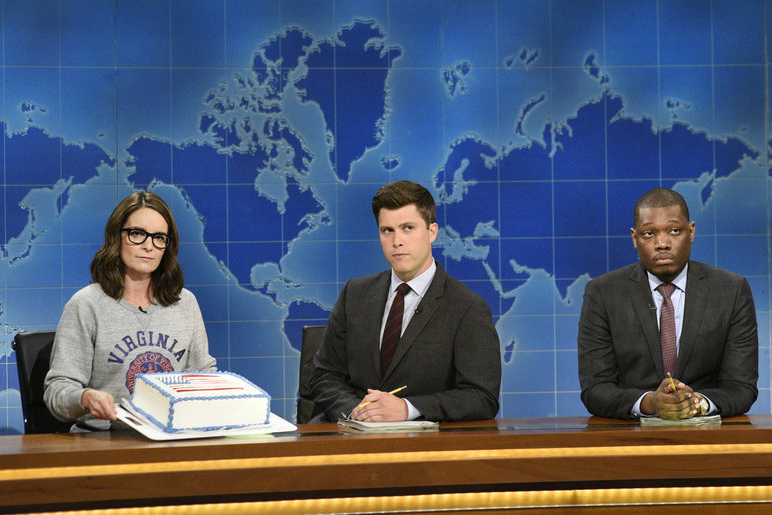
Yet the hair-trigger sensitivities of audiences predisposed to judge Fey harshly have also fueled ridiculous backlashes. Following 2017’s white-supremacist rally in Charlottesville, the UVa alum caught flak for an SNL “Weekend Update” bit in which she jokingly urged viewers to drown their rage in cake instead of getting into fistfights with Nazis. No one watching in good faith could’ve mistaken her for excusing the marchers. (She even sneaked in unusually progressive opinions for broadcast TV: “It’s not our country. We stole it from the Native Americans. And when they have a peaceful protest, at Standing Rock, we shoot at them with rubber bullets. But we let you chinless turds march through the streets with semiautomatic weapons.”) Nor was it hard to see she was playing an exaggeratedly naive version of herself. Still, she was self-critical enough to judge the segment as a failure. “If I had a time machine,” she said on David Letterman’s Netflix show My Next Guest Needs No Introduction, “I would end the piece by saying… ‘Fight [the Nazis] in every way except the way that they want.’”

When Fey gets in trouble, whether for legitimate or specious reasons, it’s usually because her darkest humor is built atop a layer of cynicism about society—and Hollywood as a mirror of it—that isn’t always easy to unearth. Viewers got that her acclaimed SNL portrayal of an airheaded Sarah Palin reflected the then VP candidate’s pandering to a demographic that wanted women in politics to be “Caribou Barbie.” But they sometimes missed that the stars of 30 Rock’s show-within-a-show, Jenna Maroney and Tracy Jordan, embody certain awful stereotypes about white women and Black men not because Fey was saying they truly represented those groups but because showbiz rewards performers who reflect audiences’ prejudices.

It’s not hard to imagine why—at this point in her prolific career, but also at this toxic moment for the cultural conversation—Fey might want a break from satire. (She has long been rumored to be a top candidate to run SNL should her mentor Lorne Michaels ever retire, but her disinclination to keep wrestling the zeitgeist makes it seem doubtful she’d want the job.) Indeed, she appears to be making an effort to avoid stress in her professional life. Her current comedy tour with Poehler reportedly finds the duo bantering in pajamas. She spoke on Good Hang about making time, after years of overwork, to “just be a person in this world and maybe, like, watch a program.” In the same episode, Fey explained her approach to making The Four Seasons. “I worked hard to build it to be a really healthy set and really, like, humane hours,” she said. “I was also extremely purposeful about bringing together people who I believed were good people who would not make any trouble for me.”

Tina Fey, Colin Jost and Michael Che at Saturday Night Live's Weekend Update desk on Aug. 17, 2017.

The disproportionate share of criticism Fey attracts is, in a way, a testament to how effectively she’s caricatured herself over the years—as a schoolmarmish killjoy, a mousy prude, a blithely self-righteous white feminist—for an audience prone to conflating comedy with reality. She’s copped to having been a “caustic” judge of her peers as a teen, but the characters she usually inhabits, onscreen and as a public persona, are, to borrow words Fey frequently uses herself, “square” and “obedient.” A recent talking point has been her Enneagram personality test type: the Achiever.

Fey’s character in The Four Seasons is a more grounded, sympathetic version of this uptight woman. Kate can micromanage her friend group and her marriage, but when she errs toward officiousness, it’s because that’s her way of caring for people. “You’ve gotta always be the good guy,” she complains to Jack. “And that only leaves one other part.” The series is similarly generous with other characters. The revelation that Carell’s Nick plans to leave his wife Anne (Kerri Kenney-Silver) after a gathering for their 25th anniversary drives the plot, throwing off both the other two couples and the overall group dynamic. But Nick comes off as less of a jerk than he is in Alda’s movie and more of a man struggling with his mortality. While Anne fades into the background of the film post-split, Fey goes to great, sometimes a bit clumsy lengths to honor the perspective of the jilted wife.

THE FOUR SEASONS

Where was she hiding this humanism, after years of depicting characters at their vain, stupid, oblivious worst? In plain sight, actually. There is no better indicator of a writer’s worldview than how they end their stories. In that regard, Fey has always been sneakily optimistic. Mean Girls is often likened to the pitch-black high school satire Heathers, but Heathers concludes, after multiple murders, with its villain’s suicide, while Mean Girls leaves us with a reformed queen bee and a utopian teenage social order. Whereas Seinfeld, another deadpan NBC sitcom about self-absorbed New Yorkers, notoriously condemned its characters to prison, 30 Rock let Liz finally have it all: the career, the baby, the hot husband. Fey’s next big project, the Netflix comedy Unbreakable Kimmy Schmidt, wrung humor out of an abused, traumatized kidnapping victim’s adventures in a cruel city plagued by economic inequality. But—and here the clue is right there in the title—Kimmy’s tenacity won out.

The Four Seasons is probably not destined to become a classic like 30 Rock and Mean Girls; it offers neither the many madcap highs nor the occasional tone-deaf lows of Fey’s best work. Still, it’s a thoroughly enjoyable watch, one that reflects the wisdom and patience of age rather than the merciless genius of youth. Best of all, it reveals a hidden, humanizing dimension of the most fascinating character Tina Fey ever created: Tina Fey.


source https://time.com/7281530/the-four-seasons-netflix-tina-fey/

TIME Unveils Special Report: “Five Years Later: America Looks for a Way Forward After George Floyd”

TIME to Host ‘TIME Impact Dinner: The Road to Justice’ in Washington, D.C. on May 20, in Partnership with the Center for Policing Equity

May 1, 2025—Today, TIME publishes “Five Years Later: America Looks for a Way Forward After George Floyd,” a special report released ahead of the fifth anniversary of George Floyd’s murder. In the wake of Floyd’s death, millions of Americans took to the streets, launching the largest protests in U.S. history and marking a watershed moment that demanded safety, dignity, and an end to anti-Black racism. Produced in collaboration with the Center for Policing Equity, the special package features a collection of interviews and essays from scholars, activists, artists, and more, exploring why the pursuit of racial justice remains so challenging in America.

[time-brightcove not-tgx=”true”]

–Read the special report: here

“Few periods have influenced the course of American history in the last century as the killing of George Floyd on May 25, 2020, and the worldwide protest movement that sprung from it the following summer,” said TIME Editor in Chief Sam Jacobs. “We are grateful to partner with the Center for Policing Equity to publish work from artists, photographers and writers, each reflecting on the impact of this moment and the work that remains undone.”

The new cover for the project is a painting, Holding On (Blue), by Tajh Rust for TIME. On the painting Rust writes: “I’ve been using this water motif to speak to a shared history and a collective memory across the Black diaspora. The water gives us a chance to reflect, but it can also be a flood. Our stories, challenges, and triumphs are connected by oceans. This family unit is inundated by the rising water, yet they stay above it. The hope may be found in the younger generation.” 

–See the cover by painter Tajh Rust for TIME: here

The TIME Special Report “Five Years Later: America Looks for a Way Forward After George Floyd” 

 features perspectives from:  

As an extension of the special project, TIME will host the TIME Impact Dinner: The Road to Justice with presenting partner the Center for Policing Equity in Washington, D.C. on May 20. The evening will be dedicated to elevating the perspectives of the leaders featured in the “Five Years Later: America Looks for a Way Forward After George Floyd” special report and those who are striving to reshape public safety systems to drive equity and better support marginalized communities.

###


source https://time.com/7281847/time-unveils-special-report-five-years-later-america-looks-for-a-way-forward-after-george-floyd/

2025年4月30日 星期三

Everything to Remember About All the Members of the Thunderbolts* Team

THUNDERBOLTS*

Thunderbolts*, out May 2, features Marvel’s B-team superheroes—sidekicks and antagonists who have existed largely on the sidelines of the MCU for the past decade and a half. Now they are finally getting their moment to shine. The ragtag group joins together under the watchful eye of Valentina Allegra de Fontaine (Julia Louis-Dreyfus), a morally flexible private-sector spook who has been named the head of the CIA in the new film.

[time-brightcove not-tgx=”true”]

Valentina, who was first introduced in the Disney+ series Falcon and the Winter Soldier and appeared in Black Panther: Wakanda Forever as the ex-wife of Everett Ross (Martin Freeman), has quietly been gathering together a group of assassins to work on covert operations and now dreams of her own very public superhuman—or superteam—that she can control.

But if you missed movies like Black Widow or Ant-Man and the Wasp or TV shows like Falcon and the Winter Soldier, you may be confused as to who these antiheroes who Valentina has collected are, what they’ve been up to for the last several years, and whether they’re good guys or bad.

Here is your spoiler-free guide to everything you need to know about the characters who make up the Thunderbolts team.

Read more: All the Future MCU Movies Announced in Marvel’s Major Revamp

Yelena Belova

Florence Pugh in Thunderbolts

Introduced in Black Widow as the little sister of Natasha Romanoff (Scarlett Johanson), Florence Pugh’s Yelena was raised from childhood to be an assassin in the Russian Red Room, just like Black Widow before her. Yelena and Natasha are not sisters by blood but by circumstance: When they were children they were sent as spies to America and lived with a fake family of other covert operatives. David Harbour’s Alexei Shostakov or Red Guardian (more on him later) and Rachel Weisz’s Melina Vostokoff acted as their parents until all four had to escape back to Russia.

The four reunite in Black Widow to eliminate the Red Room and save the women being brainwashed there. After the death of Natasha in Avengers: Endgame, Yelena became an assassin for hire working for Valentina Allegra de Fontaine, who in Thunderbolts* is trying to build (and control) her own superhuman.

Bucky Barnes / The Winter Soldier

Sebastian Stan in Thunderbolts*

Sebastian Stan has been playing Steve Rogers’ best bud, Bucky Barnes, since 2011’s Captain America: The First Avenger. A lot has happened to Bucky since he fought alongside Cap during World War II in that film. Bucky fell from a train in that movie, apparently dying, but his body was recovered by HYDRA, a science-minded organization within the Nazi party. Bucky was given supersoldier serum, brainwashed, and transformed into the Winter Soldier. He performed many dastardly deeds for HYDRA, including murdering Tony Stark’s parents.

Steve eventually helped Bucky recover his memories and break free of HYDRA, and the Wakandans gifted Bucky an indestructible arm. Bucky fought alongside the Avengers against Thanos in Avengers: Infinity War and teamed up with Sam Wilson (The Falcon and, later, the new Captain America) in the Disney+ show, The Falcon and the Winter Soldier. Since then, apparently Bucky has become an elected official, representing Brooklyn in Congress. Whether his commitments to supersoldier-ing will interfere with his duties as an elected official remains unclear.

Alexei Shostakov/Red Guardian

The USSR’s answer to Captain America, Harbour’s Red Guardian is a washed-up super soldier who dreams of his days of glory as a Russian emblem of strength. A surrogate father to Natasha and Yelena, he was living in an Eastern European prison when the two girls broke him out during the events of Black Widow.

John Walker

An antagonistic force in Falcon and the Winter Soldier, John Walker (Wyatt Russell) is a military vet who takes the supersoldier serum and, briefly, is dubbed by the U.S. government as the new Captain America. However, we learn that supersoldier serum has different effects on different people. In the scrawny but noble Steve Rogers, it brought out leadership qualities. For Walker, it enhanced his already-simmering rage and resentment. Though Walker isn’t a bad guy, per se—he is in pursuit of justice—he doesn’t have the moral compass of, say, Sam Wilson. Walker eventually kills an innocent man in front of a crowd in the streets, bloodying the sacred Captain America shield in the process.

Walker is stripped of his title after that incident. But Valentina Allegra de Fontaine recruits the shamed Walker to be part of her network of privately paid assassins.

Ghost

Hannah John-Kamen in Thunderbolts*

Another misunderstood villain, Ghost (Hannah John-Kamen) is one of the antagonists in Ant-Man and the Wasp. The daughter of a former colleague of Hank Pym, Ava Starr has an encounter with the Quantum Realm as a child that grants her “phasing powers”—she can disappear and walk through walls—but leaves her in chronic pain. She joins S.H.I.E.L.D. as an assassin in exchange for a suit that allows her to control her instability and the promise of a cure that never manifests. By the end of Ant-Man and the Wasp, Janet van Dyne (Michelle Pfeiffer) uses the power of quantum physics to stabilize Ava.

Taskmaster

THUNDERBOLTS*

Though she does not play as large a role as the rest of the team in The Thunderbolts, Taskmaster does work for Valentina too. Antonia Dreykov (Olga Kurylenko) is the daughter of General Dreykov, the head of the Red Room. During an assassination attempt targeting General Dreykov, Natasha Romanoff almost kills Antonia. Antonia still carries the scars from the explosion. General Dreykov then trained Antonia to become Taskmaster and used a substance to control her mind. In Black Widow, Natasha and Yelena redeem Natasha’s near-murder of Antonia by freeing her from the Red Room to restart her life.

Bob

Bob (Lewis Pullman) in Marvel Studios' THUNDERBOLTS*

Bob (Lewis Pullman) is a new character in the Thunderbolts, a mysterious man who seemingly appears out of nowhere inside Valentina’s secret bunker. We won’t reveal more about Bob here to avoid spoiling the movie.


source https://time.com/7281053/thunderbolts-team-members-what-to-know/

2025年4月29日 星期二

The History of Why Raw Milk Regulation is Necessary

Robert F. Kennedy Jr. Synthetic Dyes

On April 21, The Food and Drug Administration (FDA) announced that it will be suspending its oversight of the labs that conduct safety and quality testing on the nation’s milk supply. The move comes as raw milk is ascendant in federal public health policy. Secretary of Health and Human Services Robert F. Kennedy Jr. has called for the end of what he deems the “aggressive suppression” of raw dairy by public health authorities, meaning that more deregulation may be on the way.

[time-brightcove not-tgx=”true”]

Today’s raw milk evangelists like Kennedy claim that it has more nutrients, benefits the immune system, and that kids are healthier when they consume raw milk rather than pasteurized dairy. Public health authorities have debunked these claims while highlighting thousands of illnesses linked to raw milk. Nevertheless, raw dairy is increasingly popular with American consumers. It fits nicely into the “tradwife” aesthetic, personified by Ballerina Farm influencer Hannah Neeleman, who feeds her children raw milk on Tiktok for millions of viewers. Yet, like the rest of the aesthetic, the mainstreaming of raw dairy relies on consumers forgetting our history—in this case, a history in which kids got sick from raw milk.

The history of children’s health in the U.S. reveals an important truth. The U.S. government adopted a robust apparatus for regulating and monitoring the milk supply after an epidemic killed thousands of kids at the turn of the 20th century. This history offers a grim warning about what a future without milk regulation could hold for America’s children.

Nineteenth-century Americans recognized the dangers of an unregulated dairy industry. In 1843, the domestic writer Catharine Beecher warned parents that “diseased” milk was “the cause of extensive mortality among young children.” Yet, even after the French microbiologist Louis Pasteur patented the technology of pasteurization, or heating liquids to kill microorganisms, in 1865, Americans largely continued to consume raw milk for several more decades.

Read More: Public Health Experts Alarmed at Trump’s Pick of RFK Jr. to Lead HHS

They did so despite increasing fears about the dairy industry, driven by the way young children were consuming an increasingly dairy-centric diet. As America urbanized in the late 19th century, many mothers moved away from families who could have supported them in breastfeeding, while also working at Gilded Age jobs like textile factories without labor protections. The technologies of pumping and refrigeration, so essential to balancing work and breastfeeding today, were not yet widely available. This combination of barriers to breastfeeding proved insurmountable for many mothers.

Bad advice from their pediatricians compounded the situation. At the time, pediatrics was a new specialty trying to prove its worth, and practitioners mistakenly believed in sticking to a strict schedule for breastfeeding, which actually limited breastmilk supply. Hampered by this erroneous guidance, health authorities and the American public began to believe that women were physically incapable of producing enough breastmilk. 

The result of both inadequate support for new mothers and poor medical advice was that more and more mothers bottle-fed their babies cow’s milk. Young children drank lots of milk, too. Medical authorities like the pediatrician Luther Emmett Holt, whose 1894 The Care and Feeding of Children would become the most popular parenting manual of the early 20th century, advised parents to feed their toddlers milk at every meal.

But for kids at the turn of the century, milk came with dire risks. Amid the unbridled capitalism of the Gilded Age, the milk supply was a nightmare of corruption and contamination. On the farm, poor sanitation enabled cows and dairy workers to introduce tuberculosis, typhoid, and other pathogens into milk. Farmers or middlemen also frequently adulterated milk, watering it down to stretch supplies—with impure water likely to introduce further pathogens—or adding toxic substances, like formaldehyde or chalk, meant to conceal spoilage or make milk appear whiter. The milk was then shipped in open, unrefrigerated containers no matter the weather, vulnerable to even more contamination and spoilage. 

This poisoned milk threatened America’s most vulnerable consumers: young children. Infant mortality skyrocketed in the second half of the 19th century, up to 20% nationally and closer to 30% in urban centers. Tens of thousands of babies died every year of gastroenteritis known as “the summer complaint,” an epidemic of diarrhea that worsened in the warmer months. Gastrointestinal infections were the third leading cause of death across all ages, but particularly impacted small children’s fragile immune systems.

Read More: Is Raw Milk Safe? Here’s What to Know

Parents, many mourning dead children, pushed for lawmakers to clean up the milk supply. They joined a movement of Americans calling for government regulation of the food industry. Progressive Era reformers chronicled the lax food safety and labor conditions that put Americans at risk. In 1902, a Department of Agriculture chemist named Harvey Wiley launched a brilliant but dangerous public relations campaign dubbed “The Poison Squad” dosing human test subjects with food additives like formaldehyde and chronicling their alarming effects on the body. In his famous 1905 novel The Jungle, the journalist Upton Sinclair exposed the horrors of meatpacking plants and the threat they posed to Americans.

This activism prodded state and federal authorities to enact a flurry of public health legislation. In 1906, Congress passed the Pure Food and Drug Act, leading to the creation of the FDA. In 1910, New York State mandated the pasteurization of all milk sold for human consumption. As an extra layer of oversight, public health authorities began testing cows for diseases like tuberculosis, to ensure that milk remained safe for American consumers.

Public health historians credit the cleanup of the milk supply as one of the major drivers of the dramatic decrease in child mortality over the course of the 20th century. Within two generations of the pasteurization mandates, “the summer complaint” had become a memory, so much so that Benjamin Spock, the pediatrician whose parenting advice defined childcare in mid-20th-century America, had to explain its history to the parents of Baby Boomers. In the 1964 edition of his bestseller Baby and Child Care, Spock described the terror of early 20th century doctors and parents who watched infants suffer “serious intestinal infections that afflicted tens of thousands of babies yearly.” Spock confidently asserted that pasteurization had made such suffering a thing of the past.

Yet as Kennedy’s attacks on dairy regulation illustrate, the memory of the infant mortality crisis has receded too far into the past. Unlike their turn-of-the-20th century forebears, most 21st century parents will never know the agony of losing a child, as infant mortality rates have fallen below 1%. Many Americans are unaware that government regulation of industry helped bring us these precious gains in children’s health, by keeping tuberculosis, E.coli, and yes, bird flu out of the milk people drink. If this important regulatory work is undone, Kennedy’s calls to “Make America Healthy Again” could bring back an infant mortality crisis previous generations of Americans thought they had overcome.

Carla Cevasco is associate professor of American studies at Rutgers University-New Brunswick. She is writing a book on the history of feeding children in the U.S.

Made by History takes readers beyond the headlines with articles written and edited by professional historians. Learn more about Made by History at TIME here. Opinions expressed do not necessarily reflect the views of TIME editors.


source https://time.com/7280534/why-raw-milk-regulation-is-necessary/

How TIME and Statista Determined the World’s Top EdTech Companies of 2025

For the second time, TIME is awarding the World’s Top EdTech Companies 2025, in partnership with Statista, a leading international provider of market and consumer data and rankings. The result of this quantitative study: 350 companies dedicated to the development and provision of educational technologies, encompassing both products and services. Here’s how the winners were selected.

Methodology

The research project “World’s Top EdTech Companies 2025” is a comprehensive analysis conducted to identify the top performing EdTech companies in the United States. First, companies had to primarily focus on developing and providing educational technologies, products, or services. The 350 companies with the highest score were awarded as “World’s Top EdTech Companies 2025.”

[time-brightcove not-tgx=”true”]

The ranking is built on two pillars: financial strength and industry impact. Statista gathered and scrutinized data from over 7,000 companies through desk research, online application forms, and collaborations with other data and market intelligence companies. A company received scores in each of these dimensions, which were then combined into an overall score.

For the first dimension, financial strength, Statista analyzed revenue, employee, and funding data, obtained from publicly available sources like annual reports, company websites, through media monitoring, and via databases. Additionally, company disclosures submitted via an online application form, which was freely accessible via the TIME website, were considered.

For the evaluation of the industry impact, Statista cooperated with HolonIQ and LexisNexis® Intellectual Property Solutions to assess companies in different impact dimensions, encompassing factors such as:

  • quality and impact of their product/service portfolio
  • quantity and value of a company’s IP (intellectual property) portfolio

In addition, Statista researched various metrics around web traffic, to assess the relevance of the products and services to the respective target groups.

The evaluation process involved assessing all relevant companies within the global EdTech sector that exhibited above-average performance on financial metrics in their geographical region. Subsequently, the selection was narrowed down to include only those companies that not only excelled financially but also demonstrated significant industry impact within their specific categories. This selection process allowed us to establish our final ranking of the World’s Top EdTech Companies 2025. Once the data was collected and evaluated, it was consolidated and weighted within a scoring model. The final score was calculated as follows: 70% x financial strength score + 30% x impact score. The companies with the highest score were awarded as “World’s Top EdTech Companies 2025” by TIME and Statista.

Alongside the list of 350 top EdTech companies, Statista and TIME are also publishing a “Rising Stars Ranking” highlighting the companies with the highest revenue growth rates over the past three years out of those who submitted company data via the online application process.

Applied criteria:

  • company age 10 years and younger
  • minimum revenue of 1 million U.S. dollars in 2022
  • revenue growth rate of more than 20% over the last three years

Disclaimer
The selection of the companies and the definition of the evaluation criteria were based on independent journalistic criteria of TIME and Statista. The evaluation was carried out by the statistics and market research company Statista. TIME and Statista make no claim to the completeness of the companies examined.

The ranking only includes companies that qualify according to the criteria described in this document. A position in the ranking is a positive recognition based on research of publicly available data sources at the time and information received via an application process and through collaboration partners.

In addition, events after March 14, 2025, were not considered in the analysis. As such, the results of this list should not be used as the sole source of information for future deliberations. The information provided through this ranking should rather be considered in conjunction with other available information about a company.

The quality of companies that are not included in the ranking is not disputed.


source https://time.com/7280705/worlds-top-edtech-companies-2025-methodology/

من هشت سال گروگان ایران بودم. آیا دوستانم از بمباران اسرائیل جان سالم به در بردند؟

Read this story in English here نمازی گروگان سابق آمریکایی در ایران است و اکنون عضو هیئت مشاوران ابتکار آزادی برای زندانیان سیاسی در...