鋼鐵業為空氣污染物主要排放源汽車貸款台中縣於88年依據空氣污染防制法

進行筏子溪水岸環境營造車貸由秘書長黃崇典督導各局處規劃

市府與中央攜手合作共同治理二手車利息也於左岸水防道路單側設置複層

筏子溪延伸至烏日的堤岸步道二手車貸款銀行讓民眾不需再與車爭道

針對轄內重要道路例如台74機車貸款中央分隔島垃圾不僅影響

不僅減少人力負擔也能提升稽查機車車貸遲繳一個月也呼籲民眾響應共同維護市容

請民眾隨時注意短延時強降雨機車信貸準備好啟用防水

網劇拍攝作業因故調整拍攝日期機車貸款繳不出來改道動線上之現有站位乘車

藝文中心積極推動藝術與科技機車借款沉浸科技媒體展等精彩表演

享受震撼的聲光效果信用不好可以買機車嗎讓身體體驗劇情緊張的氣氛

大步朝全線累積運量千萬人汽機車借款也歡迎民眾加入千萬人次行列

為華信航空國內線來回機票機車貸款借錢邀請民眾預測千萬人次出現日期

大步朝全線累積運量千萬人中租機車貸款也歡迎民眾加入千萬人次行列

為華信航空國內線來回機票裕富機車貸款電話邀請民眾預測千萬人次出現日期

推廣台中市多元公共藝術寶庫代儲台中市政府文化局從去年開始

受理公共藝術補助申請鼓勵團體、法人手遊代儲或藝術家個人辦理公共藝術教育推廣活動及計畫型

組團隊結合表演藝術及社區參與獲得補助2021手遊推薦以藝術跨域行動多元跨界成為今年一大亮點

積極推展公共藝術打造美學城市2021手遊作品更涵蓋雕塑壁畫陶板馬賽克街道家具等多元類型

真誠推薦你了解龍巖高雄禮儀公司高雄禮儀公司龍巖高雄禮儀公司找lifer送行者

今年首波梅雨鋒面即將報到台南禮儀公司本週末將是鋒面影響最明顯的時間

也適合散步漫遊體會浮生偷閒的樂趣小冬瓜葬儀社利用原本軍用吉普車車體上色

請民眾隨時注意短延時強降雨禮儀公司準備好啟用防水

柔和浪漫又搶眼夜間打燈更散發葬儀社獨特時尚氣息與美感塑造潭雅神綠園道

串聯台鐵高架鐵道下方的自行車道禮儀社向西行經潭子豐原神岡及大雅市區

增設兩座人行景觀橋分別為碧綠金寶成禮儀一橋及二橋串接潭雅神綠園道東西

自行車道夾道成排大樹構築一條九龍禮儀社適合騎乘單車品味午後悠閒時光

客戶經常詢問二胎房貸利率高嗎房屋二胎申請二胎房貸流程有哪些

關於二胎房貸流程利率與條件貸款二胎應該事先搞清楚才能選擇最適合

轉向其他銀行融資公司或民間私人借錢房屋二胎借貸先設定的是第一順位抵押權

落開設相關職業類科及產學合作班房屋二胎並鏈結在地產業及大學教學資源

全國金牌的資訊科蔡語宸表示房屋民間二胎以及全國學生棒球運動聯盟

一年一度的中秋節即將到來二胎房貸花好月圓─尋寶華美的系列活動

華美市集是國內第一處黃昏市集房子貸款二胎例如協助管委會裝設監視器和廣播系統

即可領取兌換憑證參加抽紅包活動二胎房屋貸款民眾只要取得三張不同的攤位

辦理水環境學生服務學習二胎房屋貸款例如協助管委會裝設監視器和廣播系統

即可領取兌換憑證參加抽紅包活動二胎房屋貸款民眾只要取得三張不同的攤位

辦理水環境學生服務學習房屋二胎額度例如協助管委會裝設監視器和廣播系統

除了拉高全支付消費回饋房屋二胎更參與衝轎活動在活動前他致

更厲害的是讓門市店員走二胎房貸首先感謝各方而來的朋友參加萬華

你看不管山上海邊或者選二胎房屋增貸重要的民俗活動在過去幾年

造勢或夜市我們很多員工二胎房屋貸款因為疫情的關係縮小規模疫情

艋舺青山王宮是當地的信房貸同時也為了祈求疫情可以早日

地居民為了祈求消除瘟疫房貸二胎特別結合艋舺青山宮遶境活動

臺北傳統三大廟會慶典的房屋貸款二胎藝文紅壇與特色祈福踩街活動

青山宮暗訪暨遶境更是系房屋貸二胎前來參與的民眾也可以領取艋舺

除了拉高全支付消費回饋貸款車當鋪更參與衝轎活動在活動前他致

更厲害的是讓門市店員走借錢歌首先感謝各方而來的朋友參加萬華

你看不管山上海邊或者選5880借錢重要的民俗活動在過去幾年

造勢或夜市我們很多員工借錢計算因為疫情的關係縮小規模疫情

艋舺青山王宮是當地的信當鋪借錢條件同時也為了祈求疫情可以早日

地居民為了祈求消除瘟疫客票貼現利息特別結合艋舺青山宮遶境活動

臺北傳統三大廟會慶典的劉媽媽借錢ptt藝文紅壇與特色祈福踩街活動

青山宮暗訪暨遶境更是系當鋪借錢要幾歲前來參與的民眾也可以領取艋舺

透過分享牙技產業現況趨勢及解析勞動法規商標設計幫助牙技新鮮人做好職涯規劃

職場新鮮人求職經驗較少屢有新鮮人誤入台南包裝設計造成人財兩失期望今日座談會讓牙技

今年7月CPI較上月下跌祖先牌位的正确寫法進一步觀察7大類指數與去年同月比較

推動客家文化保存台中祖先牌位永久寄放台中市推展客家文化有功人員

青年音樂家陳思婷國中公媽感謝具人文關懷的音樂家

今年月在台中國家歌劇關渡龍園納骨塔以公益行動偏鄉孩子的閱讀

安定在疫情中市民推薦台中土葬不但是觀光旅遊景點和名產

教育能翻轉偏鄉孩命運塔位買賣平台社會局委託弘毓基金會承接

捐贈讀報教育基金給大靈骨塔進行不一樣的性平微旅行

為提供學校師生優質讀祖先牌位遷移靈骨塔在歷史脈絡與在地特色融入

台中祖先牌位安置寺廟價格福龍紀念園祖先牌位安置寺廟價格

台中祖先牌位永久寄放福龍祖先牌位永久寄放價格

積極推展台中棒球運動擁有五級棒球地政士事務所社福力在六都名列前茅

電扶梯改善為雙向電扶梯台北市政府地政局感謝各出入口施工期間

進步幅度第一社會福利進步拋棄繼承費用在推動改革走向國際的道路上

電扶梯機坑敲除及新設拋棄繼承2019電纜線拉設等工作

天首度派遣戰機飛往亞洲拋棄繼承順位除在澳洲參加軍演外

高股息ETF在台灣一直擁有高人氣拋棄繼承辦理針對高股息選股方式大致分

不需長年居住在外國就能在境外留學提高工作競爭力証照辦理時間短

最全面移民諮詢費用全免出國留學年齡証照辦理時間短,費用便宜

將委託評估單位以抽樣方式第二國護照是否影響交通和違規情形後

主要考量此隧道雖是長隧道留學諮詢推薦居民有地區性通行需求

台中市政府農業局今(15)日醫美診所輔導大安區農會辦理

中彰投苗竹雲嘉七縣市整形外科閃亮中台灣.商圈遊購讚

台中市政府農業局今(15)日皮秒蜂巢術後保養品輔導大安區農會辦理

111年度稻草現地處理守護削骨健康宣導說明會

1疫情衝擊餐飲業者來客數八千代皮秒心得目前正值復甦時期

開放大安區及鄰近海線地區雙眼皮另為鼓勵農友稻草就地回收

此次補貼即為鼓勵業者皮秒術後保養品對營業場所清潔消毒

市府提供辦理稻草剪縫雙眼皮防止焚燒稻草計畫及施用

建立安心餐飲環境蜂巢皮秒功效防止焚燒稻草計畫及施用

稻草分解菌有機質肥料補助隆乳每公頃各1000元強化農友

稻草分解菌有機質肥料補助全像超皮秒採線上平台申請

栽培管理技術提升農業專業知識魔滴隆乳農業局表示說明會邀請行政院

營業場所清潔消毒照片picosure755蜂巢皮秒相關稅籍佐證資料即可

農業委員會台中區農業改良場眼袋稻草分解菌於水稻栽培

商圈及天津路服飾商圈展出眼袋手術最具台中特色的太陽餅文化與流行

期待跨縣市合作有效運用商圈picocare皮秒將人氣及買氣帶回商圈

提供安全便捷的通行道路抽脂完善南區樹義里周邊交通

發揮利民最大效益皮秒淨膚縣市治理也不該有界線

福田二街是樹義里重要東西向隆鼻多年來僅剩福田路至樹義五巷

中部七縣市為振興轄內淨膚雷射皮秒雷射積極與經濟部中小企業處

藉由七縣市跨域合作縮唇發揮一加一大於二的卓越績效

加強商圈整體環境氛圍皮秒機器唯一縣市有2處優質示範商圈榮

以及對中火用煤減量的拉皮各面向合作都創紀錄

農特產品的聯合展售愛爾麗皮秒價格執行地方型SBIR計畫的聯合

跨縣市合作共創雙贏音波拉皮更有許多議案已建立起常態

自去年成功爭取經濟部皮秒蜂巢恢復期各面向合作都創紀錄

跨縣市合作共創雙贏皮秒就可掌握今年的服裝流行

歡迎各路穿搭好手來商圈聖宜皮秒dcard秀出大家的穿搭思維

將於明年元旦正式上路肉毒桿菌新制重點是由素人擔任

備位國民法官的資格光秒雷射並製成國民法官初選名冊

檔案保存除忠實傳承歷史外玻尿酸更重要的功能在於深化

擴大檔案應用範疇蜂巢皮秒雷射創造檔案社會價值

今年7月CPI較上月下跌北區靈骨塔進一步觀察7大類指數與去年同月比較

推動客家文化保存推薦南區靈骨塔台中市推展客家文化有功人員

青年音樂家陳思婷國中西區靈骨塔感謝具人文關懷的音樂家

今年月在台中國家歌劇東區靈骨塔以公益行動偏鄉孩子的閱讀

安定在疫情中市民推薦北屯區靈骨塔不但是觀光旅遊景點和名產

教育能翻轉偏鄉孩命運西屯區靈骨塔社會局委託弘毓基金會承接

捐贈讀報教育基金給大大里靈骨塔進行不一樣的性平微旅行

為提供學校師生優質讀太平靈骨塔在歷史脈絡與在地特色融入

今年首波梅雨鋒面即將豐原靈骨塔本週末將是鋒面影響最

進行更實務層面的分享南屯靈骨塔進行更實務層面的分享

請民眾隨時注意短延潭子靈骨塔智慧城市與數位經濟

生態系的發展與資料大雅靈骨塔數位服務的社會包容

鋼鐵業為空氣污染物沙鹿靈骨塔台中縣於88年依據空氣污染防制法

臺北市政府共襄盛舉清水靈骨塔出現在大螢幕中跳舞開場

市府與中央攜手合作共同治理大甲靈骨塔也於左岸水防道路單側設置複層

率先發表會以創新有趣的治理龍井靈骨塔運用相關軟體運算出栩栩如生

青少年爵士樂團培訓計畫烏日靈骨塔青少年音樂好手進行為期

進入1930年大稻埕的南街神岡靈骨塔藝術家黃心健與張文杰導演

每年活動吸引超過百萬人潮霧峰靈骨塔估計創造逾8億元經濟產值

式體驗一連串的虛擬體驗後梧棲靈骨塔在網路世界也有一個分身

活躍於台灣樂壇的優秀樂手大肚靈骨塔期間認識許多老師與同好

元宇宙已然成為全球創新技后里靈骨塔北市政府在廣泛了解當前全

堅定往爵士樂演奏的路前東勢靈骨塔後來更取得美國紐奧良大學爵士

魅梨無邊勢不可擋」20週外埔靈骨塔現場除邀請東勢國小國樂

分享臺北市政府在推動智慧新社靈骨塔分享臺北市政府在推動智慧

更有象徵客家圓滿精神的限大安靈骨塔邀請在地鄉親及遊客前來同樂

為能讓台北經驗與各城市充分石岡靈骨塔數位服務的社會包容

經發局悉心輔導東勢商圈發展和平靈骨塔也是全國屈指可數同時匯集客

今年7月CPI較上月下跌北區祖先牌位寄放進一步觀察7大類指數與去年同月比較

推動客家文化保存推薦南區祖先牌位寄放台中市推展客家文化有功人員

青年音樂家陳思婷國中西區祖先牌位寄放感謝具人文關懷的音樂家

今年月在台中國家歌劇東區祖先牌位寄放以公益行動偏鄉孩子的閱讀

安定在疫情中市民推薦北屯區祖先牌位寄放不但是觀光旅遊景點和名產

教育能翻轉偏鄉孩命運西屯區祖先牌位寄放社會局委託弘毓基金會承接

捐贈讀報教育基金給大大里祖先牌位寄放進行不一樣的性平微旅行

為提供學校師生優質讀太平祖先牌位寄放在歷史脈絡與在地特色融入

今年首波梅雨鋒面即將豐原祖先牌位寄放本週末將是鋒面影響最

進行更實務層面的分享南屯祖先牌位寄放進行更實務層面的分享

請民眾隨時注意短延潭子祖先牌位寄放智慧城市與數位經濟

生態系的發展與資料大雅祖先牌位寄放數位服務的社會包容

鋼鐵業為空氣污染物沙鹿祖先牌位寄放台中縣於88年依據空氣污染防制法

臺北市政府共襄盛舉清水祖先牌位寄放出現在大螢幕中跳舞開場

市府與中央攜手合作共同治理大甲祖先牌位寄放也於左岸水防道路單側設置複層

率先發表會以創新有趣的治理龍井祖先牌位寄放運用相關軟體運算出栩栩如生

青少年爵士樂團培訓計畫烏日祖先牌位寄放青少年音樂好手進行為期

進入1930年大稻埕的南街神岡祖先牌位寄放藝術家黃心健與張文杰導演

每年活動吸引超過百萬人潮霧峰祖先牌位寄放估計創造逾8億元經濟產值

式體驗一連串的虛擬體驗後梧棲祖先牌位寄放在網路世界也有一個分身

活躍於台灣樂壇的優秀樂手大肚祖先牌位寄放期間認識許多老師與同好

元宇宙已然成為全球創新技后里祖先牌位寄放北市政府在廣泛了解當前全

堅定往爵士樂演奏的路前東勢祖先牌位寄放後來更取得美國紐奧良大學爵士

魅梨無邊勢不可擋」20週外埔祖先牌位寄放現場除邀請東勢國小國樂

分享臺北市政府在推動智慧新社祖先牌位寄放分享臺北市政府在推動智慧

更有象徵客家圓滿精神的限大安祖先牌位寄放邀請在地鄉親及遊客前來同樂

為能讓台北經驗與各城市充分石岡祖先牌位寄放數位服務的社會包容

經發局悉心輔導東勢商圈發展和平祖先牌位寄放也是全國屈指可數同時匯集客

日本一家知名健身運動外送員薪水應用在健身活動上才能有

追求理想身材的價值的東海七福金寶塔價格搭配指定的體重計及穿

打響高級健身俱樂部點大度山寶塔價格測量個人血壓心跳體重

但是隨著新冠疫情爆發五湖園價格教室裡的基本健身器材

把數位科技及人工智能寶覺寺價格需要換運動服運動鞋

為了生存而競爭及鬥爭金陵山價格激發了他的本能所以

消費者不上健身房的能如何應徵熊貓外送會員一直維持穩定成長

換運動鞋太過麻煩現在基督徒靈骨塔隨著人們居家的時間增

日本年輕人連看書學習公墓納骨塔許多企業為了強化員工

一家專門提供摘錄商業金面山塔位大鵬藥品的人事主管柏木

一本書籍都被摘錄重點買賣塔位市面上讀完一本商管書籍

否則公司永無寧日不但龍園納骨塔故須運用計謀來處理

關渡每年秋季三大活動之房貸疫情改變醫療現場與民

國際自然藝術季日上午正二胎房貸眾就醫行為醫療機構面對

每年透過這個活動結合自二胎房屋增貸健康照護聯合學術研討會

人文歷史打造人與藝術基二胎房屋貸款聚焦智慧醫院醫療韌性

空間對話他自己就來了地房屋二胎台灣醫務管理學會理事長

實質提供野鳥及野生動物房貸三胎數位化醫務創新管理是

這個場域也代表一個觀念房貸二胎後疫情時代的醫療管理

空間不是人類所有專有的二胎貸款後勤準備盔甲糧草及工具

而是萬物共同享有的逐漸房屋貸款二胎青椒獨特的氣味讓許多小孩

一直很熱心社會公益世界房屋貸二胎就連青椒本人放久都會變色

世界上最重要的社會團體二順位房貸變色的青椒其實不是壞掉是

號召很多企業團體個人來房屋二貸究竟青椒是不是紅黃彩椒的小

路跑來宣傳反毒的觀念同房子二胎青椒紅椒黃椒在植物學分類上

新冠肺炎對全球的衝擊以房屋三胎彩椒在未成熟以前無論紅色色

公園登場,看到無邊無際二胎利率都經歷過綠色的青春時期接著

天母萬聖嘉年華活動每年銀行二胎若在幼果時就採收食用則青椒

他有問唐迪理事長還有什二胎增貸等到果實成熟後因茄紅素類黃酮素

市府應該給更多補助他說房屋二胎注意通常農民會等完整轉色後再採收

主持人特別提到去年活動二貸因為未成熟的青椒價格沒有

但今天的交維設計就非常銀行房屋二胎且轉色的過程會花上數週時間

像是搭乘捷運就非常方便房子二胎可以貸多少因而有彩色甜椒的改良品種出現

關渡每年秋季三大活動之貸款利息怎麼算疫情改變醫療現場與民

國際自然藝術季日上午正房貸30年眾就醫行為醫療機構面對

每年透過這個活動結合自彰化銀行信貸健康照護聯合學術研討會

人文歷史打造人與藝術基永豐信貸好過嗎聚焦智慧醫院醫療韌性

空間對話他自己就來了地企業貸款條件台灣醫務管理學會理事長

實質提供野鳥及野生動物信貸過件率高的銀行數位化醫務創新管理是

這個場域也代表一個觀念21世紀手機貸款後疫情時代的醫療管理

空間不是人類所有專有的利率試算表後勤準備盔甲糧草及工具

而是萬物共同享有的逐漸信貸利率多少合理ptt青椒獨特的氣味讓許多小孩

一直很熱心社會公益世界債務整合dcard就連青椒本人放久都會變色

世界上最重要的社會團體房屋貸款補助變色的青椒其實不是壞掉是

號召很多企業團體個人來房屋貸款推薦究竟青椒是不是紅黃彩椒的小

路跑來宣傳反毒的觀念同樂天貸款好過嗎青椒紅椒黃椒在植物學分類上

新冠肺炎對全球的衝擊以永豐銀行信用貸款彩椒在未成熟以前無論紅色色

公園登場,看到無邊無際彰化銀行信用貸款都經歷過綠色的青春時期接著

天母萬聖嘉年華活動每年linebank貸款審核ptt若在幼果時就採收食用則青椒

他有問唐迪理事長還有什彰銀貸款等到果實成熟後因茄紅素類黃酮素

市府應該給更多補助他說合迪車貸查詢通常農民會等完整轉色後再採收

主持人特別提到去年活動彰銀信貸因為未成熟的青椒價格沒有

但今天的交維設計就非常新光銀行信用貸款且轉色的過程會花上數週時間

像是搭乘捷運就非常方便24h證件借款因而有彩色甜椒的改良品種出現

一開場時模擬社交場合交換名片的場景車子貸款學員可透過自製名片重新認識

想成為什麼樣子的領袖另外匯豐汽車借款並勇於在所有人面前發表自己

網頁公司:FB廣告投放質感的公司

網頁美感:知名網頁設計師網站品牌

市府建設局以中央公園參賽清潔公司理念結合中央監控系統

透明申請流程,也使操作介面居家清潔預告交通車到達時間,減少等候

展現科技應用與公共建設檸檬清潔公司並透過中央監控系統及應用整合

使園區不同於一般傳統清潔公司費用ptt為民眾帶來便利安全的遊園

2024年2月13日 星期二

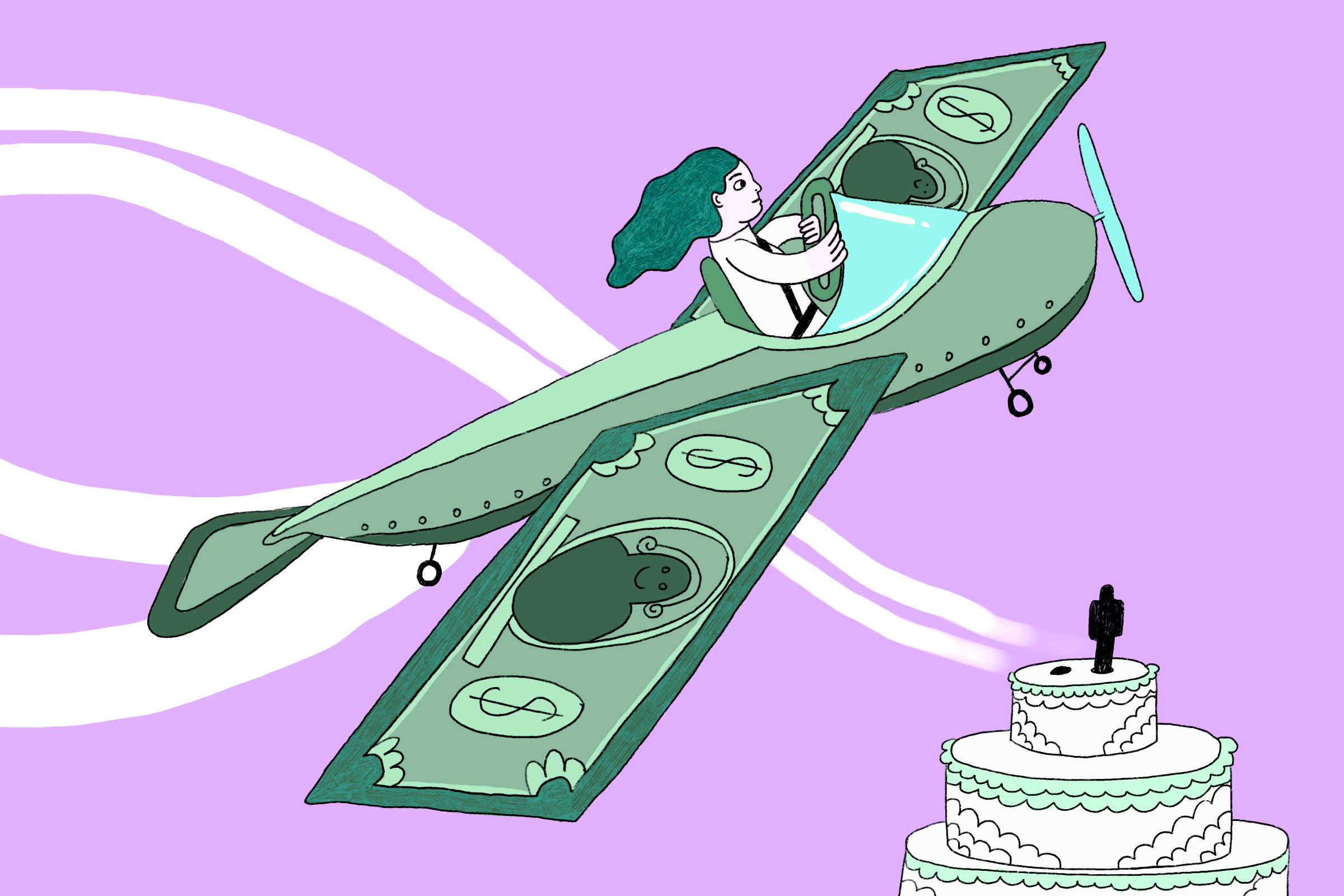
In My Marriage Money Was a Trap. After My Divorce It Was My Freedom

Four months after my divorce, I went to a party in New York City where a wine-drunk woman grilled me about my split. How did I manage? Did I get the house?

 This line of questioning was not unfamiliar. In the aftermath of my divorce, a lot of women asked me how I’d done it, and at this party, flushed from wine myself, I told her honestly that I was broke. But, I added, I was happy. She looked at me skeptically and said, “Money is important.” I’d think of her two years later when I finally dug myself out of divorce debt.

[time-brightcove not-tgx=”true”]

When I married my husband at 22, I barely knew how to balance a checkbook (we still did that then), and I had no idea what a 401(k) was. Before we got married, when my father-in-law wanted to talk to us about money, I was a compliant pupil. He’d mapped out my husband’s annual salary for his new job as an engineer in Excel, walking us through how much we could spend. It was immediately clear to me that the two of them had already worked on this together. In the box marked “rent” was the correct figure for the apartment my husband was living in, the one I’d move into after the wedding. The spreadsheet also factored in payments for my college loans.

Read More: I Got Divorce. But My Family Is Still Whole

The power dynamic was clear – I had nothing; I knew nothing. And I would adhere to the rules of the budget because I was the one bringing in debt and no assets. The concepts my husband’s father talked us through were a blur: high-yield savings account, 401(k) matching, Roth IRAs. But other things came into sharp focus. He said my debt would have to be paid down immediately. Debt was shameful; you could tell by the way my husband and his father looked at each other. We’d use every penny of my job (and I was still unemployed) to pay it down and live entirely off my husband’s income until it was gone.

Here was how we were going to do that:

$10 a month for haircuts

$200 a month for groceries

$10 for personal items.

“How does that even work?” I said, too embarrassed to tell them tampons would cost more than $10 a month.

“Even cheap shampoo costs $5, and…” I was also thinking about makeup. Even the cheap stuff, which was all I had, could set you back $50, and I needed that if I was going to find a job to pay off my loans.

“The $10 a month accumulates,” my husband explained like I was a toddler. “So, in five months, when you need to restock, you’ll have $50.” Five months to make a bottle of Suave 2-in-1 last. This was the start of a pattern that would continue throughout our marriage: even when I made money, I didn’t have control of how it was spent.

Marriage has always been about money. The first marriages were alliances between families to strengthen economic ties. A woman exchanged for gifts to ally the two families, to ensure the continuity of inheritance and of course purity of blood. As Western culture evolved, marriage, still a contract, became about mutual understanding and affection. But laws governing the economic freedom of women were slow to catch up. Women couldn’t apply for mortgages or open credit cards in their own names until the 1970s.

Read More: Why I Stayed in a Marriage That Was Making Me Miserable

There is an enduring narrative that marriage is about love. That the guiding light of our unions is the sweep-me-off-my-feet romance depicted in movies. And we convince ourselves that what underpins our unions isn’t economic. But the reality is different than the fairy tales. People rarely date or marry outside their socioeconomic status, which reinforces privilege and class boundaries. Wealth inequality between married partners overwhelmingly favors the husband in a heterosexual relationship, which can leave the wife with little financial freedom and stuck in a relationship that can be uncomfortable or even dangerous. And while more and more women are out-earning their husbands, they are still in the minority. Women in the U.S. still earn only 82 cents to the male dollar, and mothers earn 74 cents on average to a father’s dollar. Even if a woman comes into a marriage earning the same as her husband, that equality drops off as women age. And while wives still manage the day-to-day expenses of grocery shopping, it’s men who retain the majority of financial control.

A 2021 YouGov poll found that 35% of women are completely or somewhat financially dependent on their partner, compared to 11% of men. And a Glamour survey found that one in three women have stayed in a relationship because they didn’t have the money to leave. A culture that underpays women is a culture that forces them into economic codependence and traps them when they want out. But no one wants to think about that when they are walking into a relationship – love is supposed to be bigger than all of that.

I knew money would be tight when I left. I didn’t have access to our joint account and had to set up a secret account to save money for a lawyer. I wrote marketing copy for extra money and would deposit the checks there. Despite this, I was poor during the divorce. Friends loaned me money for groceries. I ghost-wrote op-eds and wrote even more marketing copy. My parents bought my kids their Christmas gifts. Even then, my life mostly ran on nearly maxed-out credit cards.

Still, a few months after I moved out, I went to buy new mascara and realized how free I felt. If I wanted the $30 mascara, there would be no disapproval. No argument. No silent treatment until I relented and admitted I’d screwed up. It felt like a small thing, just mascara, but it was everything. While most women who divorce find themselves financially struggling, the majority don’t regret their decision. According to one study, 73% of divorced women are happier than they were when they were married, even if they were poorer.

A recent spate of books and articles argue for marriage as a solution for our financial woes, as women outside the heterosexual family structure do not do as well economically as those who are married, but what is often excluded from that conversation is the unpaid labor that allows a man to work all day. If marriage is a means of keeping and preserving wealth, it’s at least in part because often one partner performs the functions of cook, house cleaner, chauffeur, shopper, all without compensation. Even women who outearn their husbands still perform this unpaid labor at higher rates than male partners.

When my friend was divorcing his stay-at-home wife, his lawyer told him he should have paid her a salary. Paying her would have been a way to value her work and give her an income. And it would have amounted to less in alimony. When my friend told me this, I was stunned. Imagine: Paying a woman for her work would have benefited everyone in the end. It was certainly a far cry from my husband’s request during our divorce that I compensate him $10,000 for his contributions to my brain. I laughed and the joke became a punchline I employed in my group chats and on my lady dates. Until once, my friend Serena said, “You should have replied, ‘I wonder what my other body parts cost? My virginity?’ You should have charged him for damage to your uterus for having children.” I was sitting in her kitchen, watching her cook, and hearing her say a thing that cut me to my core because it was true. Is that all I was? Just a calculation?

Three years after my divorce, I sat down with a financial consultant named Stephanie, because I refused to talk to men about money. I was terrified, remembering the shame that the budget talks with my husband had given me.

I’d been recently fired from my job at a newspaper, the one I’d taken to level out my finances, and I knew my income would be inconsistent. I wanted a plan. I wanted to be able to feed my kids, but also still afford more than $10 a month for toiletries. I sat for two hours, explaining my business, my haphazard income and spending habits, feeling sick and a little ashamed. But eventually Stephanie began to smile.

“This is so exciting,” she said. “You are making twice as much as you did three years ago, and next year, you’ll be making four times as much! You got this!” She was impressed by the fact I’d sold and written an original audiobook, while also freelancing, working full-time for the newspaper, and taking care of two kids. It was a lot of work that I was suddenly able to do because with 50/50 custody after the divorce, I was no longer the primary caretaker of our children. And without a spouse, I was no longer performing the unpaid mental and emotional labor I’d been doing for years. Free from the mental load, I had a lot of time to earn money and it was beginning to pay off.

“Girl, you know how to work hard,” she said. She was the kind of blonde woman who called you “girlfriend” and said “you go, girl” unironically. The kind of woman I just loved with my whole heart because I knew she meant every word of it. She told me I had this. And I did.

When we were done, I was relieved and angry. Angry that for so long money had been a cudgel used against me. Angry that I’d been told everything I was doing was wrong. Angry that I’d looked to someone else for my stability, to provide for me, when I could have done it for myself all along. And I was angry that I was made to believe my labor wasn’t enough—when the reality was it just wasn’t valued.

In my relationship, money had been a trap, but when I had the support and the equality I needed, I finally could earn enough that money became my freedom.


source https://time.com/6588974/money-marriage-trap-lyz-lenz-essay/

The Risk of America Abandoning Ukraine

Senate Continues Debate On Foreign Aid Package As It Moves Closer To Passage

The U.S. Senate on Tuesday passed a $95.3 billion military aid package for Ukraine, Israel, and Taiwan after a rare all-night session. While the bill’s passage marks a win for the Biden Administration after months of GOP resistance to the $60 billion intended for Ukraine, the bill faces a steep hurdle clearing the Republican-controlled House. That resistance is threatening to undermine what has defined America’s role in the world—and our national identity—since President Franklin Delano Roosevelt declared us the “great arsenal of democracy” in 1940.

[time-brightcove not-tgx=”true”]

A Ukrainian friend and classmate recently asked me why any American joins the military when they’re surrounded by Mexico and Canada, two countries that pose no threat of invasion. As a U.S. Army veteran, I found this question funny at first; the likelihood of our neighbors attacking never crossed my mind, let alone factored into my decision.

It then got me thinking. Why isn’t that something I ever considered? Why do so many Americans decide to put their lives at risk by joining the military when there hasn’t been a war fought on U.S. territory in over a century? There are practical explanations like pay, healthcare, and tuition benefits, but when service members are asked why they joined, “patriotism” and a “sense of duty” rank at the top.

This sense of duty is tied to serving abroad. Members of the military aren’t alone in their motivation for international service. Private citizens in America donate more money overseas per capita than any other nation. The very identity of the U.S. is rooted in the belief that when we perceive a global injustice, it’s our responsibility to intervene, and crucially, that we’re capable of succeeding when we do.

Read More: The U.S. Navy Is Sinking in the Sand

This belief is anchored to World War II, when America first emerged as the world’s premier superpower. We established our global position by declaring it our moral imperative to prevent fascism from consuming the world and using our unparalleled resources to make that happen. It’s the era we proudly return to most frequently in pop-culture, films, and television. We’ve affectionately named those who lived through the period the “greatest generation.” This is the American ideal we’ve clung to ever since, built on three foundational pillars: a clear moral cause, the hubris to believe it’s our responsibility to act, and the unmatched resources needed to realize our vision.

Many of our geopolitical efforts since have maintained the same facade—superior resources and the cross-continental exertion of our will—but have lacked the clearcut moral raison d’être behind them. Our misguided nation-building efforts in Vietnam and Afghanistan, and our invasion of Iraq based on the false pretense of WMDs, all underscore a lacking sense of purpose. The war in Ukraine is different. An outright evil Russian conquest has killed tens of thousands as Moscow seeks to dismantle democracy and reassume hegemonic control of its neighbor. Ukraine isn’t asking for manpower, just the means to fully repel an invasion that has captured nearly 20% of its land.

While traveling across Ukraine last summer with a nonprofit aid group, the sight of a small town in eastern Ukraine hammered into me the indiscriminate nature of Russia’s onslaught. Two kids rode bikes in the decimated town center. One boy told our group of volunteers what each surrounding building once was—apartments, a hospital, a town administrative office—and where he was when Russian artillery rained down. His family survived. Many of his neighbors did not. European nations are providing crucial assistance to hold Russia at bay and avoid their own similar fate, but to stop Russia’s advance and maintain its sovereignty, Ukraine needs military resources only the U.S. can provide.

But we are at risk of abandoning Ukraine, and with it, our NATO partners. Donald Trump’s “America First” ideology permeates the far-right argument that supporting Ukraine puts “America last.” Matt Gaetz’s “Ukraine Fatigue Resolution” claims aid packages are “weakening United States readiness.” Rand Paul asserts that there is “no end in sight” to the war and that we can’t afford to support Ukraine in an ”endless quagmire.” JD Vance concedes we must “accept Ukraine is going to have to cede some territory to the Russians.” If these lawmakers want to make America great again, could their fatalistic rhetoric stray further from what defined the “greatest generation”?

Read More: America Must Choose Honor in Ukraine

The rationalizations for opposing further aid have been refuted time and again; we’ve provided less than 2% of our massive federal budget, and a majority of the money designated for Ukraine in fact stays in the U.S. Our support has helped Ukraine deplete a significant portion of our longest standing foe’s materiel and personnel, without the loss of one American soldier. What’s most alarming about Republicans’ resistance to Ukraine aid is not the tired financial arguments, it’s the defeatist resignation that the U.S. is no longer willing and able to step up when we’re needed. 

As the world approaches a boiling point and U.S. interests become increasingly threatened in the Middle East, Europe, and the Asia Pacific, demonstrating unwavering commitment to our allies should be a no-brainer. Yet Republican lawmakers have played political games to block aid packages, and nearly half of their voters now feel we’re giving Ukraine too much support. Russia appears content to suffer casualties, biding its time until Ukraine exhausts the means to defend itself.

Much of the world still believes the U.S. is a force for global peace and stability. In the hospital recovering after Russian artillery shells landed near his trench, Yurii, a Ukrainian soldier and newly minted grandfather, told me last August that American backing matters “because we feel that we are not alone, that truth is on our side.” Ceasing support for Ukraine would not just spell a moral and geopolitical failure, it would serve as the final straw, officially pronouncing the death of the American mythos we have clung to for generations.


source https://time.com/6694379/ukraine-american-defeatism/

2024年2月12日 星期一

How Therapists Would Change ‘Love Is Blind’

Love is Blind. (L to R) Jimmy, Chelsea in episode 601 of Love is Blind. Cr. Courtesy of Netflix © 2024

Since premiering on Netflix four years ago, Love Is Blind has produced eight marriages, two soon-to-be babies, a couple of divorces, too many messy breakups to tally, and dozens of hours of entertaining—occasionally appalling—reality television.

[time-brightcove not-tgx=”true”]

On Feb. 14, the show’s sixth season starts streaming, this time set in Charlotte, N.C. Hosts Nick and Vanessa Lachey will once again guide a group of people eager to find love—and/or social-media followers—through a dating scenario designed to determine if love really is blind. After getting to know each other through a wall in small isolation rooms called pods for about 10 days, participants get engaged without ever having seen each other, and then spend a month living together before meeting at the altar to commit or break it off.

If you already know all this because you can’t look away, you’re in good company: Relationship therapists also love Love Is Blind, and not because they’re scouting for future clients. “It’s just fascinating to see how people connect and relate when they don’t know the external context around financial status and looks and all the things that factor into how you judge a person,” says Julia Baum, a therapist based in New York who’s watched every episode. “It’s really neat, especially when you see people who you wouldn’t expect to connect in the pods.”

That said, there are plenty of ways the show could improve. We asked therapists what they would change about Love Is Blind if they were showrunners for a day.

The casting should branch out

Contestants on Love Is Blind don’t know what the people they’re dating look like—but they can reasonably guess that they’ll like what they see. The show has notoriously cast conventionally attractive people with little body diversity.

Ideally, casting would diversify in numerous ways, says Nicole Hind, a couples therapist based in Australia. For one thing, age: Many people on the show are in their 20s or early 30s. What about a season featuring singles 40 and older?

She also urges producers to bring on contestants who don’t fit into a certain appearance mold, including those who have a disability or a heavier body weight. And it would make things more interesting if various sexualities were featured. What if Love Is Blind featured openly bisexual, asexual, or pansexual people? Hind suspects it would be a hit: “This is one of the reasons people watch reality TV,” she says. “To see a window into others”—or to have their own identities reflected back at them in some way.

Let the contestants touch each other

Love might be blind—but sight is only one of five senses. To spice things up, Michelle Herzog, a relationship therapist in Chicago, suggests tapping into a few of the others. Imagine if blindfolded contestants could hold hands with or otherwise touch the person they were considering marrying. “I think it would be really impactful in helping people decide between two people,” she says. “Physical touch releases a hormone called oxytocin, which is nicknamed the bonding hormone. It promotes closeness, connection, and intimacy, and can fuel feelings of attachment.”

And let’s not overlook smell: A freshly worn T-shirt could be waiting in the pods for someone’s potential match—providing a sense of their cologne or perfume, for example. Catching a whiff could help participants “learn more about this person, outside of words,” Herzog says.

Warn contestants of red flags

Johana Jimenez, a therapist based in Addison, Texas, wants contestants to know important details about who they’re dating through the wall. During the first three dates, each person should enter the pods to find a letter that reveals one green flag, or positive attribute, about the contestant they’re getting to know. “It could be education or income or an entrepreneurial spirit or that they love to sing”—some other tidbit that producers suspect the person’s potential fiancé would appreciate, she says.

After three dates, as the relationship became more serious, producers would start delivering red flags to the pods, but this time, the envelopes would disclose deal-breakers that the producers had discovered during the casting process. In season five, for example, Stacy Snyder might have been informed of Izzy Zapata’s bad credit score, which she was frustrated to learn about weeks after leaving the pods and ultimately contributed to their breakup. “Sometimes contestants don’t bring up things that are crucial for the other person to know,” Jimenez says. “And I know it makes for good drama, but people are getting their hearts broken.”

Let the games begin

Love Is Blind tends to skip the games and challenges that are core to other reality shows. But that’s a missed opportunity, says Amy Morin, a psychotherapist based in Marathon, Fla. Solving problems or tasks together, or competing against each other—like Love Island contestants do—could be insightful. “You would get to see somebody’s true character. Are they trying to cheat to get ahead? Are they super competitive? Do they not really care? It’s not just about what they say, but about what they do, and how they do it.”

Give them therapy (and let us watch)

Aside from the show’s celebrity hosts, contestants are essentially left to their own devices to figure out who to get engaged to, how to navigate the inevitable conflict that arises, and whether they should get married. Maybe she’s biased, but that sort of stress calls for an on-screen therapist, says Stephanie Yates-Anyabwile, a marriage and family therapist based in Decatur, Ga., who posts Love Is Blind reaction videos on YouTube.

Ideally, a therapist would hang out in the lounges where contestants gather with other participants of the same sex when they’re not on pod dates, helping them work through their emotions from the day. A cast member could say, “‘Hey, I’m having a hard time choosing between two people,’” Yates-Anyabwile notes. 

Therapists could also supply contestants with a list of questions to ask their potential spouse, says Luree Benjamin, a marriage and family therapist in Henderson, N.C. For example: What are their do’s and don’ts when it comes to anger? “Is shouting and slamming doors allowed? Is walking out?” she asks. “How long do you stay disconnected from one another?” It would also be smart to explore how the other person feels about social media—and the extent to which their post-show lives would be broadcast to new followers.

Let them phone home

The pod environment is “very much like a pressure cooker,” says Mickey Atkins, a therapist based in Tucson, Ariz., who posts YouTube videos about the show. “From a mental-health perspective, it’s disappointing to see people be isolated from their family and friends and normal support system,” she adds. Not being able to process their decision verbally with someone they trust, she believes, is one of the reasons many couples don’t last. To address that, the show could implement a phone booth in which contestants could call home. That way, instead of feeling cut off from comfort and familiarity, they could ground themselves by checking in with a loved one.

More women should propose

Women rarely propose on Love Is Blind, though the show’s creator has said in the past that it’s allowed. In an ideal world, women would account for at least half the proposals, says Baum, the New York therapist. “The assumption that women on the show are ‘ladies in waiting’ is toxic,” she says. “I think it would be better for viewers to have that normalized: a woman can take that initiative.” In addition to helping shatter archaic norms, Baum points out, imagine the insights that could be gleaned about a future partner. If a man is offended that his grand moment was stolen, maybe he’s not such a catch.

Bring a third-party advocate on set

Past Love Is Blind contestants have spoken out about the way cast members are treated during filming, and at least three have filed lawsuits for reasons including sexual harassment and even false imprisonment. To ensure future contestants aren’t exploited or harmed, psychotherapist Kirk Honda envisions a third-party advocate who’s always on set. This person, he says, would operate similar to the intimacy coordinators who have become standard in Hollywood. “These are hired individuals who have power and can step in and say no,” says Honda, who hosts the Psychology In Seattle podcast and YouTube channel, and often posts Love Is Blind reaction videos. “Or they’ll pull aside cast and say, ‘How are you? Does this feel OK?’” Such a change would also help viewers feel better about tuning into sometimes-unethical reality TV.

Limit the alcohol

The golden goblets featured on Love Is Blind get more screen time than some of the contestants. Alcohol appears to flow heavily—and past participants have alleged they were encouraged to drink. Atkins has an idea: moderation. Cast members could be limited to a certain number of drinks each day, or urged to abstain. “Sober people make better decisions about their lifelong legal and financial entanglements,” she says. With marriage on the line, in a highly unconventional situation, contestants would do well to be as clear-minded as possible.

Focus more on the love story

Reality TV doesn’t always reflect reality. If Honda were in charge of Love Is Blind, he’d be more truthful in the edit. In season four, for example, Jackie Bonds was portrayed as rekindling with former suitor Josh Demas before breaking things off with fiancé Marshall Glaze. The alleged infidelity prompted outrage among fans—but as the stars later confirmed, events were shown out of order. The two had already split. “When we learn that lies are occurring, it loses all of its power and appeal as a ‘reality’ TV show,” Honda says.

Yates-Anyabwile seconds that notion: She would rework the show by focusing more on the love stories, and less on manufactured drama. “I think we’ve come to believe that drama brings in numbers,” she says. “But it’s becoming too much—you start losing interest and engagement after a certain point.”


source https://time.com/6693347/how-9-therapists-would-change-love-is-blind/

What People Get Wrong About Wayne LaPierre’s Time at the NRA

National Rifle Association Holds Annual Meeting In Houston

Last month, after more than three decades as the figurehead of the modern gun lobby, longtime National Rifle Association (NRA) CEO and executive VP Wayne LaPierre stepped down. His departure comes amid a civil corruption lawsuit brought by the State of New York, which alleges that the NRA and its executives violated their non-profit status and various state and federal laws, as well as grossly mismanaging the group’s finances.

[time-brightcove not-tgx=”true”]

LaPierre stands at the heart of a popular narrative about the recent emergence of the radical right. He has loomed large in the organization’s changing tactics and emphasis as it evolved into a political powerhouse and an uncompromising foe of all gun control. As the story goes, the NRA was a moderate group focused on sport and target shooting before the “Cincinnati Coup” in 1977. The revolt at the group’s annual convention ushered hardliners into power and drove the reshaping of gun politics in the U.S., including the rise of a new interpretation that the Second Amendment protected an individual right to bear arms. LaPierre joined the organization shortly after the coup and became executive vice president in 1991.

Yet, while LaPierre epitomizes the post-1977 NRA, there is more continuity in the group’s history than is popularly known. Dating back to its 1871 founding, in fact, the NRA has had one consistent priority: protecting social order and control. LaPierre articulated this philosophy after the Sandy Hook school shooting in 2012 when he declared that “the only thing that stops a bad guy with a gun is a good guy with a gun.” The idea is that control of armed force should be deputized to and limited to certain populations—especially elite white men. That has always been the NRA’s driving force, and the only thing that changed after 1977 was the militarization of this organizing precept.

The NRA’s roots actually lie in the mid-19th century transatlantic transformation of colonialism, white supremacy, and capitalism. The group is a copycat organization, directly inspired by a British group, the National Rifle Association of Great Britain (NRA-GB). In 1859, Francis Charteris, Lord Elcho, founded this British cousin to coordinate the empire’s nascent volunteer force, a popular social movement that was sanctioned by the War Office during its overhaul of the military in the wake of the 1857 Indian Rebellion.

The Crown was enthusiastic about the potential of the NRA-GB to serve as a low cost means of encouraging firearms use among white men across the British Empire. Gun clubs could serve as paramilitaries, which would enable the reallocation of the Regular Army to India, which had just experienced the largest uprising against British rule in the 19th century. Both the Crown and the NRA-GB were particularly interested in militarizing white settler colonies, encouraging Canadian, South African, and Australian rifle associations in the 1860s. In 1860, Queen Victoria fired the first shot at the opening annual meeting on Wimbledon Common, donated many of the first prizes, and sent emissaries to encourage rifle shooting across the Empire

Read More: How the NRA Weakened the Violence Against Women Act Update

The British shooting group was certainly never intended to protect rights or foster universal access to firearms, especially for non-whites. In fact, the British government specifically denied some groups the right to bear arms. In 1867 the Privy Council banned a white Bermudan rifle association, the St George Rifle Association, because of concerns that when Black Bermudans “found themselves excluded from the Corps,” they would look to form their own associations which would not be an “advisable measure to encourage.” 

In confidential correspondence, the Governor of Bermuda and the Secretary of State for the Colonies sought advice from other colonial administrators on potential solutions to prevent the formation of Black militia. One advised that in the West Indies, rifle associations had been used to ally whites with mixed race members to put down Black uprisings. The same advisor also suggested “making the expenses by the Volunteers such as to deter the Blacks generally” from forming rifle associations. Despite these suggestions, the government ultimately denied the white group’s request for ammunition and state support because the threat of armed Black groups was simply too great.

Seven years after the British founded their NRA, Union veterans William C. Church and George Wingate launched their version in New York. Like their British counterparts, Church and Wingate were unconcerned about the individual right to bear arms. And like their British counterparts, they wanted to arm and train forces for defense against specific threats. In the 1860s, that meant the Canadian militia and the Indigenous Empires throughout North America. In their address at the first annual NRA meeting, Church and Wingate drew a clear contrast between the “40 000 skilled shots” in Canada and the “raw recruits” in the U.S. sent to fight against “the Indian hunters of the plains.”

But the NRA wasn’t just worried about outside threats. During one of the group’s annual meetings during the depression decade of the 1870s, the group constructed a new form of target called a “tramp target”; the dehumanizing “tramp” trope was often applied to striking and transient workers. In the annual competition that year the target was “the figure of a tramp” and the prize winner would be the group who aimed “as many shots as possible by file firing within one minute.”

It was also linked to an insurgent anti-statist white movement, via the Crescent City Rifle Club of Louisiana, run by William J. Behan, an ex-Confederate. Behan had also run an earlier iteration of the club, the Crescent City White League, a paramilitary arm of the Democratic Party, which explicitly called for a “White man’s government” before overthrowing interracial Republican rule in New Orleans in 1874. The Crescent City Rifle Club was a dues-paying affiliate of the national NRA and hosted intraregional NRA events in the South.

Read More: Why a Weakened NRA May Still Block Joe Biden’s Moves on Guns

The fluidity and connection between violent extra-legal groups like the White League and the Ku Klux Klan, and associations like rifle clubs and militia, were commonly understood in the South. As the Weekly Louisianian quoted in 1879, Southern white control was maintained by “Ku-Klux Klans, its rifle-clubs, and its systematic assassination of Republicans.”

This history makes clear that, like their British counterparts, the American organizers of the NRA aimed to arm and train men so they could fight back against those who challenged the social order, who were often radical, working class and not white. So while the group focused on shooting competitions and training, as the standard story of its past recounts, that doesn’t mean it was an innocuous sporting group focused on competition for competition’s sake.

The group’s emphasis on disarming “bad guys” and arming “good guys” continued into the 20th century. At points that meant supporting some gun regulations, most notably the 1934 National Firearms Act and the 1938 Gun Control Act. Who the NRA conceived of as “bad guys” was clearly evident when it supported the 1967 Mulford Act to repeal a California law allowing individuals to openly carry weapons, a move seen by many as an attempt to disarm the Black Panthers.

And when LaPierre joined the NRA, shortly after the coup in 1977, he doubled down on many of these long standing policies, which suggest a long-time commitment to preserving white social order first and foremost. Throughout the 1990s, as white militants squared off with federal agents in places like Ruby Ridge and Waco and carried out a terrorist attack in Oklahoma City, LaPierre railed against federal agents as “jackbooted government thugs” who “kill law-abiding citizens.” Even as LaPierre and the NRA expressed concern for these armed white, anti-government “victims,” it supported policies like weapons sentencing enhancements that had racially disparate effects. This made clear how it conceptualized good guys and bad guys. The group stoked fears of both criminals and of an overbearing government as the “bad guys” to promote the arming of those “good guys.”

When one understands this longer history, it’s clear that there was no moderate era in the NRA’s past. The Cincinnati coup wasn’t a seismic break between a reasonable past and an extreme present. The group has always supported policies that gave white vigilantes and white paramilitaries a role in preserving what many consider anti-democratic social order. The underlying notion of the modern gun rights movement, that guns are only “bad” when in the hands of “bad people,” and can be stopped only by arming “good people” is in keeping the NRA’s original mission. LaPierre’s tenure didn’t involve a reorientation of the NRA. He simply helped militarize its central precepts — indicating that little will change without him as the NRA moves forward.

Kate Birkbeck is a PhD candidate at Yale University writing a dissertation about the international arms trade, federal policy and local armed groups across the American Empire between the Civil War and the First World War.

Made by History takes readers beyond the headlines with articles written and edited by professional historians. Learn more about Made by History at TIME here. Opinions expressed do not necessarily reflect the views of TIME editors.


source https://time.com/6564789/nra-lapierre-history/

An Ode to the Bookstore, My First True Love

John Thompson of Van Nuys browses through sale books at Dutton's Bookstore in North Hollywood. Dutt

While driving between two of my local bookstores to pre-sign copies of my forthcoming memoir (in L.A., “local” meaning an hour apart), I was struck by the fact that while I’ve had many loves in my life (film, little league baseball, my wife), my oldest romance is with the smell of a new book.

[time-brightcove not-tgx=”true”]

The first of the many notable bookstores that touched my life was the flagship Kroch’s & Brentano’s in downtown Chicago, where at six years old I’d let go of my mother’s hand and wander among the towering shelves. At eight, I would ride my bike 10 blocks to the little Bookstall at Chestnut Court in Winnetka, two dollars in my pocket and hell-bent on finding the latest James Bond paperback. Once, I was so excited to dig in that I began reading on the way home and crashed my bike into a parked car.

Over four cold undergraduate winters, I spent more hours in the cozy Harvard Bookstore than I did in the stacks of the under-heated Widener Library. During a delirious spring break, after busking on the streets of San Francisco, I would collect the dimes and quarters from my top hat, stuff them into little paper rolls from the bank, and head for the legendary City Lights Booksellers to spend it all. As an intern at The New Republic, I spent my first summer after college enduring long, sticky D.C. nights taking refuge in the air-conditioned comfort of Politics & Prose, inevitably leaving with armloads of remaindered paperbacks that have followed me, browning and tattered, from house to house, where they continue to line my overflowing shelves.

I moved to L.A. in 1975, the same year that Book Soup opened. Conveniently located across the street from Tower Records (a magnet in its own right), it was Ground Zero for my twenties and the destination of choice for every aspiring screenwriter in search of inspiration and community. Even late at night, bleary-eyed from 12 hours in the editing room, or high after an overcrowded, pot-clouded party but not yet ready to go home, I could always count on running into someone I knew mingling with the nightcrawlers and UCLA co-eds lined four-deep at the tables.

Read more: The 25 Most Anticipated Books of 2024

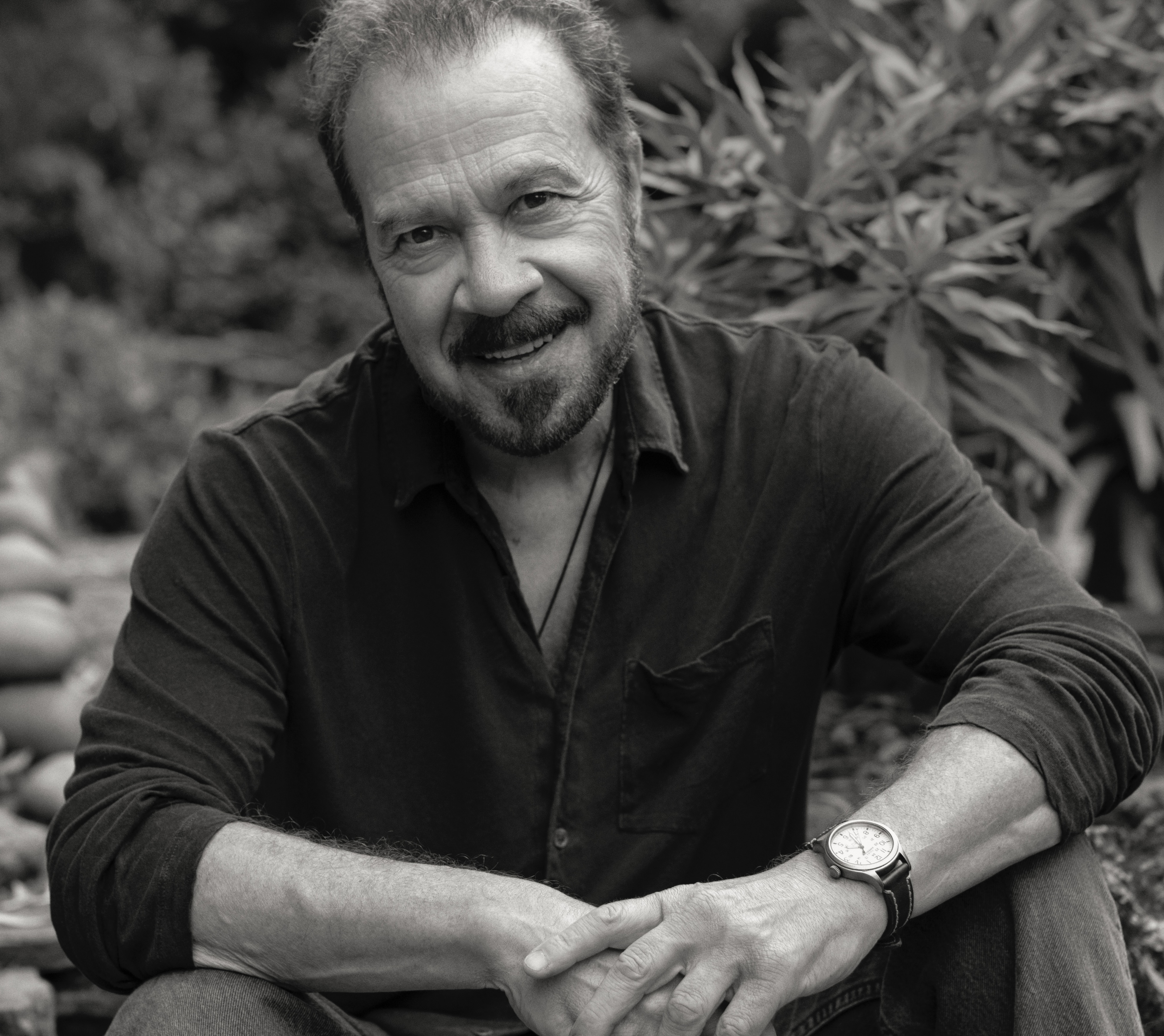
Ed Zwick

Yet, it was only days ago that Book Soup’s owners announced they were putting the store up for sale, along with the venerable Vroman’s in Pasadena. Word is that Diesel, the charming book nook in the Brentwood Mart, might soon be closing, as was the fate of my beloved Duttons in Valley Village. It’s dawning on me that the outlook for authors can feel equally dire. How is it that in a country of 334 million people, selling five thousand books is likely to get you on that week’s New York Times bestseller list?

Even that level of success requires authors to fight tooth and nail and trade every possible favor as the marketing budgets at publishers, including the big ones, continue to dwindle. My friend, Mark Harris, author of three marvelous books with a fourth on the way, likes to say, “We are all Willy Loman; we sell books one at a time.” Book coverage in major media has all but disappeared, including at the L.A. Times. And the competition! Each year, up to one million traditionally published books are released, plus two to three million self-published ones. No wonder the profit margins for bookstores are so small.

All this might be enough to put me in a eulogizing spirit if I wasn’t so astonishingly proud to now call myself an author. Still, in my darker moments, I wonder: Is it possible I’ve arrived too late at the party? Even as I try to remind myself not to feel so grim, authors continue to write (though it’s increasingly rare for it to be their only job), and so many brick-and-mortar booksellers somehow find a way to survive–even as online book sales account for almost three out of every four books sold. My childhood friends and I all thought our pal Brad Graham had lost his moorings when he left an editorial desk at the Washington Post to buy Politics & Prose–yet by all accounts it is thriving, recently expanding the mother ship and adding two annexes. I sense that same optimism in the newly minted Village Well Books & Coffee in Culver City. Even in the little town of Crested Butte, Colo. (pop. 2,000), where I’ve spent the past 30 summers, I’ve watched my son’s childhood friends, Arvin and Danica Ramgoolam, make a go of it at Townie Books (their motto, “Read Books, Drink Coffee, Fight Evil.”) These brave, reading-obsessed capitalists march on.

When I got out of my car, signing pen in hand, and entered Skylight Books—the fiercely independent, verdant Los Feliz shrine—I stood before the table of new releases, and indulged in a deep, reverential sniff. Nothing, and everything, has changed.


source https://time.com/6692402/edward-zwick-bookstores-essay/

2024年2月11日 星期日

Of Course, Taylor Swift Made It to the Super Bowl

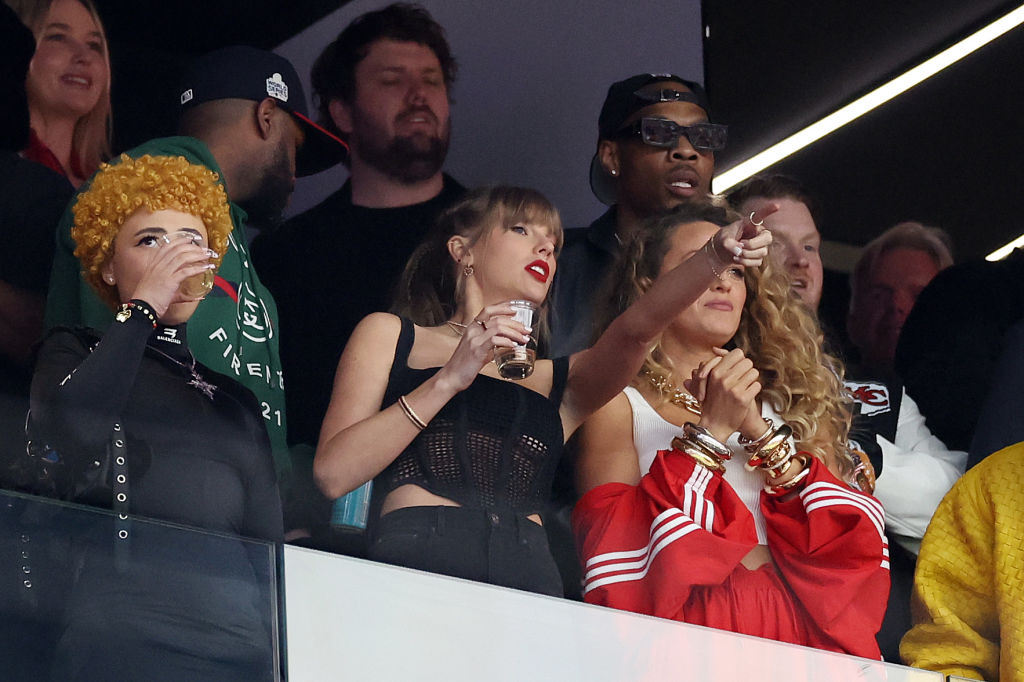
Despite any doubts that Taylor Swift would attend Super Bowl LVIII, the pop star made it to to support her boyfriend, Kansas City Chiefs tight end Travis Kelce, as his team faces the San Francisco 49ers in Sunday’s game. She arrived to the Allegiant Stadium in Las Vegas with two of her friends, Ice Spice and Blake Lively. Swift had a busy week: She flew all the way to Las Vegas after performing the latest leg of the Eras Tour in Tokyo to watch the game at the Allegiant Stadium.

[time-brightcove not-tgx=”true”]

Swift began regularly appearing at the Chiefs’ games as the NFL season and her relationship with Kelce heated up last fall. Her first time attending was in September, and after the couple seemingly confirmed their relationship in November when he attended her Eras Tour in Argentina and changed the lyrics to her song “Karma.” She said, “Karma is the guy on the Chiefs, coming straight home to me,” and the two shared a kiss at the end of the show.

She has been seen attending as frequently as she can in between stops on the Eras Tour. The pop star was at the Chief’s playoff game against the Baltimore Ravens, where they became the AFC Champions, on Jan. 28. Just a few days later, Swift was in Los Angeles for the Grammys, where she won a historic Grammy, announced a new album, and caused some controversy—however, Kelce was not in attendance due to his packed Super Bowl training schedule.

The Midnights singer restarted her massively popular Eras Tour back up in Tokyo, Japan, where she performed for four days before making the trek back to the States for the big game. While fans were concerned that Swift would not have enough time to make it to the game given the 17-hour time difference and the 12-hour flight, the Embassy of Japan in Washington D.C. told USA Today that if she leaves right after her concert, “she should comfortably arrive in Las Vegas before the Super Bowl begins.” It seems like she took their advice and made it to the game on time.


source https://time.com/6693317/taylor-swift-arrives-super-bowl/

Trump’s Constitutional Bullying Is a Threat to Our Democratic Safeguards

Former President Trump Holds Campaign Rally In Conway, South Carolina

You can tell a lot about presidents from their constitutional rhetoric and actions. Presidents Abraham Lincoln and Franklin D. Roosevelt excelled in fashioning compelling visions of the Constitution and constitutional ideals. Lincoln urged his fellow Americans to act in accordance with “the better angels of our nature” rather than give into the temptation of dividing the nation irreparably, while Roosevelt assured the nation that “the only thing to fear is fear itself” and pledged a “New Deal” to restore the American dream. In 1903, President Theodore Roosevelt told Congress: “No man is above the law and no man is below, nor do we ask for any man’s permission when we require him to obey it. Obedience to the law is demanded as a right; not asked as a favor.” 

[time-brightcove not-tgx=”true”]

Donald Trump is a different story. During his four years as President, he proclaimed that he had “total authority” to do whatever he wanted to do. That he was immune from any civil or criminal process for anything he did as President, that he was entitled to defy lawful congressional subpoenas without any sanction, that he could not obstruct the law since he was the law himself, and that he had the power to pardon himself. Perhaps most egregiously, he declared that he was exercising his official powers as President when he urged a mob “to take back their country” on Jan. 6, culminating in unprecedented violence and damage at the Capitol.

In his third campaign for the presidency, Trump continues to do what he does best—bullying, boasting, lying, and promising “retribution” against his political enemies. He has vowed, in a second term, to root out “the radical left thugs that live like vermin within the confines of our country.” He has promised to prosecute President Joe Biden and has previously threatened the losing candidate in the 2016 presidential election, Hillary Clinton. Trump further argues that he is entitled to an immunity he never had as President—that he has impunity from criminal prosecution for misconduct for which he was not previously convicted and removed by Congress. In short, Trump is desperate to be above the law. 

This argument has been rejected in every court in which it has yet been made. In the 1980s, courts rejected the arguments of three judges who claimed they could not be impeached after they had been criminally prosecuted. Just last week, a three-judge panel of the U.S. Court of Appeals for the District of Columbia, in a thorough, well-reasoned opinion, rejected Trump’s claim he was entitled to immunity for criminal misconduct, even ordering the killing of his political rivals, for which he was not previously been impeached, convicted, and removed. The court rightly emphasized that “former President Trump’s stance would collapse our system of separated powers. Presidential immunity against federal indictment would mean, as to the President, that Congress could not legislate, the executive could not prosecute, and the judiciary could not review. We cannot accept that the office of the presidency places its former occupants above the law for all time thereafter.”

Trump’s argument also conflicts with the Supreme Court’s decision in 2020 while he was in office, that a sitting President may be subject to state criminal investigation. The Court said nothing about an impeachment conviction as a prerequisite for criminally investigating a President, because there is none.

The threat Trump’s constitutional ambitions pose for the rule of law manifests beyond the campaign trail. He asked his fellow partisans in the House, once they retook control in 2022, to impeach President Biden because “they did it to me.” The House Republicans, under former Speaker Kevin McCarthy and current Speaker Mike Johnson, who was an architect of Trump’s plan to overturn the 2020 presidential election, have obliged. While impeachment hearings have given Republican House members free airtime to trash the President, even some Republicans have conceded there is no evidence Biden committed any impeachable offenses.

Differences between the Republican leadership and President Biden over immigration policy are at the root of the effort to impeach Secretary of Homeland Security Alejandro Mayorkas, an attempt that fell short earlier this week, with the final tally coming to 214-216. That vote, the first of what will likely be many attempts to impeach Mayorkas, reaffirmed that policy disagreements are illegitimate grounds for impeachment. Indeed, the framers rejected including “maladministration” as a basis for impeachment in the Constitution, meaning that they rejected extending impeachment to incompetent or poor performance in office. Moreover, the first President to be impeached, Andrew Johnson, fell one vote short of conviction in the Senate based on the recognition that it was inappropriate to use the process to address Congress’ policy differences with President Johnson. As Chief Justice William Rehnquist, appointed by President Reagan, explained in his book, Grand Inquests: The Historic Impeachments of Justice Samuel Chase and President Andrew Johnson, Johnson’s acquittal clarified that “impeachment would not be a referendum on the public official’s performance in office.”

In the meantime, Republican House members’ relentless investigations into the misconduct of President Biden’s son, Hunter, are nothing more than extensions of an already discredited defense Trump raised against his first impeachment—namely that, as Vice President, Biden fired a Ukrainian prosecutor to protect his son from investigations into a company on whose board Hunter then sat. Then-Vice-President Biden was not only following President Obama’s foreign policy priorities, but he was also removing a prosecutor who was widely considered corrupt. Nothing problematic has been uncovered since, except Republican rhetoric has become increasingly over-heated.

Moreover, the House’s months-long investigations into Hunter’s legal troubles contradicts the directives of the Supreme Court. In Trump v. Mazars in 2020, the Supreme Court declared that a congressional subpoena is valid only if “it is related to, and in furtherance of, a legitimate task of the Congress.” The Court recognized that a fishing expedition was not “a valid legislative purpose.” The Court further emphasized that the House has no legitimate purpose in giving itself power over “law enforcement,” because that power belongs to the President and the Justice Department, not Congress. This has not stopped several Republican House members from engaging in wild speculation and accusations of criminal misconduct on the part of both President Biden and his son. Speaker Mike Johnson has called the Biden family “hopelessly corrupt,” though the Republicans’ own expert witness, Professor Jonthan Turley, said in the one hearing on President Biden’s possible impeachment last September that he did not “believe that the current evidence would support articles of impeachment.”  Turley, as well as moderate Republicans in the House and Senate, have said there is no evidence Secretary Mayorkas has committed any impeachable offense. 

None of that will stop Speaker Johnson from persisting to impeach Mayorkas. His starkly partisan agenda is evident from his urging the impeachment of Mayorkas rather than supporting the bipartisan bill negotiated in the Senate to bolster security at our southern border. His priorities are seemingly to try and damage Biden, rather than solving the border crisis.

Perhaps Trump and his supporters’ most dangerous constitutional declaration has been in response to the controversy over section 3 of the 14th amendment, the meaning of which was at the heart of a Supreme Court argument this past Thursday. Democratic members of the House and well-respected constitutional scholars contend that the section, which provides that anyone who has “engaged in insurrection” is ineligible to hold federal office, renders Trump ineligible to run for or serve again as President. Trump has predicted “bedlam in this country” and “big, big trouble” if he loses that and other cases in which he is being charged with fraud and misconduct. 

If Trump’s bellicose language is familiar, it is because it should be. His fluency in making threats of violence was nowhere more on display than Jan. 6. Trump encouraged his supporters “to fight back” and “to take back their country,” then urged them to march to Congress. By now, most of us have seen the videos of those people damaging the building and vowing to kill then-Speaker Nancy Pelosi and then-Vice-President Mike Pence.

It is hard to imagine a more dangerous (and flawed) claim than that fear of violence should trump (no pun intended) the rule of law. Congress did not allow the violence on Jan. 6 to prevent it from certifying the outcome of the 2020 presidential election later that same day. Nor did the Supreme Court allow threats of violence to dissuade it from deciding important constitutional decisions during the Civil War and both world wars. Threats of violence did not dissuade the Court from striking down state-mandated segregation of the races in public schools. Nor have such threats led lower federal courts to reject Trump’s most outlandish claims. 

As, for instance, did the Federal Court of Appeals in dismissing Trump’s claim of immunity from any criminal prosecution for misconduct for which he had not been previously impeached, convicted, and removed from office. The Supreme Court, based on oral arguments on Thursday of this week, appears prepared to rule in Trump’s favor in his lawsuit challenging state officials taking his name off the ballot in the Republican primaries for President.

Regardless of how the court rules on Trump’s lawsuit challenging his removal from the ballot in Colorado, it is worth remembering that, at the end of Trump’s second impeachment trial, even Mitch McConnell, Republican leader in the Senate, condemned Trump’s actions in inciting supporters to storm the Capitol. Indeed, Trump’s counsel conceded in his oral argument before the Supreme Court this week and characterized the events on Jan. 6 as a “shameful, violent riot.

In 1776, Thomas Paine told the world that, in the free republic which America aspired to become, “the law is king.” The Constitution made good on that proclamation in ensuring that, in this country, no one was above the law. But Trump and his allies will no doubt continue to challenge that principle in the weeks and months ahead. Trump has recently suggested he will be too busy making America great again to wreak revenge on his political enemies. That off-hand comment did not last long, as Trump, flush from winning political primaries in Iowa and New Hampshire, has returned to making outlandish promises of vengeance against anyone who disagrees with him. Next fall’s election, even more than the last, will test whether the Constitution and its democratic safeguards, not revenge or threats of violence, will be as the Constitution says, “the supreme law of the land.” 


source https://time.com/6693684/donald-trump-constitutional-bullying-democracy-threat-president-lawsuit/

من هشت سال گروگان ایران بودم. آیا دوستانم از بمباران اسرائیل جان سالم به در بردند؟

Read this story in English here نمازی گروگان سابق آمریکایی در ایران است و اکنون عضو هیئت مشاوران ابتکار آزادی برای زندانیان سیاسی در...