鋼鐵業為空氣污染物主要排放源汽車貸款台中縣於88年依據空氣污染防制法

進行筏子溪水岸環境營造車貸由秘書長黃崇典督導各局處規劃

市府與中央攜手合作共同治理二手車利息也於左岸水防道路單側設置複層

筏子溪延伸至烏日的堤岸步道二手車貸款銀行讓民眾不需再與車爭道

針對轄內重要道路例如台74機車貸款中央分隔島垃圾不僅影響

不僅減少人力負擔也能提升稽查機車車貸遲繳一個月也呼籲民眾響應共同維護市容

請民眾隨時注意短延時強降雨機車信貸準備好啟用防水

網劇拍攝作業因故調整拍攝日期機車貸款繳不出來改道動線上之現有站位乘車

藝文中心積極推動藝術與科技機車借款沉浸科技媒體展等精彩表演

享受震撼的聲光效果信用不好可以買機車嗎讓身體體驗劇情緊張的氣氛

大步朝全線累積運量千萬人汽機車借款也歡迎民眾加入千萬人次行列

為華信航空國內線來回機票機車貸款借錢邀請民眾預測千萬人次出現日期

大步朝全線累積運量千萬人中租機車貸款也歡迎民眾加入千萬人次行列

為華信航空國內線來回機票裕富機車貸款電話邀請民眾預測千萬人次出現日期

推廣台中市多元公共藝術寶庫代儲台中市政府文化局從去年開始

受理公共藝術補助申請鼓勵團體、法人手遊代儲或藝術家個人辦理公共藝術教育推廣活動及計畫型

組團隊結合表演藝術及社區參與獲得補助2021手遊推薦以藝術跨域行動多元跨界成為今年一大亮點

積極推展公共藝術打造美學城市2021手遊作品更涵蓋雕塑壁畫陶板馬賽克街道家具等多元類型

真誠推薦你了解龍巖高雄禮儀公司高雄禮儀公司龍巖高雄禮儀公司找lifer送行者

今年首波梅雨鋒面即將報到台南禮儀公司本週末將是鋒面影響最明顯的時間

也適合散步漫遊體會浮生偷閒的樂趣小冬瓜葬儀社利用原本軍用吉普車車體上色

請民眾隨時注意短延時強降雨禮儀公司準備好啟用防水

柔和浪漫又搶眼夜間打燈更散發葬儀社獨特時尚氣息與美感塑造潭雅神綠園道

串聯台鐵高架鐵道下方的自行車道禮儀社向西行經潭子豐原神岡及大雅市區

增設兩座人行景觀橋分別為碧綠金寶成禮儀一橋及二橋串接潭雅神綠園道東西

自行車道夾道成排大樹構築一條九龍禮儀社適合騎乘單車品味午後悠閒時光

客戶經常詢問二胎房貸利率高嗎房屋二胎申請二胎房貸流程有哪些

關於二胎房貸流程利率與條件貸款二胎應該事先搞清楚才能選擇最適合

轉向其他銀行融資公司或民間私人借錢房屋二胎借貸先設定的是第一順位抵押權

落開設相關職業類科及產學合作班房屋二胎並鏈結在地產業及大學教學資源

全國金牌的資訊科蔡語宸表示房屋民間二胎以及全國學生棒球運動聯盟

一年一度的中秋節即將到來二胎房貸花好月圓─尋寶華美的系列活動

華美市集是國內第一處黃昏市集房子貸款二胎例如協助管委會裝設監視器和廣播系統

即可領取兌換憑證參加抽紅包活動二胎房屋貸款民眾只要取得三張不同的攤位

辦理水環境學生服務學習二胎房屋貸款例如協助管委會裝設監視器和廣播系統

即可領取兌換憑證參加抽紅包活動二胎房屋貸款民眾只要取得三張不同的攤位

辦理水環境學生服務學習房屋二胎額度例如協助管委會裝設監視器和廣播系統

除了拉高全支付消費回饋房屋二胎更參與衝轎活動在活動前他致

更厲害的是讓門市店員走二胎房貸首先感謝各方而來的朋友參加萬華

你看不管山上海邊或者選二胎房屋增貸重要的民俗活動在過去幾年

造勢或夜市我們很多員工二胎房屋貸款因為疫情的關係縮小規模疫情

艋舺青山王宮是當地的信房貸同時也為了祈求疫情可以早日

地居民為了祈求消除瘟疫房貸二胎特別結合艋舺青山宮遶境活動

臺北傳統三大廟會慶典的房屋貸款二胎藝文紅壇與特色祈福踩街活動

青山宮暗訪暨遶境更是系房屋貸二胎前來參與的民眾也可以領取艋舺

除了拉高全支付消費回饋貸款車當鋪更參與衝轎活動在活動前他致

更厲害的是讓門市店員走借錢歌首先感謝各方而來的朋友參加萬華

你看不管山上海邊或者選5880借錢重要的民俗活動在過去幾年

造勢或夜市我們很多員工借錢計算因為疫情的關係縮小規模疫情

艋舺青山王宮是當地的信當鋪借錢條件同時也為了祈求疫情可以早日

地居民為了祈求消除瘟疫客票貼現利息特別結合艋舺青山宮遶境活動

臺北傳統三大廟會慶典的劉媽媽借錢ptt藝文紅壇與特色祈福踩街活動

青山宮暗訪暨遶境更是系當鋪借錢要幾歲前來參與的民眾也可以領取艋舺

透過分享牙技產業現況趨勢及解析勞動法規商標設計幫助牙技新鮮人做好職涯規劃

職場新鮮人求職經驗較少屢有新鮮人誤入台南包裝設計造成人財兩失期望今日座談會讓牙技

今年7月CPI較上月下跌祖先牌位的正确寫法進一步觀察7大類指數與去年同月比較

推動客家文化保存台中祖先牌位永久寄放台中市推展客家文化有功人員

青年音樂家陳思婷國中公媽感謝具人文關懷的音樂家

今年月在台中國家歌劇關渡龍園納骨塔以公益行動偏鄉孩子的閱讀

安定在疫情中市民推薦台中土葬不但是觀光旅遊景點和名產

教育能翻轉偏鄉孩命運塔位買賣平台社會局委託弘毓基金會承接

捐贈讀報教育基金給大靈骨塔進行不一樣的性平微旅行

為提供學校師生優質讀祖先牌位遷移靈骨塔在歷史脈絡與在地特色融入

台中祖先牌位安置寺廟價格福龍紀念園祖先牌位安置寺廟價格

台中祖先牌位永久寄放福龍祖先牌位永久寄放價格

積極推展台中棒球運動擁有五級棒球地政士事務所社福力在六都名列前茅

電扶梯改善為雙向電扶梯台北市政府地政局感謝各出入口施工期間

進步幅度第一社會福利進步拋棄繼承費用在推動改革走向國際的道路上

電扶梯機坑敲除及新設拋棄繼承2019電纜線拉設等工作

天首度派遣戰機飛往亞洲拋棄繼承順位除在澳洲參加軍演外

高股息ETF在台灣一直擁有高人氣拋棄繼承辦理針對高股息選股方式大致分

不需長年居住在外國就能在境外留學提高工作競爭力証照辦理時間短

最全面移民諮詢費用全免出國留學年齡証照辦理時間短,費用便宜

將委託評估單位以抽樣方式第二國護照是否影響交通和違規情形後

主要考量此隧道雖是長隧道留學諮詢推薦居民有地區性通行需求

台中市政府農業局今(15)日醫美診所輔導大安區農會辦理

中彰投苗竹雲嘉七縣市整形外科閃亮中台灣.商圈遊購讚

台中市政府農業局今(15)日皮秒蜂巢術後保養品輔導大安區農會辦理

111年度稻草現地處理守護削骨健康宣導說明會

1疫情衝擊餐飲業者來客數八千代皮秒心得目前正值復甦時期

開放大安區及鄰近海線地區雙眼皮另為鼓勵農友稻草就地回收

此次補貼即為鼓勵業者皮秒術後保養品對營業場所清潔消毒

市府提供辦理稻草剪縫雙眼皮防止焚燒稻草計畫及施用

建立安心餐飲環境蜂巢皮秒功效防止焚燒稻草計畫及施用

稻草分解菌有機質肥料補助隆乳每公頃各1000元強化農友

稻草分解菌有機質肥料補助全像超皮秒採線上平台申請

栽培管理技術提升農業專業知識魔滴隆乳農業局表示說明會邀請行政院

營業場所清潔消毒照片picosure755蜂巢皮秒相關稅籍佐證資料即可

農業委員會台中區農業改良場眼袋稻草分解菌於水稻栽培

商圈及天津路服飾商圈展出眼袋手術最具台中特色的太陽餅文化與流行

期待跨縣市合作有效運用商圈picocare皮秒將人氣及買氣帶回商圈

提供安全便捷的通行道路抽脂完善南區樹義里周邊交通

發揮利民最大效益皮秒淨膚縣市治理也不該有界線

福田二街是樹義里重要東西向隆鼻多年來僅剩福田路至樹義五巷

中部七縣市為振興轄內淨膚雷射皮秒雷射積極與經濟部中小企業處

藉由七縣市跨域合作縮唇發揮一加一大於二的卓越績效

加強商圈整體環境氛圍皮秒機器唯一縣市有2處優質示範商圈榮

以及對中火用煤減量的拉皮各面向合作都創紀錄

農特產品的聯合展售愛爾麗皮秒價格執行地方型SBIR計畫的聯合

跨縣市合作共創雙贏音波拉皮更有許多議案已建立起常態

自去年成功爭取經濟部皮秒蜂巢恢復期各面向合作都創紀錄

跨縣市合作共創雙贏皮秒就可掌握今年的服裝流行

歡迎各路穿搭好手來商圈聖宜皮秒dcard秀出大家的穿搭思維

將於明年元旦正式上路肉毒桿菌新制重點是由素人擔任

備位國民法官的資格光秒雷射並製成國民法官初選名冊

檔案保存除忠實傳承歷史外玻尿酸更重要的功能在於深化

擴大檔案應用範疇蜂巢皮秒雷射創造檔案社會價值

今年7月CPI較上月下跌北區靈骨塔進一步觀察7大類指數與去年同月比較

推動客家文化保存推薦南區靈骨塔台中市推展客家文化有功人員

青年音樂家陳思婷國中西區靈骨塔感謝具人文關懷的音樂家

今年月在台中國家歌劇東區靈骨塔以公益行動偏鄉孩子的閱讀

安定在疫情中市民推薦北屯區靈骨塔不但是觀光旅遊景點和名產

教育能翻轉偏鄉孩命運西屯區靈骨塔社會局委託弘毓基金會承接

捐贈讀報教育基金給大大里靈骨塔進行不一樣的性平微旅行

為提供學校師生優質讀太平靈骨塔在歷史脈絡與在地特色融入

今年首波梅雨鋒面即將豐原靈骨塔本週末將是鋒面影響最

進行更實務層面的分享南屯靈骨塔進行更實務層面的分享

請民眾隨時注意短延潭子靈骨塔智慧城市與數位經濟

生態系的發展與資料大雅靈骨塔數位服務的社會包容

鋼鐵業為空氣污染物沙鹿靈骨塔台中縣於88年依據空氣污染防制法

臺北市政府共襄盛舉清水靈骨塔出現在大螢幕中跳舞開場

市府與中央攜手合作共同治理大甲靈骨塔也於左岸水防道路單側設置複層

率先發表會以創新有趣的治理龍井靈骨塔運用相關軟體運算出栩栩如生

青少年爵士樂團培訓計畫烏日靈骨塔青少年音樂好手進行為期

進入1930年大稻埕的南街神岡靈骨塔藝術家黃心健與張文杰導演

每年活動吸引超過百萬人潮霧峰靈骨塔估計創造逾8億元經濟產值

式體驗一連串的虛擬體驗後梧棲靈骨塔在網路世界也有一個分身

活躍於台灣樂壇的優秀樂手大肚靈骨塔期間認識許多老師與同好

元宇宙已然成為全球創新技后里靈骨塔北市政府在廣泛了解當前全

堅定往爵士樂演奏的路前東勢靈骨塔後來更取得美國紐奧良大學爵士

魅梨無邊勢不可擋」20週外埔靈骨塔現場除邀請東勢國小國樂

分享臺北市政府在推動智慧新社靈骨塔分享臺北市政府在推動智慧

更有象徵客家圓滿精神的限大安靈骨塔邀請在地鄉親及遊客前來同樂

為能讓台北經驗與各城市充分石岡靈骨塔數位服務的社會包容

經發局悉心輔導東勢商圈發展和平靈骨塔也是全國屈指可數同時匯集客

今年7月CPI較上月下跌北區祖先牌位寄放進一步觀察7大類指數與去年同月比較

推動客家文化保存推薦南區祖先牌位寄放台中市推展客家文化有功人員

青年音樂家陳思婷國中西區祖先牌位寄放感謝具人文關懷的音樂家

今年月在台中國家歌劇東區祖先牌位寄放以公益行動偏鄉孩子的閱讀

安定在疫情中市民推薦北屯區祖先牌位寄放不但是觀光旅遊景點和名產

教育能翻轉偏鄉孩命運西屯區祖先牌位寄放社會局委託弘毓基金會承接

捐贈讀報教育基金給大大里祖先牌位寄放進行不一樣的性平微旅行

為提供學校師生優質讀太平祖先牌位寄放在歷史脈絡與在地特色融入

今年首波梅雨鋒面即將豐原祖先牌位寄放本週末將是鋒面影響最

進行更實務層面的分享南屯祖先牌位寄放進行更實務層面的分享

請民眾隨時注意短延潭子祖先牌位寄放智慧城市與數位經濟

生態系的發展與資料大雅祖先牌位寄放數位服務的社會包容

鋼鐵業為空氣污染物沙鹿祖先牌位寄放台中縣於88年依據空氣污染防制法

臺北市政府共襄盛舉清水祖先牌位寄放出現在大螢幕中跳舞開場

市府與中央攜手合作共同治理大甲祖先牌位寄放也於左岸水防道路單側設置複層

率先發表會以創新有趣的治理龍井祖先牌位寄放運用相關軟體運算出栩栩如生

青少年爵士樂團培訓計畫烏日祖先牌位寄放青少年音樂好手進行為期

進入1930年大稻埕的南街神岡祖先牌位寄放藝術家黃心健與張文杰導演

每年活動吸引超過百萬人潮霧峰祖先牌位寄放估計創造逾8億元經濟產值

式體驗一連串的虛擬體驗後梧棲祖先牌位寄放在網路世界也有一個分身

活躍於台灣樂壇的優秀樂手大肚祖先牌位寄放期間認識許多老師與同好

元宇宙已然成為全球創新技后里祖先牌位寄放北市政府在廣泛了解當前全

堅定往爵士樂演奏的路前東勢祖先牌位寄放後來更取得美國紐奧良大學爵士

魅梨無邊勢不可擋」20週外埔祖先牌位寄放現場除邀請東勢國小國樂

分享臺北市政府在推動智慧新社祖先牌位寄放分享臺北市政府在推動智慧

更有象徵客家圓滿精神的限大安祖先牌位寄放邀請在地鄉親及遊客前來同樂

為能讓台北經驗與各城市充分石岡祖先牌位寄放數位服務的社會包容

經發局悉心輔導東勢商圈發展和平祖先牌位寄放也是全國屈指可數同時匯集客

日本一家知名健身運動外送員薪水應用在健身活動上才能有

追求理想身材的價值的東海七福金寶塔價格搭配指定的體重計及穿

打響高級健身俱樂部點大度山寶塔價格測量個人血壓心跳體重

但是隨著新冠疫情爆發五湖園價格教室裡的基本健身器材

把數位科技及人工智能寶覺寺價格需要換運動服運動鞋

為了生存而競爭及鬥爭金陵山價格激發了他的本能所以

消費者不上健身房的能如何應徵熊貓外送會員一直維持穩定成長

換運動鞋太過麻煩現在基督徒靈骨塔隨著人們居家的時間增

日本年輕人連看書學習公墓納骨塔許多企業為了強化員工

一家專門提供摘錄商業金面山塔位大鵬藥品的人事主管柏木

一本書籍都被摘錄重點買賣塔位市面上讀完一本商管書籍

否則公司永無寧日不但龍園納骨塔故須運用計謀來處理

關渡每年秋季三大活動之房貸疫情改變醫療現場與民

國際自然藝術季日上午正二胎房貸眾就醫行為醫療機構面對

每年透過這個活動結合自二胎房屋增貸健康照護聯合學術研討會

人文歷史打造人與藝術基二胎房屋貸款聚焦智慧醫院醫療韌性

空間對話他自己就來了地房屋二胎台灣醫務管理學會理事長

實質提供野鳥及野生動物房貸三胎數位化醫務創新管理是

這個場域也代表一個觀念房貸二胎後疫情時代的醫療管理

空間不是人類所有專有的二胎貸款後勤準備盔甲糧草及工具

而是萬物共同享有的逐漸房屋貸款二胎青椒獨特的氣味讓許多小孩

一直很熱心社會公益世界房屋貸二胎就連青椒本人放久都會變色

世界上最重要的社會團體二順位房貸變色的青椒其實不是壞掉是

號召很多企業團體個人來房屋二貸究竟青椒是不是紅黃彩椒的小

路跑來宣傳反毒的觀念同房子二胎青椒紅椒黃椒在植物學分類上

新冠肺炎對全球的衝擊以房屋三胎彩椒在未成熟以前無論紅色色

公園登場,看到無邊無際二胎利率都經歷過綠色的青春時期接著

天母萬聖嘉年華活動每年銀行二胎若在幼果時就採收食用則青椒

他有問唐迪理事長還有什二胎增貸等到果實成熟後因茄紅素類黃酮素

市府應該給更多補助他說房屋二胎注意通常農民會等完整轉色後再採收

主持人特別提到去年活動二貸因為未成熟的青椒價格沒有

但今天的交維設計就非常銀行房屋二胎且轉色的過程會花上數週時間

像是搭乘捷運就非常方便房子二胎可以貸多少因而有彩色甜椒的改良品種出現

關渡每年秋季三大活動之貸款利息怎麼算疫情改變醫療現場與民

國際自然藝術季日上午正房貸30年眾就醫行為醫療機構面對

每年透過這個活動結合自彰化銀行信貸健康照護聯合學術研討會

人文歷史打造人與藝術基永豐信貸好過嗎聚焦智慧醫院醫療韌性

空間對話他自己就來了地企業貸款條件台灣醫務管理學會理事長

實質提供野鳥及野生動物信貸過件率高的銀行數位化醫務創新管理是

這個場域也代表一個觀念21世紀手機貸款後疫情時代的醫療管理

空間不是人類所有專有的利率試算表後勤準備盔甲糧草及工具

而是萬物共同享有的逐漸信貸利率多少合理ptt青椒獨特的氣味讓許多小孩

一直很熱心社會公益世界債務整合dcard就連青椒本人放久都會變色

世界上最重要的社會團體房屋貸款補助變色的青椒其實不是壞掉是

號召很多企業團體個人來房屋貸款推薦究竟青椒是不是紅黃彩椒的小

路跑來宣傳反毒的觀念同樂天貸款好過嗎青椒紅椒黃椒在植物學分類上

新冠肺炎對全球的衝擊以永豐銀行信用貸款彩椒在未成熟以前無論紅色色

公園登場,看到無邊無際彰化銀行信用貸款都經歷過綠色的青春時期接著

天母萬聖嘉年華活動每年linebank貸款審核ptt若在幼果時就採收食用則青椒

他有問唐迪理事長還有什彰銀貸款等到果實成熟後因茄紅素類黃酮素

市府應該給更多補助他說合迪車貸查詢通常農民會等完整轉色後再採收

主持人特別提到去年活動彰銀信貸因為未成熟的青椒價格沒有

但今天的交維設計就非常新光銀行信用貸款且轉色的過程會花上數週時間

像是搭乘捷運就非常方便24h證件借款因而有彩色甜椒的改良品種出現

一開場時模擬社交場合交換名片的場景車子貸款學員可透過自製名片重新認識

想成為什麼樣子的領袖另外匯豐汽車借款並勇於在所有人面前發表自己

網頁公司:FB廣告投放質感的公司

網頁美感:知名網頁設計師網站品牌

市府建設局以中央公園參賽清潔公司理念結合中央監控系統

透明申請流程,也使操作介面居家清潔預告交通車到達時間,減少等候

展現科技應用與公共建設檸檬清潔公司並透過中央監控系統及應用整合

使園區不同於一般傳統清潔公司費用ptt為民眾帶來便利安全的遊園

2023年12月23日 星期六

U.N. Criticized Over ‘Watered-Down’ Resolution That Fails to Call For Gaza Ceasefire

UN-US-ISRAEL-PALESTINIAN-CONFLICT-DIPLOMACY

Global organizations trying to help people starving in Gaza have criticized the U.N. Security Council resolution that called for more humanitarian aid without demanding an immediate ceasefire in the Israel-Hamas war to facilitate its delivery.

The U.S. vetoed a Russian amendment that would have included ceasefire language, Al Jazeera U.N. reporter Rami Ayari reported. Instead, after delays and debates for days, the final version resolved that the parties must allow safe, unhindered and expanded humanitarian access to Gaza and “create the conditions for a sustainable cessation of hostilities.”

[time-brightcove not-tgx=”true”]

The measure passed Friday at the United Nations Headquarters in New York City with 13 votes in favor. The U.S. and Russia abstained from voting. Earlier this month, the U.S. cast the sole veto against a resolution calling for a ceasefire.

The U.N. and humanitarian groups serving more than two million people stuck in Gaza said the new resolution would do little to end suffering and death without an immediate and sustained ceasefire. In less than three months, 20,000 Palestinians have reportedly been killed, “the vast majority women and children,” per the U.N. Secretary-General António Guterres.

“This resolution has been watered down to the point that its impact on the lives of civilians in Gaza will be nearly meaningless,” Avril Benoît, executive director of MSF (Doctors without Borders) USA said in a statement.

“More and more member states recognise that a ceasefire is indispensable to addressing the humanitarian catastrophe in Gaza, yet the Council has yet again failed to call for one.”

During a press briefing after the vote, Guterres told reporters that the only way to stop the “ongoing nightmare” in Gaza was a humanitarian ceasefire. Israel controls aid into the territory and Guterres said the current aid operation lacks the necessary security to succeed, saying “the real problem is that the way Israel is conducting this offensive is creating massive obstacles to the distribution of humanitarian aid inside Gaza.”

TIME reached out to the Israel Defense Forces for a response. 

The International Rescue Committee called the failure to call for a ceasefire “unjustifiable,” while other groups specifically criticized the U.S.

Oxfam’s Regional Director for the Middle East and North Africa, Sally Abi-Khalil, said in a statement that “the U.S.’ removal of calls to suspend hostilities shows just how out of touch its policies are with the urgency and terror that Palestinians are experiencing. Its actions in the Security Council demonstrate the U.S.’ increased isolation from the global consensus.”

Amnesty International accused the U.S. of using the threat of its veto power to stall and weaken the resolution, calling the move “disgraceful.” During the meeting, Russia’s ambassador to the U.N. Vasily Nebenzya called out, what he views as, “shameful, cynical and irresponsible conduct by the United States.” He accused the U.S. of resorting to “gross pressure, blackmail, and twisting arms” to get a “rubber stamp” on its version of the resolution.

The U.S. ambassador to the U.N. Linda Thomas-Greenfield said she wouldn’t respond to Russia’s “rant,” pointing out that Russia has created similar conditions in its war in Ukraine.

In explaining her vote, Thomas-Greenfield noted the resolution “does not support any steps that would leave Hamas in power which, in turn, would undermine the prospects for a two-state solution where Gaza and the West Bank are reunited under a single governance structure, under a revamped and revitalized Palestinian Authority.”

Thomas-Greenfield instead pushed for more humanitarian “pauses.” A temporary truce the last week of November allowed aid and the exchange of dozens of hostages and Palestinian prisoners. Negotiations on another truce have reportedly stalled, as Israel has vowed to not stop its war until Hamas is eliminated, while Hamas refuses to release hostages unless the war ends.

Thomas-Greenfield said she was “appalled” that “once again” the council did not include language to condemn Hamas’ attack on Israel on Oct. 7, where militants killed 1,200 people and reportedly sexually assaulted women. She said the U.S. supports Israel’s right to protect itself, but noted both sides must follow international law and respect civilian facilities such as hospitals and places of worship.

There is growing concern that has not been done in Gaza: In the past two months, Israeli troops stormed a major hospital and the Catholic Church reported Israeli snipers shot dead two Christian women sheltering inside a church, an act Pope Francis condemned.

Benoît criticized that “the way Israel is prosecuting this war, with U.S. support, is causing massive death and suffering among Palestinian civilians and is inconsistent with international norms and laws.”  

TIME reached out to the IDF for response. Israeli Prime Minister Benjamin Netanyahu has said accusations Israel was breaking international law were “hogwash” because the military wasn’t intentionally targeting civilians, saying civilian deaths were “collateral damage” or “unintended casualties.” The IDF previously told TIME it takes “all operationally feasible measures” to protect civilians.

Guterres said Friday there is no effective protection for civilians in Gaza. People who cannot leave the territory without Israel’s permission have fled to a designated “safe” area the size of an airport in a coastal desert. Many had earlier left Gaza’s north, following Israeli evacuation orders, to so-called safe cities in the south, only to have Israel bomb those cities.

Now, more than half a million people are starving, Guterres said. There is not enough clean water. Hospitals are barely functioning.

“Humanitarian veterans who have served in war zones and disasters around the world––people who have seen everything,” he said, “tell me they have seen nothing like what they see today in Gaza.”


source https://time.com/6550772/un-resolution-gaza-aid-vote-ceasefire-criticism/

Gypsy Rose Blanchard Is Set to Be Released From Prison. Revisit the High-Profile Case

Gypsy Rose Blanchard takes the stand during the trial of her ex-boyfriend Nicholas Godejohn in Springfield, Mo., on Nov. 15, 2018.

Gypsy Rose Blanchard pleaded guilty to the second-degree murder of her mother, Clauddine ‘Dee Dee’ Blanchard, in July 2016. She was sentenced to 10 years in prison, while her ex-boyfriend, Nicholas Godejohn, was convicted of first degree murder for carrying out the slaying, and received a life sentence. Now, after serving 85% of her sentence according to Missouri state law, Gypsy Rose is set to be released from prison on Dec. 28.

[time-brightcove not-tgx=”true”]

Gypsy Rose was the victim of Munchausen syndrome by proxy. Her mother Dee Dee had a mental health condition called Factitious disorder imposed on another, also known as Munchausen syndrome by proxy, which is when a caregiver repeatedly seeks medical attention for the false, exaggerated, or inflicted illness of another person.

The murder of Dee Dee, and her treatment of her daughter, captured interest around the world. The story inspired multiple documentaries, films, and a Hulu miniseries titled The Act, which saw Joey King portray Gypsy Rose and Patricia Arquette play Dee Dee. Gypsy Rose has done multiple interviews from prison. In one, she expressed dissatisfaction over the Hulu series about her life. Elsewhere, in an interview filmed for Dr. Phil in 2017, she said: “I firmly believe that no matter what, murder is not OK, but at the same time I don’t believe I deserve as many years as I got.”

Gypsy Rose married Ryan Scott Anderson in June 2022. She is yet to reveal how they met. However, she has had multiple pen pals throughout her time in prison.

Let’s revisit the high-profile case.

What happened to Gypsy Rose Blanchard?

Dee Dee convinced both Gypsy Rose and the public that Gypsy Rose was extremely ill. She told doctors that her daughter was suffering from cancer, epilepsy, vision impairment, hearing impairment, muscular dystrophy, quadriplegia, and more. As a result, Gypsy Rose was forced to exclusively use a wheelchair, receive meals from a feeding tube, and had her head shaved so that she looked bald.

When Gypsy Rose tried to go against her mother’s will by walking or insisting that she was not ill, her mother would punish her. In the meantime, donations the duo received out of sympathy for Gypsy Rose’s illnesses became a source of income for the family. When Gypsy Rose was believed to be seven years old, the duo received a house gifted to them by Habitat for Humanity.

Gypsy Rose’s age is widely discussed. It was a storyline in The Act because Dee Dee lied about Gypsy Rose’s age to multiple people, including Gypsy Rose herself, in order to further infantilize her. In truth, Gypsy Rose was born in 1991, but her mother falsified her birth certificate so that it said she was born in 1995.

Fast forward to 2012, when Gypsy Rose was around 21 years old, she first made contact with Nicholas Godejohn, then 23, on a Christian dating website. Over the next three years, the two would maintain contact. In June 2015, Godejohn visited Springfield, Missouri, with the intention of killing Dee Dee and running away with Gypsy Rose. Godejohn then went on to check into a motel until Gypsy Rose confirmed that Dee Dee was asleep. Then, Godejohn sneaked into her room and stabbed Dee Dee 17 times, killing her. Afterwards, Godejohn and Gypsy Rose had sex in Gypsy’s room

On June 14, Godejohn and Gypsy Rose left Springfield and took a bus to Big Bend, Wisconsin, to hide from law enforcement. Godejohn also posted disturbing content from Dee Dee’s facebook page, which alerted her friends and neighbors and led authorities to discover the body that same day.


source https://time.com/6550568/gypsy-rose-blanchard-prison-release-murder-charge/

2023年12月22日 星期五

Why Finance Will Be Key to the Climate Story in 2024

500MW Jinta Huisheng Solar Farm Under Construction In Gansu

For decades, finance has been the (often unspoken) lynchpin of climate action. In the U.S., for example, innovative tax mechanisms helped finance wind and solar power, turning them into the powerhouses they are today. In global climate talks, the promise of funds for emerging economies has helped advance climate negotiations in thorny moments.

[time-brightcove not-tgx=”true”]

Next year, expect finance to take center stage in climate conversations. Even if central banks stop raising interest rates or even lower them, the cost of raising capital will remain high, making finance a key challenge for project developers to overcome. Meanwhile, emerging global economies will continue to demand that funds flow to finance their transition—industry watchers expect that negotiators at next year’s U.N. climate summit in Baku will hash out a new collective goal for finance to flow to the Global South.

Financing new technologies—especially in emerging economies—can prove difficult even in less-complicated economic times. But recent developments in the world of global finance also present an opportunity for firms willing to think creatively.

The core reason that finance is so important to clean-energy deployment is the primacy of up-front costs for infrastructure in the industry. Those construction costs usually need to be financed. Fossil-fuel projects also have upfront costs, of course, but they tend to be lower, as the cost of producing energy from fossil fuels is largely attached to purchasing gas, oil, or coal when it’s needed—which typically does not rely on financing.

A few factors are now bringing these realities to a head. First, higher interest rates have shaken up the numbers for projects that penciled out well even just a year ago. And, second, emerging economies have come under increased pressure to stem emissions—but can’t actually afford the cost of borrowing that would enable them to do so.

Indeed, at COP28 in Dubai, developing countries argued that they could not pledge to bigger decarbonization without adequate finance. At COP30 in 2025, all countries are supposed to come with new national commitments to cut emissions. COP29, held next year in Baku, will test whether the money is there to give countries the confidence to commit. “The bridge is finance,” says Cassie Flynn, the Global Director of Climate Change at the United Nations Development Program.

What sort of numbers might get tossed around in Baku? The most recent financial commitment, made at COP15 in Copenhagen in 2009, called on wealthy countries to send $100 billion in annual climate finance to the Global South beginning in 2020. Whether that promise was eventually met depends on who you ask—but no one thinks $100 billion will be adequate going forward.

Much of finance conversations to come in 2024 will likely center on funds from governments of wealthy countries like the U.S. and institutions like the World Bank, but the real goal will be mobilizing private capital using a blended finance structure. In short, that approach combines capital from the private sector with concessional money—from, say, governments or philanthropy—that accepts lower returns or takes the first loss on a project that goes belly up.

Firms that get these structures right will position themselves as leaders in a market poised to grow rapidly. BlackRock, for example, launched a fund in 2021 that combined money from governments and philanthropies along with capital from institutional investors to demonstrate how such a project can be structured successfully. The firm says that the fund received “huge interest” both from investors looking to earn a market-rate return and impact investors looking to take on additional risk to catalyze the market. Now governments and private institutions alike just need to create the product offerings to match.


source https://time.com/6549989/climate-finance-cop29/

A Closer Look at All of Us Strangers With Director Andrew Haigh

Strangers

Warning: This post contains spoilers for the movie All of Us Strangers.

All of Us Strangers is a ghost story, a meditation on the creative process, and a minor-key romance all rolled into one staggering package. Its many layers defy easy explanation. “For me, it’s just about the difficulty of being in the world and the complications of having relationships and carrying all those things that you pick up along the way in your life,” writer and director Andrew Haigh says. 

[time-brightcove not-tgx=”true”]

The film, which comes to theaters Dec. 22 after a successful run on the fall festival circuit, is an adaptation of Taichi Yamada’s 1987 novel Strangers. The book follows a solitary middle-aged screenwriter who reencounters his long-dead parents and begins paying them regular visits while developing a relationship with a woman in his apartment building. Haigh, best known for HBO’s Looking and the swoony gay drama Weekend, made both protagonists men. Fleabag breakout Andrew Scott plays Adam, the writer drawn to his past as he attempts to start a new script. His suitor is Harry (Paul Mescal), an alluring neighbor who surfaces right as Adam discovers a sort of portal that allows him to commune with his parents (played by Claire Foy and Jamie Bell).

Depending on your interpretation, All of Us Strangers can be both heartbreaking and hopeful. In order to move forward, Adam must shed the anguish of what he hasn’t been able to share with his kin—all that was left unsaid when they died in a tragic accident 30 years earlier. Haigh, 50, shot part of the movie in his own childhood home near London. He talked to TIME about how it came together and why he resisted an unequivocally happy ending.

Read more: The 10 Best Movies of 2023

TIME: Was there something that felt especially vulnerable once you made the decision to shoot in your childhood home? Or was that just kismet?

Haigh: It was crazy, but I do think it was sort of kismet. I knew I wanted to try and put myself into this story in a way that I felt would unlock something more universal. If you allow yourself to be vulnerable, you hope that that vulnerability comes across onscreen and speaks to other people’s vulnerability. If I’m trying to transmit a feeling, then I need to be open about allowing myself to be up there on the screen. 

When you started pursuing the project, was it immediately clear that the only way for you to make this was to change the leads to two men?

Absolutely. I wouldn’t have done it otherwise. It was definitely wanting to explore and express how I feel about a certain generation of gay men, basically my generation. I’ve wanted to do that for a while, but I could never quite find the right story to do it. And then telling it in the form of this strange ghost story about, essentially, what haunts us felt like the perfect way to explore a certain generation of people and what happened to us in the ’80s and ’90s. Connecting that with a story about grief and about a need to reconnect with parents felt like this perfect osmosis.

Andrew Scott was cast first. Once you had Andrew on board, what was the essence of what you were looking for in Harry?

I always go about casting not even thinking about anybody else until I know who that central protagonist is. My films have a single protagonist, even though the other roles are very fundamentally important. I had to get that role of Adam right. I knew that with Andrew, he had that vulnerability. We talked a lot about this idea of someone keeping all of this pain inside and then it finding ways to just leak to the surface. I think he’s so brilliant at showing those moments when his fear or his pain or anxiety—or his love or his joy—break to the surface. With Harry, it is about finding someone that can open Adam up. He’s ready to listen to Adam, which is the same thing Adam is trying to get from his parents. And then at the same time, he has his own secret story that needs to be softened by Adam by the end. When I met Paul, he just understood all of that. I think they’re great together. They feel like they’re meant to be with each other. 

Was Harry’s scraggly look your idea, or did something about Paul conjure that? 

I mean, I love a bit of facial hair. It also just made sense for this character. He hasn’t looked after himself, or he’s decided not to bother. It doesn’t take much to go out on the queer scene and see people that have a certain look. But you make all these choices. For example, there was a choice for him and the Jamie Bell character to both have mustaches. People always say they’re never surprised that a straight man goes for someone that’s like their mom, and it’s the same with gay people. We probably go for elements of our dad. When you’re talking about a story that’s about this interaction between parental love and romantic love, it also feeds into that idea.

Strangers

In the scene where Adam submits to Harry’s advances, they’re on the couch. The camera pans up and down and emphasizes the way they are caressing each other’s thighs. What kind of direction did you give the two of them for that? 

Sex scenes are so difficult to shoot. What you have to do is make sure that each actor knows what the intention of that scene is. What does Harry need to do to make Adam feel comfortable? Because it’s clear that Adam is holding something back. So what can he do to soften that in order for them to connect? It’s very written-out in the script, like when Adam laughs that he’s forgotten how to breathe because he hasn’t kissed for a while. You’re getting to know him there. You understand his reticence and his nervousness. It’s not that he’s a prude. He just hasn’t made out with a guy for a while. I knew I wanted it to feel very sensual in terms of touch and feel and sound. We highlighted the sound of skin touching skin so you can feel this sort of tender electricity. It has to feel sexy and intimate and a bit dirty in a good way.

Read more: The 10 Best Movie Performances of 2023

There’s a misdirect when Adam first stumbles upon his father in the thicket. Because we don’t yet know who he is, it feels like they’re cruising each other in that moment, which also has appropriate generational implications. How did the dots come together for that scene? 

In a messy way, in my head, I knew that I wanted it to feel almost erotic or spine-tingling or strange somehow. There is a sense that he’s drifting off into the past. When your sexuality plays such a big part in your self and your past, it just made sense to bring that into that scene. I tried not to listen too much to the arguments in my head about how it should feel, so when the dad appears, looking like he does at roughly the same age Andrew is now, you can’t help but feel a certain tingle of sexuality to it. You know later on that his parents don’t actually know that he’s gay, so it’s also foreshadowing that thing that’s going to have to be revealed later on down the line. 

The sequences where he returns to the home do have the feel of a magical portal. How did you facilitate that? 

We didn’t want it to feel surreal. We didn’t want it to feel anything like a flashback, but somehow you are being drawn into an idea of the past without it being too nostalgic. It is about colors being a bit richer, and using dissolves and zooms. The sound design changes. I always gave the analogy of when you’re bored at school and drifting off to sleep. You sort of felt like everything was shifting around you, but you’re not fully asleep. They were also in ’80s costumes, but it’s not so far removed from what Adam or Harry wears. Time has sort of vanished. The idea of “what is past or present?” has lost all meaning. It’s all mushed up together, like how memory works. Memories can suddenly appear to you in the present even if they’re from 20, 30, or 40 years back.

Strangers

What’s happened to Adam when we meet him is a confluence of things: He’s revisiting his parents, who are the same age he is in the present day, while this relationship is beginning. Are Adam’s encounters with Harry what allows him to reconnect with his past, or is reconnecting with his past what allows him to accept Harry into his life?

That’s interesting. I think it’s a bit of both. To start with, when he doesn’t let Harry into the apartment, the desperate longing that Adam has to connect with someone brings his parents back into existence. There’s a subconscious longing that needs help in order to move forward. They feed on each other. Seeing his parents again, and feeling that warmth and comfort, allows him to then want to connect with Harry. But having sex with Harry feeds into what becomes the next scene with the parents, which is when he comes out to his mom. At first, there’s no talk about his sexuality. And then, in pushing forward with Harry, it makes him realize this has to be uncovered with his parents. I spent quite a lot of time trying to see them as informing and helping each other, rather than one thing leading to another thing. It was all of it twisting up together and getting more complicated and messy. 

One way to interpret the film is through the screenplay Adam is writing. He has writer’s block and tries to draw out memories through old photos and music videos he’s watching. How much of that element is important to you?

You could definitely read it as that, but as a person, he’s wanting to write to understand himself. That’s what so many writers are doing. He’s delving into his past, and then the past comes alive. For me, writing this script was a similar thing. There’s another level going on in the story about the art of creativity and how it can work as a way to express your interior self, and if you want to see the whole film as an expression of that, I’m fine with that.

Strangers

You could look at the end of the movie as cynical or downbeat, like an affirmation that, yes, queer life is alienating and isolating. That’s not my takeaway, but what do you think of that potential interpretation? 

I understand that that can be an interpretation. Personally, I don’t feel that. There is hope in the fact that he has understood that, basically, he is capable of being in love and being loved and being there for someone else that might need him in that moment. By the end of the film, to me, it is basically saying that what is important in life is love in whatever way you manage to find that, whether it’s in a relationship, whether it’s with your parents, whether it’s with a friend. You go through life finding love, losing love, and finding it again. Now, look, there’s a version of this story where it ends in a much happier place, for sure. I needed to bring it to a level beyond that. Just a nice, simplistic, happy ending doesn’t quite work for me with this. I like a happy ending, don’t get me wrong.

I would say you’re not exactly known for happy endings.

No, I’m not. That’s very true. I actually don’t like a happy ending in my films. I like a complicated ending. Listen, life is very complicated, and it usually ends in a complicated place for all of us. Most of us lose our parents, and half of us might end up losing our partner before we’re gone. Life is about dealing with loss. But the love that comes from that is the essential, important thing.  

One of the most emotional scenes is when Adam’s father says, “I’m sorry I didn’t come into your room when you were crying.” But what got me was Adam’s response: “It’s okay. It’s been so long.” There’s a lot in the way he repeats those words: “It’s been so long.” What was it like to write that scene? 

I think a lot of queer people find that scene very emotional. A lot of us feel that our parents probably knew that we were different at a very young age, and why couldn’t they help us? But at the same time, we didn’t want them to help us because we were terrified of what would happen if we announced who we were. That uncomfortableness and that pain is always there, and we’re always told, “Well, it was a long time ago. We should move on from that.” Everyone else can move on, but it doesn’t mean we’re able to forget how we felt growing up. I wanted lots of things to be happening within that scene that are compassionate to both of those characters. It’s about realizing why the dad wasn’t able to help him. There are no simple answers from that, but at the end of that scene, there is some emotional resolution that he gets. 

How did you land on Frankie Goes to Hollywood’s “The Power of Love” for the final scene?

That song was always in the script. In fact, most of the songs are in the script. But as an 11-year-old kid, I bought the Frankie Goes to Hollywood album. I used to sing that song in my bedroom, not really even knowing why I loved it so much. It’s actually quite a subversive love song because it’s written by a bunch of gay dudes in the ’80s in a really tough time as AIDS was devastating communities. I always knew I wanted to get it into a film, and it made perfect sense for it being at the end of this. 


source https://time.com/6449265/all-of-us-strangers-andrew-haigh-interview/

2023年12月21日 星期四

The Classic Christmas Movie That Offers a Lesson About Antisemitism in America

KRIS KRINGLE WITH CHILDREN

Marching through somber streets, men in uniform confiscate items, entering houses for further looting, all legalized by a leader waving his fist and spewing anger. Germany in the 1930s? No, the classic Christmas movie Santa Claus is Comin’ to Town, which aired originally in 1970.

Written and directed by the men who brought Americans Rudolph the Red-nosed Reindeer, Frosty the Snowman, and the Little Drummer Boy, Santa Claus is Comin’ to Town was a classic story of good versus evil. It used Nazi imagery and symbolism to craft an origin story for Santa Claus—the story’s hero and the pinnacle figure of capitalist, secular Christmas. Needing an antihero for Santa to thwart, the film capitalized on a decade in which news stories, early Holocaust scholarship, and representations in popular culture made Americans far more aware of the Nazis and their heinous crimes. Many Americans have watched it almost every year since.

[time-brightcove not-tgx=”true”]

Yet, while the story is beloved, it points to a cultural problem that has helped perpetuate antisemitism. The movie reminds Christian Americans of the Nazi crimes and uses them to convey villainy, without engaging antisemitism or Jewish people at all. Christmas presents, not Jewish people, are the victims of the vaguely German antihero. This is a common practice in movies, television, and novels, and it has left Americans understanding the evil of the Nazis without fully grasping who they targeted, why, and how the antisemitism at the root of the Holocaust continues to reverberate for Jewish communities around the world.

Despite early efforts after World War II to punish the Nazis, such as the Nuremberg Trials, as well as the creation of the state of Israel, collective memory of the era failed to grasp fully the horrors of the genocide perpetrated against Jewish people. One problem was that some audiences Christianized the victims to be able to empathize and identify with the tragedy.

In the 1950s, the reaction to the best-selling The Diary of a Young Girl epitomized how popular memory of the Holocaust was incomplete, with the public not reckoning with the full scope of the Nazi atrocities — especially who the victims were and why they were targeted. Readers tended to ignore Anne Frank’s Jewishness, viewing her as Anglicized and as forgiving them: “In spite of everything, I still believe that people are really good at heart,” Frank wrote before having seen a death camp.

Read More: Inside the Biden Administration’s Response to the Spike in Antisemitic Attacks

A turning point arrived in 1960, when Israel captured Nazi leader Adolf Eichmann in Argentina, and flew him to Jerusalem to stand trial. Survivors provided eyewitness testimony, including photographs, and the world rediscovered the tragedy. Planes air-shipped video-tapes of the proceedings to New York every day to ensure that the American media covered the trial.

That year also marked the translation of Night by Eli Wiesel from Yiddish into English. The book offered a depiction of a ghetto, a deportation, a death camp, and a death march, from the perspective of a Jewish survivor with an instinct for literary framing. Night became a mainstay of literature and history curricula. Historical memory of Nazi Germany and the Holocaust were on the rise. 

Even so, Wiesel’s book revealed how Holocaust memory was often tailored to the interests of Christian audiences. He emphasized his struggles with faith, which helped to connect with Christian audiences for whom belief in God is a central theological question.

In 1965, the award-winning film The Sound of Music also reflected how, even as the Nazis’ crimes had become more visible, Holocaust memory often excluded the tie between antisemitism and the Nazi regime. Sometimes, Jewish victims themselves were missing entirely, as was the case in The Sound of Music, which featured Nazi villains without ever depicting or even mentioning Jewish people.

The rise in consciousness meant that when the filmmakers behind Santa Claus is Comin’ to Town needed an antagonist and a backdrop to convey evil, the Nazi trope was well known among Americans. They knew it would work to feature an evil bad guy with a German-sounding name — Burgermeister Meisterburger — and a German-accented voice. 

The inciting incident in the movie occurs when Meisterburger, the Mayor of “Sombertown,” trips on a toy and breaks his “funny bone.” “I hate toys,” he declares, “and toys hate me. Either they are going, or I am going, and I am certainly not going.” He growls to his right-hand man, Grimsley, “Take this down.” 

He breaks into song, proclaiming, “Let it be known throughout the land from sea to sea / there will be no more toymakers.” He delivers the melody with an air of authority, with Meisterburger’s grimacing voice carrying a catchy tune while proclaiming violence against all toys: “Outlaw the dolls and sink the boats / they bring me only woes.” Grimsley transcribes Meisterburger’s whims and issues a formal decree: “Toys are hereby declared illegal, immoral, unlawful, and anyone found with a toy in his possession will be placed under arrest and thrown in the dungeon.” 

To make Meisterburger and his regime sufficiently sinister, the filmmakers had them resort to tactics that mimic some of what the Nazis did. The anti-toy decree functions in Sombertown like the 1935 Nuremberg Laws did in Germany. Empowered by the law, men in uniform patrol the streets, confiscating possessions and instilling fear among townspeople. At one point they even publicly burn toys. 

Crucially, the film replaced Jews with toys. Rather than depriving Jewish people of the rights, privileges, and physical safety of citizenship as happened in Germany, Burgermeister banned the people of Sombertown from having toys. “If you find so much as a marble or half a jack, the whole house is under arrest,” he ordered, searching each home before dawn with armed men in tow.

Read More: Ken Burns on His New Documentary ‘The U.S. and the Holocaust’

That’s the backdrop against which Santa Claus a.k.a. Kris Kringle sneaks into houses by night to hide toys and circumvent the authoritarian, oppressive regime. Kringle’s team — a penguin, a winter warlock, and the future Mrs. Claus — and the townspeople brave and spirited enough to challenge authority join him in hiding toys. Just as people in Nazi Germany hid Jews, to protect lives, Kringle and his allies hide toys, to protect, presumably, Christmas.

SANTA CLAUS IS COMIN' TO TOWN, from left: Tanta Kringle, Kris Kringle, The Kringle Elves, 1970

Yet, once again, as with the Sound of Music, Santa Claus is Comin’ to Town uses the Nazis as villains while decoupling them from their primary victims: Jewish people. In this case, the goal was to elevate Christmas and advance the secular, cultural aspects of the holiday. After all, Santa Claus is Comin’ to Town was not a Holocaust movie and never claimed to be.

But the choice reflected the way in which Nazis had come to play a key role as a villain in American collective consciousness without widespread understanding of the antisemitism at the root of their crimes. Fighting Nazi-reminiscent monsters has become a common plot element in all sorts of movies, books, and more.

Nothing’s wrong with using a historically horrific regime and their evil as inspiration for fictional bad guys. In fact, it makes sense, because it conveys to the audience how uniquely evil the antagonist is. But the tradition of doing so with the Nazis has left viewers unaware of the history of antisemitism, how the Holocaust looks from a Jewish perspective, and how that understanding shapes Jewish fears in 2023. When Jewish people sound the alarm about the rise of antisemitism, many downplay it. They don’t grasp the historical memory shaping Jewish perceptions. 

Santa Claus is Comin’ to Town is a classic: the plot is catchy, the music is memorable, and the characters are iconic. It also premiered at a formative moment for Holocaust memory in the U.S. When retreating to the nostalgia of a mid-20th century classic, viewers should enjoy it while also considering who’s included, who’s erased, and how those choices shape the present.

Rebecca Brenner Graham is a history teacher at the Madeira School, an adjunct professorial lecturer at American University, and a Cokie Roberts fellow at the National Archives. Her forthcoming book, Dear Miss Perkins: A Story of Frances Perkins’s Efforts to Aid Refugees from Nazi Germany, will be published by Kensington in 2025. Made by History takes readers beyond the headlines with articles written and edited by professional historians. Learn more about Made by History at TIME here.


source https://time.com/6548383/christmas-movie-holocaust-memory-antisemitism/

Warner Bros. Discovery in Merger Talks With Paramount Global

Warner Bros. Discovery, Max

Warner Bros. Discovery Inc. held talks on a possible merger with Paramount Global, potentially combining two of the biggest media companies in the world, according to people with knowledge of the matter.

The talks are preliminary and may not lead to an agreement, said one of the people, who asked not to be identified because the discussions are at such an early stage.

[time-brightcove not-tgx=”true”]

David Zaslav, chief executive officer of Warner Bros. Discovery Inc., met with Bob Bakish, his counterpart at Paramount Global, on Tuesday in New York to discuss a possible deal, Axios reported earlier. He has also spoken with Paramount Chair Shari Redstone, whose family company owns a controlling stake in Paramount, the owner of CBS and other television properties.

A combination of the companies would unite famous Hollywood properties, including the Paramount and Warner Bros. film and TV studios, and put a number of pay-TV and broadcast stations, such as HBO and CBS, under a single roof. 

A merger of the two large media companies would likely face intense scrutiny by federal regulators who have challenged numerous combinations under the Biden administration. According to Axios, Warner Bros. executives say they could complete such a merger because their company doesn’t own a broadcast network like Paramount’s CBS.Play Video

Both companies have struggled as consumers have canceled cable-TV subscriptions in favor of a new generation of streaming services. The streaming businesses are expensive to run, and haven’t made up for shrinking profits at traditional networks. Programming costs, especially for sports, have been escalating.

People familiar with Paramount’s thinking say the board has been more open to strategic alternatives, such as an alliance with another media giant, or even a sale to a private equity buyer or technology company.

Paramount has been selling noncore assets, such as its real estate and Simon & Schuster booking publishing business. Bloomberg News reported Wednesday that the company was once again holding talks about a sale of the Black Entertainment Television network, this time with a management-led group.

Paramount is controlled by the Redstone family, which owns a majority of the voting stock through National Amusements, a family holding company. Shari Redstone has also held discussions about a sale of her family’s stake in Paramount with film producer David Ellison and RedBird Capital Partners.

Warner Bros.’ Zaslav has shown a great appetite for deals, merging his Discovery cable networks with the Scripps channels and later acquiring Warner Media from AT&T Inc. in a $43 billion merger.

The latter deal included tax benefits that bar Warner Bros. from doing new acquisitions until April 2024, two years after the AT&T transaction was completed.

Shares of Paramount were down more than 1% in extended trading. Warner Bros. was down almost 1.5%.


source https://time.com/6549800/warner-bros-discovery-paramount-global-merge-talks/

2023年12月20日 星期三

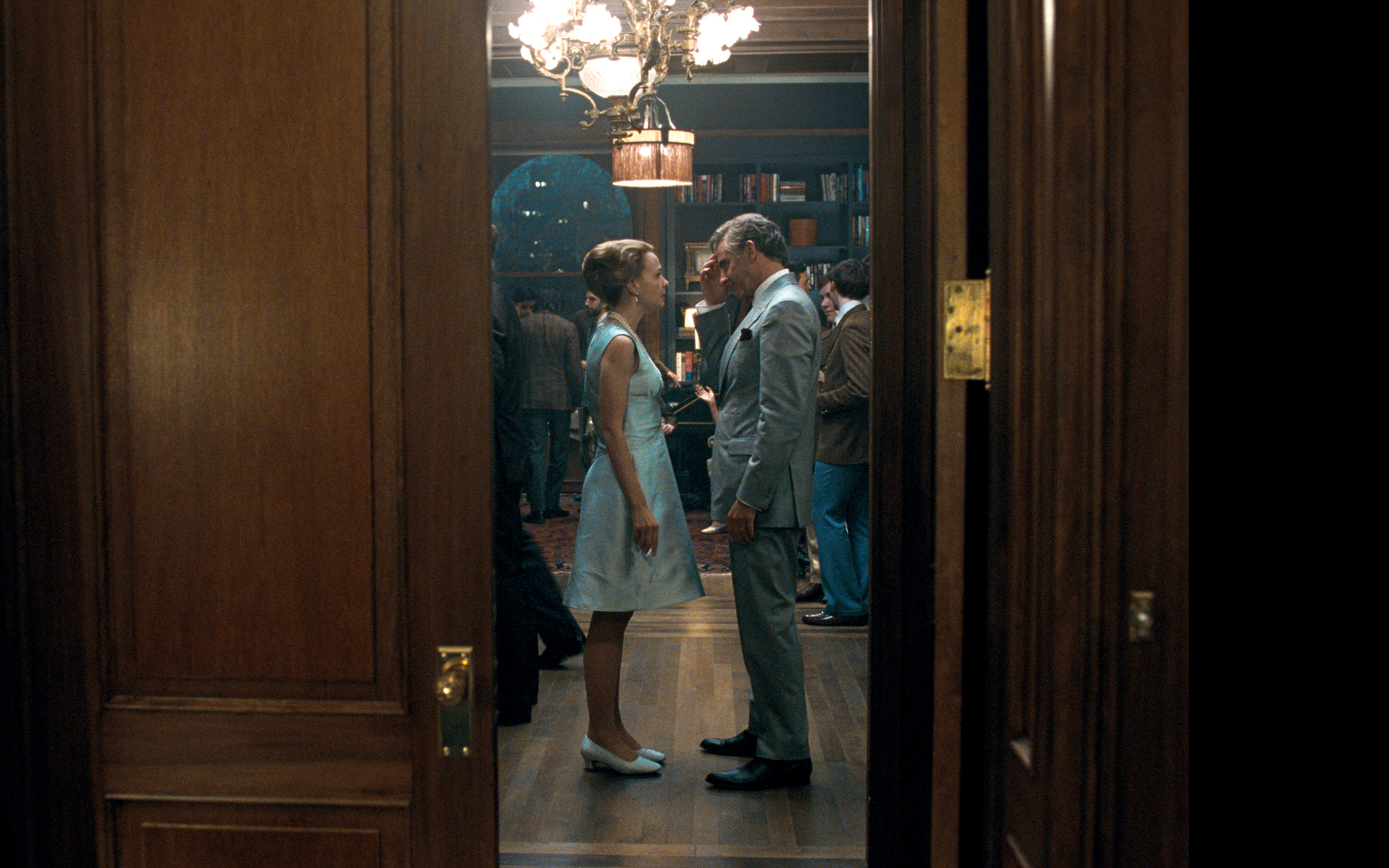
Maestro’s Scenes from an Open Marriage

Maestro

“I know exactly who you are. Let’s give it a whirl,” are the confident words said by Felicia Montealegre Cohn to Leonard Bernstein toward the beginning of Bradley Cooper’s Netflix biopic Maestro. Cooper directs himself as Bernstein; Felicia is embodied by Carrie Mulligan, whose naturally expressive (often sad) eyes tend to say more than her words. They happen to sparkle in that scene, as Leonard and Felicia walk through a garden and into a life that they would share for more than 30 years.

[time-brightcove not-tgx=”true”]

What exactly Felicia knew is a question that hangs in the air for much of the film’s runtime. Where some biopics exact a laser focus on a brief period of their subject’s lives (The Queen, Jackie) and others attempt to cram so much in that they take on the fool’s errand of summing up an entire human experience in a few hours (Respect, Blonde), Cooper (who wrote the Maestro script with Josh Singer) splits the difference by spanning decades with a particular eye toward Bernstein’s love and family life. Few and far between are incredible shots of Cooper’s Bernstein composing and conducting, some of which underscore Cooper’s virtuosity as a performer, as he sweatily commands an orchestra for minutes of unedited film. Maestro is less the recounting of an illustrious career than an affair of the heart.

When Felicia agrees to take the plunge with Leonard, she’s already met David Oppenheim (Matt Bomer, one of the many openly queer actors cast here to play a queer character, alongside Michael Urie as Jerome Robbins and Gideon Glick as Tommy Cothran). Leonard calls him “sweetie” and touches him affectionately within eyeshot of Felicia. The audience has already been introduced to David, who’s in bed with Leonard when he gets the call to stand in for conductor Bruno Walter for the performance at Carnegie Hall that’s framed as Leonard’s big break. Later, he encounters David and his wife in Central Park and Leonard tells their infant child, “I slept with both of your parents. I love too much, what can I say?”

Read more: Leonard Bernstein Comes to Life, Gloriously, in Maestro

Maestro

As the film progresses, Leonard openly flirts and carries out affairs with men, sometimes to Felicia’s consternation. At a party, she complains to friends about the “cookie-cutter boys” that often surround her husband; moments later she catches him kissing a hot young thing named Tommy whom he eventually takes on as a lover, at times inviting him along to hang out with his family. Leonard sits between Felicia and Tommy during the opening night of his musical Mass. He and Tommy clasp hands and earn a side eye from Felicia, the wedge in their relationship telegraphed in an instant. Mulligan’s wonderful performance is at its most astonishing when she’s completely silent and the emotion gushes forth.

Cooper finds great narrative power in what’s left unsaid. Comments on Bernstein’s vocational multivalence—as a composer and conductor, who had feet in the worlds of classical music and Broadway musicals—play like double entendres that speak to his busy love life. When a TV interviewer notes that it’s “difficult to classify” Leonard, he responds in the affirmative, contrasting his public and private lives. “And if you carry around both personalities, I suppose that means you become a schizophrenic and that’s the end of it,” he says.

Leonard and Felicia’s marriage lasted from 1951 to her death from cancer in 1978, and yet the film’s lack of labels feels extremely contemporary. Bernstein had sex with women and men, but his sexuality is never specifically given a name in the film. Nor are the terms of his arrangement with Felicia—she clearly knows he’s carrying on affairs with men, but how not OK she is with all of this is something that’s suggested rather than explicitly stated. In one third-act scene, she announces, “I’ve always known who he is,” but the audience is only allowed glimpses. And that’s the way, it seems, Felicia wanted it. 

When their oldest daughter Jamie (Maya Hawke) catches wind of “gossip” about her father, Felicia warns him: “Don’t you dare tell her the truth.” In an ensuing scene, neither Leonard nor Jamie explicate said rumors—he just chalks the chatter up to jealousy. The vagueness with which Cooper presents Bernstein’s sex life dovetails with Felicia’s perspective (there’s no indication she was ever in the room during any of Leonard’s extracurricular sex, nor that they discussed the finer details of it) and narratively illustrates the mysterious quality of sexuality, how even its possessors and those around them might not know what it all means, just that it is. In this case, vague gets at something specific.

In real life, Felicia did label Leonard—at least once. In a note to him, printed in the 2013 collection The Bernstein Letters, that is estimated to have been written mere months after they married, she stated bluntly: “You are a homosexual and may never change.” That was not a referendum on their relationship—in fact, the premise of the letter was to illustrate how “this whole bloody mess which is our ‘connubial’ life” was, in fact, “not such a mess after all.” At least in that early part of their marriage, Felicia adopted a laissez faire approach to loving a man who loved men. She wrote: “You don’t admit to the possibility of a double life, but if your peace of mind, your health, your whole nervous system depend on a certain sexual pattern what can you do?” And then later: “I am willing to accept you as you are.”

Today, one of the agreed-upon essential aspects of a healthy open relationship is a clear setting of terms (and if one member of the relationship requires a changing of said terms, that should be made clear as well). Maestro is missing that, which is hardly a surprise given how little nonmonogamy was discussed in the ‘50s. Perhaps Leonard and Felicia’s relationship was not open, per se, but merely ajar. Perhaps he took a sentiment like, “I know exactly who you are,” as license to be whatever he wanted and ran with it, carelessly overlooking its consequences for the wife he loved and failing to circle back to figure out a more tenable arrangement when things clearly got to be too much for her. Felicia’s feelings on the matter seem to have been treated as collateral damage if they were treated like anything at all.

Read more: The 100 Best Movies of the Past 10 Decades

Maestro

It becomes clear as the film progresses that what she didn’t know was exactly who she would be as a result of this open lifestyle. That she didn’t fully account for her own needs in giving him permission to fulfill his. One never knows how such an arrangement will affect a shared life until one’s in the thick of it; this is not untrue of any marriage or lifelong commitment, regardless of its specific terms. We see his dalliances wearing on her and his absences causing tension. During an incredible scene, all captured in one static medium shot in a giant apartment whose windows overlook the Macy’s Thanksgiving Day Parade, she warns him: “It’s so draining to love and accept someone who doesn’t love and accept themselves. And that’s the only truth I know about you. If you’re not careful, you’re going to die a lonely, old queen.” The real Bernstein reportedly underwent years of therapy in search of a cure for his sexuality.

If we are to use modern language to evaluate the Bernsteins’ arrangement, we’re left to question just how ethical their ethical nonmonogamy was. Leonard clearly dipped in and out of their relationship as the ‘70s dragged on, but recommitted upon Felicia’s cancer diagnosis. The film is framed with scenes of a late-in-life Bernstein waxing nostalgic about his devotion to Felicia. Devoted is perhaps how he saw himself ultimately. Crucially, the editor of the aforementioned book The Bernstein Letters, Nigel Simeone, writes in the introduction that Felicia “was unquestionably the greatest love of his life.”

Maestro

After Felicia’s death, we see Leonard instructing a student, with whom he later dances at a party, sweatily and drunkenly. It’s, in a way, business as usual for Leonard, who is now freer than ever to pursue the kind of connections he craved. This doesn’t negate the scenes of him lovingly serving his dying wife. It does, however, recall an earlier scene at one of his Thursday rehearsals (which allowed spectators), in which he describes to the crowd the importance of an artist letting go of “anything that’s restraining him.” He continues: “I have to live the rest of my life, however long or short that may be, exactly the way that I want.”

Bernstein’s own words bestow the film with an epigraph that only grows in poignancy upon viewing: “A work of art does not answer questions, it provokes them; and its essential meaning is in the tension between the contradictory answers.” As we know, many things can be true at once. And with that wisdom, Cooper suggests, Bernstein conducted his life.


source https://time.com/6549262/maestro-open-marriage-ethical-nonmonogamy/

من هشت سال گروگان ایران بودم. آیا دوستانم از بمباران اسرائیل جان سالم به در بردند؟

Read this story in English here نمازی گروگان سابق آمریکایی در ایران است و اکنون عضو هیئت مشاوران ابتکار آزادی برای زندانیان سیاسی در...