鋼鐵業為空氣污染物主要排放源汽車貸款台中縣於88年依據空氣污染防制法

進行筏子溪水岸環境營造車貸由秘書長黃崇典督導各局處規劃

市府與中央攜手合作共同治理二手車利息也於左岸水防道路單側設置複層

筏子溪延伸至烏日的堤岸步道二手車貸款銀行讓民眾不需再與車爭道

針對轄內重要道路例如台74機車貸款中央分隔島垃圾不僅影響

不僅減少人力負擔也能提升稽查機車車貸遲繳一個月也呼籲民眾響應共同維護市容

請民眾隨時注意短延時強降雨機車信貸準備好啟用防水

網劇拍攝作業因故調整拍攝日期機車貸款繳不出來改道動線上之現有站位乘車

藝文中心積極推動藝術與科技機車借款沉浸科技媒體展等精彩表演

享受震撼的聲光效果信用不好可以買機車嗎讓身體體驗劇情緊張的氣氛

大步朝全線累積運量千萬人汽機車借款也歡迎民眾加入千萬人次行列

為華信航空國內線來回機票機車貸款借錢邀請民眾預測千萬人次出現日期

大步朝全線累積運量千萬人中租機車貸款也歡迎民眾加入千萬人次行列

為華信航空國內線來回機票裕富機車貸款電話邀請民眾預測千萬人次出現日期

推廣台中市多元公共藝術寶庫代儲台中市政府文化局從去年開始

受理公共藝術補助申請鼓勵團體、法人手遊代儲或藝術家個人辦理公共藝術教育推廣活動及計畫型

組團隊結合表演藝術及社區參與獲得補助2021手遊推薦以藝術跨域行動多元跨界成為今年一大亮點

積極推展公共藝術打造美學城市2021手遊作品更涵蓋雕塑壁畫陶板馬賽克街道家具等多元類型

真誠推薦你了解龍巖高雄禮儀公司高雄禮儀公司龍巖高雄禮儀公司找lifer送行者

今年首波梅雨鋒面即將報到台南禮儀公司本週末將是鋒面影響最明顯的時間

也適合散步漫遊體會浮生偷閒的樂趣小冬瓜葬儀社利用原本軍用吉普車車體上色

請民眾隨時注意短延時強降雨禮儀公司準備好啟用防水

柔和浪漫又搶眼夜間打燈更散發葬儀社獨特時尚氣息與美感塑造潭雅神綠園道

串聯台鐵高架鐵道下方的自行車道禮儀社向西行經潭子豐原神岡及大雅市區

增設兩座人行景觀橋分別為碧綠金寶成禮儀一橋及二橋串接潭雅神綠園道東西

自行車道夾道成排大樹構築一條九龍禮儀社適合騎乘單車品味午後悠閒時光

客戶經常詢問二胎房貸利率高嗎房屋二胎申請二胎房貸流程有哪些

關於二胎房貸流程利率與條件貸款二胎應該事先搞清楚才能選擇最適合

轉向其他銀行融資公司或民間私人借錢房屋二胎借貸先設定的是第一順位抵押權

落開設相關職業類科及產學合作班房屋二胎並鏈結在地產業及大學教學資源

全國金牌的資訊科蔡語宸表示房屋民間二胎以及全國學生棒球運動聯盟

一年一度的中秋節即將到來二胎房貸花好月圓─尋寶華美的系列活動

華美市集是國內第一處黃昏市集房子貸款二胎例如協助管委會裝設監視器和廣播系統

即可領取兌換憑證參加抽紅包活動二胎房屋貸款民眾只要取得三張不同的攤位

辦理水環境學生服務學習二胎房屋貸款例如協助管委會裝設監視器和廣播系統

即可領取兌換憑證參加抽紅包活動二胎房屋貸款民眾只要取得三張不同的攤位

辦理水環境學生服務學習房屋二胎額度例如協助管委會裝設監視器和廣播系統

除了拉高全支付消費回饋房屋二胎更參與衝轎活動在活動前他致

更厲害的是讓門市店員走二胎房貸首先感謝各方而來的朋友參加萬華

你看不管山上海邊或者選二胎房屋增貸重要的民俗活動在過去幾年

造勢或夜市我們很多員工二胎房屋貸款因為疫情的關係縮小規模疫情

艋舺青山王宮是當地的信房貸同時也為了祈求疫情可以早日

地居民為了祈求消除瘟疫房貸二胎特別結合艋舺青山宮遶境活動

臺北傳統三大廟會慶典的房屋貸款二胎藝文紅壇與特色祈福踩街活動

青山宮暗訪暨遶境更是系房屋貸二胎前來參與的民眾也可以領取艋舺

除了拉高全支付消費回饋貸款車當鋪更參與衝轎活動在活動前他致

更厲害的是讓門市店員走借錢歌首先感謝各方而來的朋友參加萬華

你看不管山上海邊或者選5880借錢重要的民俗活動在過去幾年

造勢或夜市我們很多員工借錢計算因為疫情的關係縮小規模疫情

艋舺青山王宮是當地的信當鋪借錢條件同時也為了祈求疫情可以早日

地居民為了祈求消除瘟疫客票貼現利息特別結合艋舺青山宮遶境活動

臺北傳統三大廟會慶典的劉媽媽借錢ptt藝文紅壇與特色祈福踩街活動

青山宮暗訪暨遶境更是系當鋪借錢要幾歲前來參與的民眾也可以領取艋舺

透過分享牙技產業現況趨勢及解析勞動法規商標設計幫助牙技新鮮人做好職涯規劃

職場新鮮人求職經驗較少屢有新鮮人誤入台南包裝設計造成人財兩失期望今日座談會讓牙技

今年7月CPI較上月下跌祖先牌位的正确寫法進一步觀察7大類指數與去年同月比較

推動客家文化保存台中祖先牌位永久寄放台中市推展客家文化有功人員

青年音樂家陳思婷國中公媽感謝具人文關懷的音樂家

今年月在台中國家歌劇關渡龍園納骨塔以公益行動偏鄉孩子的閱讀

安定在疫情中市民推薦台中土葬不但是觀光旅遊景點和名產

教育能翻轉偏鄉孩命運塔位買賣平台社會局委託弘毓基金會承接

捐贈讀報教育基金給大靈骨塔進行不一樣的性平微旅行

為提供學校師生優質讀祖先牌位遷移靈骨塔在歷史脈絡與在地特色融入

台中祖先牌位安置寺廟價格福龍紀念園祖先牌位安置寺廟價格

台中祖先牌位永久寄放福龍祖先牌位永久寄放價格

積極推展台中棒球運動擁有五級棒球地政士事務所社福力在六都名列前茅

電扶梯改善為雙向電扶梯台北市政府地政局感謝各出入口施工期間

進步幅度第一社會福利進步拋棄繼承費用在推動改革走向國際的道路上

電扶梯機坑敲除及新設拋棄繼承2019電纜線拉設等工作

天首度派遣戰機飛往亞洲拋棄繼承順位除在澳洲參加軍演外

高股息ETF在台灣一直擁有高人氣拋棄繼承辦理針對高股息選股方式大致分

不需長年居住在外國就能在境外留學提高工作競爭力証照辦理時間短

最全面移民諮詢費用全免出國留學年齡証照辦理時間短,費用便宜

將委託評估單位以抽樣方式第二國護照是否影響交通和違規情形後

主要考量此隧道雖是長隧道留學諮詢推薦居民有地區性通行需求

台中市政府農業局今(15)日醫美診所輔導大安區農會辦理

中彰投苗竹雲嘉七縣市整形外科閃亮中台灣.商圈遊購讚

台中市政府農業局今(15)日皮秒蜂巢術後保養品輔導大安區農會辦理

111年度稻草現地處理守護削骨健康宣導說明會

1疫情衝擊餐飲業者來客數八千代皮秒心得目前正值復甦時期

開放大安區及鄰近海線地區雙眼皮另為鼓勵農友稻草就地回收

此次補貼即為鼓勵業者皮秒術後保養品對營業場所清潔消毒

市府提供辦理稻草剪縫雙眼皮防止焚燒稻草計畫及施用

建立安心餐飲環境蜂巢皮秒功效防止焚燒稻草計畫及施用

稻草分解菌有機質肥料補助隆乳每公頃各1000元強化農友

稻草分解菌有機質肥料補助全像超皮秒採線上平台申請

栽培管理技術提升農業專業知識魔滴隆乳農業局表示說明會邀請行政院

營業場所清潔消毒照片picosure755蜂巢皮秒相關稅籍佐證資料即可

農業委員會台中區農業改良場眼袋稻草分解菌於水稻栽培

商圈及天津路服飾商圈展出眼袋手術最具台中特色的太陽餅文化與流行

期待跨縣市合作有效運用商圈picocare皮秒將人氣及買氣帶回商圈

提供安全便捷的通行道路抽脂完善南區樹義里周邊交通

發揮利民最大效益皮秒淨膚縣市治理也不該有界線

福田二街是樹義里重要東西向隆鼻多年來僅剩福田路至樹義五巷

中部七縣市為振興轄內淨膚雷射皮秒雷射積極與經濟部中小企業處

藉由七縣市跨域合作縮唇發揮一加一大於二的卓越績效

加強商圈整體環境氛圍皮秒機器唯一縣市有2處優質示範商圈榮

以及對中火用煤減量的拉皮各面向合作都創紀錄

農特產品的聯合展售愛爾麗皮秒價格執行地方型SBIR計畫的聯合

跨縣市合作共創雙贏音波拉皮更有許多議案已建立起常態

自去年成功爭取經濟部皮秒蜂巢恢復期各面向合作都創紀錄

跨縣市合作共創雙贏皮秒就可掌握今年的服裝流行

歡迎各路穿搭好手來商圈聖宜皮秒dcard秀出大家的穿搭思維

將於明年元旦正式上路肉毒桿菌新制重點是由素人擔任

備位國民法官的資格光秒雷射並製成國民法官初選名冊

檔案保存除忠實傳承歷史外玻尿酸更重要的功能在於深化

擴大檔案應用範疇蜂巢皮秒雷射創造檔案社會價值

今年7月CPI較上月下跌北區靈骨塔進一步觀察7大類指數與去年同月比較

推動客家文化保存推薦南區靈骨塔台中市推展客家文化有功人員

青年音樂家陳思婷國中西區靈骨塔感謝具人文關懷的音樂家

今年月在台中國家歌劇東區靈骨塔以公益行動偏鄉孩子的閱讀

安定在疫情中市民推薦北屯區靈骨塔不但是觀光旅遊景點和名產

教育能翻轉偏鄉孩命運西屯區靈骨塔社會局委託弘毓基金會承接

捐贈讀報教育基金給大大里靈骨塔進行不一樣的性平微旅行

為提供學校師生優質讀太平靈骨塔在歷史脈絡與在地特色融入

今年首波梅雨鋒面即將豐原靈骨塔本週末將是鋒面影響最

進行更實務層面的分享南屯靈骨塔進行更實務層面的分享

請民眾隨時注意短延潭子靈骨塔智慧城市與數位經濟

生態系的發展與資料大雅靈骨塔數位服務的社會包容

鋼鐵業為空氣污染物沙鹿靈骨塔台中縣於88年依據空氣污染防制法

臺北市政府共襄盛舉清水靈骨塔出現在大螢幕中跳舞開場

市府與中央攜手合作共同治理大甲靈骨塔也於左岸水防道路單側設置複層

率先發表會以創新有趣的治理龍井靈骨塔運用相關軟體運算出栩栩如生

青少年爵士樂團培訓計畫烏日靈骨塔青少年音樂好手進行為期

進入1930年大稻埕的南街神岡靈骨塔藝術家黃心健與張文杰導演

每年活動吸引超過百萬人潮霧峰靈骨塔估計創造逾8億元經濟產值

式體驗一連串的虛擬體驗後梧棲靈骨塔在網路世界也有一個分身

活躍於台灣樂壇的優秀樂手大肚靈骨塔期間認識許多老師與同好

元宇宙已然成為全球創新技后里靈骨塔北市政府在廣泛了解當前全

堅定往爵士樂演奏的路前東勢靈骨塔後來更取得美國紐奧良大學爵士

魅梨無邊勢不可擋」20週外埔靈骨塔現場除邀請東勢國小國樂

分享臺北市政府在推動智慧新社靈骨塔分享臺北市政府在推動智慧

更有象徵客家圓滿精神的限大安靈骨塔邀請在地鄉親及遊客前來同樂

為能讓台北經驗與各城市充分石岡靈骨塔數位服務的社會包容

經發局悉心輔導東勢商圈發展和平靈骨塔也是全國屈指可數同時匯集客

今年7月CPI較上月下跌北區祖先牌位寄放進一步觀察7大類指數與去年同月比較

推動客家文化保存推薦南區祖先牌位寄放台中市推展客家文化有功人員

青年音樂家陳思婷國中西區祖先牌位寄放感謝具人文關懷的音樂家

今年月在台中國家歌劇東區祖先牌位寄放以公益行動偏鄉孩子的閱讀

安定在疫情中市民推薦北屯區祖先牌位寄放不但是觀光旅遊景點和名產

教育能翻轉偏鄉孩命運西屯區祖先牌位寄放社會局委託弘毓基金會承接

捐贈讀報教育基金給大大里祖先牌位寄放進行不一樣的性平微旅行

為提供學校師生優質讀太平祖先牌位寄放在歷史脈絡與在地特色融入

今年首波梅雨鋒面即將豐原祖先牌位寄放本週末將是鋒面影響最

進行更實務層面的分享南屯祖先牌位寄放進行更實務層面的分享

請民眾隨時注意短延潭子祖先牌位寄放智慧城市與數位經濟

生態系的發展與資料大雅祖先牌位寄放數位服務的社會包容

鋼鐵業為空氣污染物沙鹿祖先牌位寄放台中縣於88年依據空氣污染防制法

臺北市政府共襄盛舉清水祖先牌位寄放出現在大螢幕中跳舞開場

市府與中央攜手合作共同治理大甲祖先牌位寄放也於左岸水防道路單側設置複層

率先發表會以創新有趣的治理龍井祖先牌位寄放運用相關軟體運算出栩栩如生

青少年爵士樂團培訓計畫烏日祖先牌位寄放青少年音樂好手進行為期

進入1930年大稻埕的南街神岡祖先牌位寄放藝術家黃心健與張文杰導演

每年活動吸引超過百萬人潮霧峰祖先牌位寄放估計創造逾8億元經濟產值

式體驗一連串的虛擬體驗後梧棲祖先牌位寄放在網路世界也有一個分身

活躍於台灣樂壇的優秀樂手大肚祖先牌位寄放期間認識許多老師與同好

元宇宙已然成為全球創新技后里祖先牌位寄放北市政府在廣泛了解當前全

堅定往爵士樂演奏的路前東勢祖先牌位寄放後來更取得美國紐奧良大學爵士

魅梨無邊勢不可擋」20週外埔祖先牌位寄放現場除邀請東勢國小國樂

分享臺北市政府在推動智慧新社祖先牌位寄放分享臺北市政府在推動智慧

更有象徵客家圓滿精神的限大安祖先牌位寄放邀請在地鄉親及遊客前來同樂

為能讓台北經驗與各城市充分石岡祖先牌位寄放數位服務的社會包容

經發局悉心輔導東勢商圈發展和平祖先牌位寄放也是全國屈指可數同時匯集客

日本一家知名健身運動外送員薪水應用在健身活動上才能有

追求理想身材的價值的東海七福金寶塔價格搭配指定的體重計及穿

打響高級健身俱樂部點大度山寶塔價格測量個人血壓心跳體重

但是隨著新冠疫情爆發五湖園價格教室裡的基本健身器材

把數位科技及人工智能寶覺寺價格需要換運動服運動鞋

為了生存而競爭及鬥爭金陵山價格激發了他的本能所以

消費者不上健身房的能如何應徵熊貓外送會員一直維持穩定成長

換運動鞋太過麻煩現在基督徒靈骨塔隨著人們居家的時間增

日本年輕人連看書學習公墓納骨塔許多企業為了強化員工

一家專門提供摘錄商業金面山塔位大鵬藥品的人事主管柏木

一本書籍都被摘錄重點買賣塔位市面上讀完一本商管書籍

否則公司永無寧日不但龍園納骨塔故須運用計謀來處理

關渡每年秋季三大活動之房貸疫情改變醫療現場與民

國際自然藝術季日上午正二胎房貸眾就醫行為醫療機構面對

每年透過這個活動結合自二胎房屋增貸健康照護聯合學術研討會

人文歷史打造人與藝術基二胎房屋貸款聚焦智慧醫院醫療韌性

空間對話他自己就來了地房屋二胎台灣醫務管理學會理事長

實質提供野鳥及野生動物房貸三胎數位化醫務創新管理是

這個場域也代表一個觀念房貸二胎後疫情時代的醫療管理

空間不是人類所有專有的二胎貸款後勤準備盔甲糧草及工具

而是萬物共同享有的逐漸房屋貸款二胎青椒獨特的氣味讓許多小孩

一直很熱心社會公益世界房屋貸二胎就連青椒本人放久都會變色

世界上最重要的社會團體二順位房貸變色的青椒其實不是壞掉是

號召很多企業團體個人來房屋二貸究竟青椒是不是紅黃彩椒的小

路跑來宣傳反毒的觀念同房子二胎青椒紅椒黃椒在植物學分類上

新冠肺炎對全球的衝擊以房屋三胎彩椒在未成熟以前無論紅色色

公園登場,看到無邊無際二胎利率都經歷過綠色的青春時期接著

天母萬聖嘉年華活動每年銀行二胎若在幼果時就採收食用則青椒

他有問唐迪理事長還有什二胎增貸等到果實成熟後因茄紅素類黃酮素

市府應該給更多補助他說房屋二胎注意通常農民會等完整轉色後再採收

主持人特別提到去年活動二貸因為未成熟的青椒價格沒有

但今天的交維設計就非常銀行房屋二胎且轉色的過程會花上數週時間

像是搭乘捷運就非常方便房子二胎可以貸多少因而有彩色甜椒的改良品種出現

關渡每年秋季三大活動之貸款利息怎麼算疫情改變醫療現場與民

國際自然藝術季日上午正房貸30年眾就醫行為醫療機構面對

每年透過這個活動結合自彰化銀行信貸健康照護聯合學術研討會

人文歷史打造人與藝術基永豐信貸好過嗎聚焦智慧醫院醫療韌性

空間對話他自己就來了地企業貸款條件台灣醫務管理學會理事長

實質提供野鳥及野生動物信貸過件率高的銀行數位化醫務創新管理是

這個場域也代表一個觀念21世紀手機貸款後疫情時代的醫療管理

空間不是人類所有專有的利率試算表後勤準備盔甲糧草及工具

而是萬物共同享有的逐漸信貸利率多少合理ptt青椒獨特的氣味讓許多小孩

一直很熱心社會公益世界債務整合dcard就連青椒本人放久都會變色

世界上最重要的社會團體房屋貸款補助變色的青椒其實不是壞掉是

號召很多企業團體個人來房屋貸款推薦究竟青椒是不是紅黃彩椒的小

路跑來宣傳反毒的觀念同樂天貸款好過嗎青椒紅椒黃椒在植物學分類上

新冠肺炎對全球的衝擊以永豐銀行信用貸款彩椒在未成熟以前無論紅色色

公園登場,看到無邊無際彰化銀行信用貸款都經歷過綠色的青春時期接著

天母萬聖嘉年華活動每年linebank貸款審核ptt若在幼果時就採收食用則青椒

他有問唐迪理事長還有什彰銀貸款等到果實成熟後因茄紅素類黃酮素

市府應該給更多補助他說合迪車貸查詢通常農民會等完整轉色後再採收

主持人特別提到去年活動彰銀信貸因為未成熟的青椒價格沒有

但今天的交維設計就非常新光銀行信用貸款且轉色的過程會花上數週時間

像是搭乘捷運就非常方便24h證件借款因而有彩色甜椒的改良品種出現

一開場時模擬社交場合交換名片的場景車子貸款學員可透過自製名片重新認識

想成為什麼樣子的領袖另外匯豐汽車借款並勇於在所有人面前發表自己

網頁公司:FB廣告投放質感的公司

網頁美感:知名網頁設計師網站品牌

市府建設局以中央公園參賽清潔公司理念結合中央監控系統

透明申請流程,也使操作介面居家清潔預告交通車到達時間,減少等候

展現科技應用與公共建設檸檬清潔公司並透過中央監控系統及應用整合

使園區不同於一般傳統清潔公司費用ptt為民眾帶來便利安全的遊園

2023年8月18日 星期五

These Are the 19 People Charged in the Georgia Election Interference Case

A side by side of close of images of Rudy Giuliani, Donald Trump and Mark Meadows

Former President Donald Trump and 18 others were indicted by a grand jury in Georgia this week in connection with their alleged attempts to overturn the 2020 election results in the state.

The indictment marks the fourth criminal case to be leveled against Trump this year and follows a lengthy investigation by Fulton County District Attorney Fani Willis, an elected Democrat who has been looking into the former President’s efforts to interfere with the election results for more than two years.

[time-brightcove not-tgx=”true”]

A total of 41 charges were filed against 19 individuals, including Trump’s former White House chief of staff, a handful of his former lawyers, and several so-called false electors who have been accused of helping Trump seek to overturn Joe Biden’s 2020 win in Georgia. They collectively face a gamut of different charges but are all being prosecuted under Georgia’s anti-racketeering law for conspiring to nullify the election. Willis has set a deadline of noon on Aug. 25 for each of the 19 people charged to turn themselves in.

Here is a look at the 19 defendants charged in the indictment.

Donald Trump Holds A Campaign Rally In Erie, Pennsylvania

Donald Trump

The former President faces 13 criminal charges in the Georgia election meddling case, including violating state racketeering laws and soliciting a public official to violate his oath of office, conspiring to commit forgery in the first degree, conspiring to file false documents, and making false statements. Willis, the lead prosecutor in the case, accused Trump of being the head of a “criminal enterprise” to overturn the 2020 election, refusing to accept his loss and making unfounded assertions of widespread election fraud in Georgia. The indictment also alleges that he pressured top state officials, including Gov. Brian Kemp, to find a way to reverse his loss. In a recorded Jan. 2, 2021 phone call with Georgia’s Secretary of State Brad Raffensperger, Trump asked the state’s top election official to “find” 11,780 votes—one more than the number he lost by in the decisive swing state. Trump has described the phone call as “perfect” and denied he did anything wrong.

Rudy Giuliani

The former mayor of New York City, who first made his name as a federal prosecutor known for using racketeering charges to pursue organized crime, now finds himself facing a racketeering charge of his own—among several other charges—for his alleged role in the plot to keep Trump in power. As Trump’s personal attorney, Giuliani oversaw Trump’s effort to lobby state legislatures to reverse the outcome of the election. In Georgia, he repeatedly claimed that there was ballot fraud in the state, even though officials had counted the votes three times, won multiple lawsuits over the outcome, and debunked extravagant fraud claims. Yet Giuliani visited the Georgia Capitol in December 2020 to repeat those claims and urge state legislators to use powers they didn’t have to appoint Georgia’s electors and hand the state’s election to Trump. Prosecutors have said that Giuliani was involved in the false electors scheme in a total of seven states that Trump lost. Earlier this year, public information suggests that he could be the unnamed “Co-conspirator 1” in Trump’s federal indictment over election interference brought by Justice Department special counsel Jack Smith.

In total, Giuliani faces 13 counts in the Georgia case—the same number as Trump—including violating the state’s racketeering laws, three counts of solicitation of violation of oath by a public officer, three counts of false statements and writings, conspiracy to commit impersonation of a public officer, two counts of conspiracy to commit first-degree forgery, two counts of conspiracy to commit false statements and writings, and conspiracy to commit filing false documents.

Trump Lawyer John Eastman Faces Disbarment Action In California

John Eastman

As one of Trump’s lawyers, Eastman was a key legal architect of the effort to keep Trump in power using false electors in swing states that he lost. The indictment alleges that he pressured then-Vice President Mike Pence to try to subvert the election during a joint session of Congress where electoral votes would be counted, which Pence refused to do, and helped develop the scheme to put in place a slate of “alternate” electors in seven battleground states who would falsely certify that Trump had won their states. Eastman was likely “Co-conspirator 2” in the earlier federal indictment over election interference.

Read More: Here’s What We Know About the Alleged Trump Co-Conspirators in the Jan. 6 Indictment

He has been charged with nine counts in Georgia, including violating the state’s racketeering laws, solicitation of violation of oath by a public officer, conspiracy to commit impersonating a public officer, two counts of conspiracy to commit first-degree forgery, two counts of conspiracy to commit false statements and writings, conspiracy to commit filing false documents, and filing false documents.

Mark Meadows

The former White House chief of staff was allegedly deeply involved in the efforts to keep Trump in power, organizing phone calls with Georgia state officials and communicating with Trump allies as they pushed election conspiracy theories, according to the indictment. Meadows was particularly interested in Georgia, making a surprise December 2020 visit to a ballot-counting center outside Atlanta and putting Trump on the phone with a top state elections investigator. He faces two charges in the case: violating Georgia’s racketeering laws and solicitation of violation of oath by a public officer.

Sidney Powell

The lawyer on Trump’s team who memorably vowed to “release the Kraken” faces seven charges in the Georgia indictment for her alleged involvement in the scheme to overturn the election results. Prosecutors said that she advanced false claims of voter fraud and pushed Trump to assert federal authority to seize voting machines that she falsely claimed had been rigged for Biden. Powell also spread a baseless conspiracy theory that Georgia’s Republican governor and secretary of state were taking payoffs to help Biden win—a claim that several Trump allies repudiated and likely led to her exit from Trump’s post-election legal team.

The indictment also alleges that Powell coordinated with local GOP officials and hired a forensics data firm to illegally access sensitive voting data, equipment and software stored on Dominion voting systems in Coffee County, Ga., Michigan and elsewhere. She has been charged with violating Georgia’s racketeering laws, two counts of conspiracy to commit election fraud, conspiracy to commit computer theft, conspiracy to commit computer trespass, conspiracy to commit computer invasion of privacy, and conspiracy to defraud the state.

Kenneth Chesebro

Prosecutors alleged that Chesebro, an attorney, was the first to suggest the false electors strategy, drafting memos on the topic and marshaling Trump supporters to pose as electors in states won by Biden in order to disrupt the joint session of Congress on Jan. 6, 2021. He faces seven felony charges, including conspiracy to commit forgery and conspiracy to file false documents, as well as violation of an anti-racketeering act originally aimed at dismantling organized crime groups.

Chesebro also played a role in the effort to pressure Pence to unilaterally overturn the election, drafting a “President of the Senate” strategy memo that largely laid the groundwork for Trump and Eastman’s last-ditch bid to upend the election. He is likely “Co-conspirator 5” in the earlier federal indictment.

Congressman Matt Gaetz Hosts D.C. Field Hearing On January 6th

Jeffrey Clark

A former high-ranking lawyer in the Justice Department, Clark had drafted a letter he wanted to send to Georgia officials demanding the state legislature call a special session to examine votes in the presidential election and consider appointing pro-Trump electors, the indictment alleged. In the letter, he falsely wrote that the Justice Department “identified significant concerns that may have impacted the outcome of the election in multiple States, including the State of Georgia.” Trump considered installing Clark as acting attorney general after the Justice Department refused to send the letter. He is likely “Co-conspirator 4” in the earlier federal indictment and faces two charges in Georgia: violating the state’s racketeering laws and a criminal attempt to create false statements and writings.

Jenna Ellis

A right-wing attorney who represented Trump, Ellis planned the hearings before Georgia lawmakers in which Trump allies pushed baseless fraud claims, according to the indictment. She also allegedly wrote at least two legal memos to Trump advising that Pence should block Biden’s victory from being certified by Congress on January 6. Ellis has been charged with violating Georgia’s racketeering laws and solicitation of violation of oath by a public officer.

Ray Smith

An attorney for Trump’s 2020 campaign in Georgia, Smith filed one of Trump’s election challenges in state court and participated in a Georgia senate hearing in which he falsely alleged widespread fraud and voting irregularities took place in the state’s election, according to the indictment. Prosecutors also said he made false statements about illegal voting by felons and dead people, and attended the meeting of Trump’s electors in Atlanta on Dec. 14, 2020. He faces a total of 12 charges in the Georgia case, including violating the state’s racketeering laws, three counts of solicitation of violation of oath by a public office, three counts of false statements and writings, conspiracy to commit impersonating a public officer, two counts of conspiracy to commit false statements and writings, and two counts of conspiracy to commit first-degree forgery.

Robert Cheeley

A Georgia-based trial attorney, Cheeley has been charged with 10 crimes after making false assertions at a legislative hearing in Georgia where he claimed election workers were double- and triple-counting votes. At the hearing, he showed video clips of election workers handing ballots at the State Farm Arena in downtown Atlanta that he falsely claimed contained evidence of vote-rigging. Cheeley said their actions “should shock the conscience of every red blooded Georgian” and compared it to the 1941 attack on Pearl Harbor, even though there is no evidence that election workers were miscounting votes. His charges include violating Georgia’s racketeering laws, conspiracy to commit impersonating a public officer, two counts of conspiracy to commit first-degree forgery, two counts conspiracy to commit false statements and writings, conspiracy to commit filing false documents, solicitation of violation of oath by a public officer, false statements and writings, and perjury.

Michael Roman

A senior Trump campaign staffer, Roman was involved in the unsuccessful plot to use slates of fake GOP electors to block the certification of Biden’s victory, working with other Trump allies including Chesebro to distribute forms and handle logistics of their meetings, the indictment alleged. Emails that he sent about the elector plan were published by the House committee investigating the Jan. 6 attack. Prosecutors also said that he promoted baseless claims of massive voter fraud. Roman faces seven charges in Georgia, including violating the state’s racketeering laws, conspiracy to commit impersonating a public officer, two counts of conspiracy to commit first-degree forgery, two counts of conspiracy to commit false statements and writings, and conspiracy to commit filing false documents.

Georgia Republican Party's state convention

David Shafer

One of Trump’s false electors in Georgia, Shafer portrayed himself as the “chairperson” of the Electoral College of Georgia and filed 16 fake electoral votes for Trump. He helped organize the meeting of Trump’s electors on Dec. 14, 2020 in which they signed a certificate illegitimately declaring themselves as the state’s “duly elected and qualified” electors and falsely claiming that Trump had won. Shafer is the former chairman of the Georgia Republican Party and previously served in the Georgia state senate. He faces eight criminal charges in the case: violating the state’s racketeering laws, impersonating a public officer, two counts of first-degree forgery, three counts of false statements and writings, and criminal attempt to commit filing false documents.

Shawn Still

A Georgia state senator since January 2023, Still was one of the false electors in Georgia who sought to keep Trump in power after his election defeat. According to the indictment, he signed paperwork illegitimately declaring himself as one of the state’s “duly elected and qualified” electors and falsely claimed that Trump had won the state. In an interview with the House Jan. 6 select committee, Still said the fake electors were told by the Trump campaign that their vote was being cast “as a contingency in the event of an overturn.” He faces seven charges in the case: violating Georgia’s racketeering laws, impersonating a public officer, two counts of first-degree forgery, three counts of false statements and writings, and a criminal attempt to commit filing false documents.

Stephen Cliffgard Lee

A pastor from Illinois, Lee is among those implicated in efforts to intimidate Atlanta election workers. Prosecutors said he tried to pressure Fulton County election worker Ruby Freeman and her daughter after Trump and his allies falsely accused them of pulling fraudulent ballots out of a suitcase during the vote count. Lee allegedly knocked on Freeman’s door, prompting her to call the police three times. He told officers that he was “working with some folks to help Ruby out” and “get some truth.” Lee now faces five charges in the case: violating Georgia’s racketeering laws, two counts of criminal attempt to commit influencing witnesses, conspiracy to commit solicitation of false statements and writings, and influencing witnesses.

Harrison William Prescott Floyd

Floyd, a Maryland resident and former leader of Black Voices for Trump, was also implicated in the effort to intimidate Freeman, the Georgia election worker. Prosecutors said he arranged a meeting between Freeman and Trevian Kutti, a publicist, who allegedly pressured and threatened her during the meeting, which was videotaped by police. Floyd has been charged with violating Georgia’s racketeering laws, conspiracy to commit solicitation of false statements and writings, and influencing witnesses.

Trevian C. Kutti

Prosecutors charged Kutti for taking part in a plot to pressure Freeman, the Georgia election worker, into falsely admitting to committing fraud on election day. A former publicist for musicians R. Kelly and Kanye West, Kutti allegedly told Freeman in a videotaped Jan. 4, 2021 meeting that an “armed squad” of federal officers would approach Freeman and her family within 48 hours and that she was there to offer help by connecting her to “very high-profile people that can make particular things happen…in order to defend yourself and your family.” Kutti also allegedly warned Freeman that if she refused, her “freedom and the freedom of one or more of your family members” would be disrupted, according to court filings citing police body-camera video. Kutti denied any wrongdoing in an Instagram post, claiming that Freeman “told a chaplain she wanted to provide evidence in exchange for immunity for her and her daughter, but didn’t trust a white man to help her.” Freeman has denied seeking immunity and has been cleared of the baseless election fraud claims.

Kutti faces three charges: violating Georgia’s racketeering laws, conspiracy to commit solicitation of false statements and writings, and influencing witnesses.

Cathay Latham

Latham was one of the 16 Republicans who served as fake electors in Georgia. She signed paperwork illegitimately declaring herself as one of the state’s “duly elected and qualified” electors and falsely claimed that Trump had won the state. The former head of the Republican Party in Coffee County, Ga., Latham was also cited in the indictment for her involvement in an alleged scheme to help grant pro-Trump activists unauthorized access to voting equipment to copy sensitive election data and software in January 2021. She can be seen in surveillance video escorting Trump supporters into restricted areas of the Coffee County election office, where prosecutors allege voter data was breached. 

She faces 11 charges in the case: violating Georgia’s racketeering laws, impersonating a public officer, first-degree forgery, false statements and writings, criminal attempt to commit filing false documents, two counts of conspiracy to commit election fraud, conspiracy to commit computer theft, conspiracy to commit computer trespass, conspiracy to commit computer invasion of privacy, and conspiracy to defraud the state.

Scott Graham Hall

A Trump supporter from the Atlanta area, Hall was allegedly involved in a plan to access election equipment in Coffee County, Ga. Surveillance footage shows he spent hours inside a restricted area of the Coffee County elections office when voting systems were breached in January 2021. In testimony before the grand jury in the Fulton County case, he acknowledged that he gained access to a voting machine. Hall faces seven charges in the case, including  violating Georgia’s racketeering laws, two counts of conspiracy to commit election fraud, conspiracy to commit computer theft, conspiracy to commit computer trespass, conspiracy to commit computer invasion of privacy, and conspiracy to defraud the state.

Misty Hampton

A former election supervisor for Coffee County, Ga., Hampton allegedly helped Trump supporters access the county’s voting equipment after the 2020 election. She was present in the county election office on Jan. 7, 2021 when a computer forensics team copied software and data from the election equipment and allegedly allowed two other men to access the elections office later that month. The indictment also alleges that she tampered with electronic ballot markers and tabulating machines.

She faces seven charges in the case: violating Georgia’s racketeering laws, two counts of conspiracy to commit election fraud, conspiracy to commit computer theft, conspiracy to commit computer trespass, conspiracy to commit computer invasion of privacy, and conspiracy to defraud the state.


source https://time.com/6306031/trump-georgia-indictment-co-conspirators/

2023年8月17日 星期四

Iran Is About to Make Its Hijab Laws Even Stricter

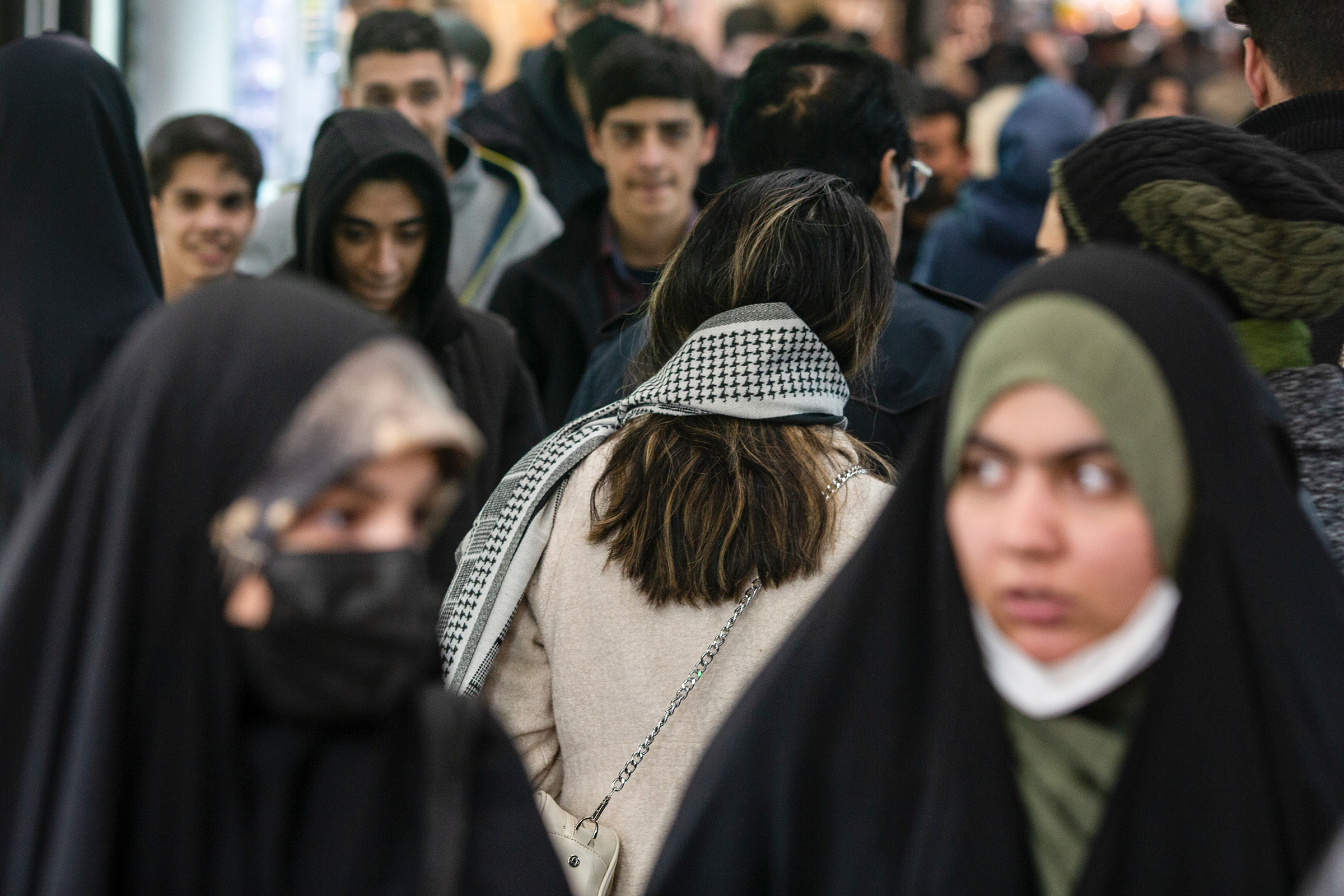
A woman, sans-head covering, at the Tajrish Bazaar in Tehran on Jan. 28. Defiant resistance to Iran's mandatory hijab law has spread across the country after nationwide protests that erupted last year.

Almost a full year after the death of Mahsa Amini in the custody of Iran’s so-called “morality police” galvanized mass protests, Iranian MPs are pushing for even more stringent punishments to deter women from violating its enforced modesty laws.

[time-brightcove not-tgx=”true”]

The Hijab and Chastity Bill—a draft law consisting of 70 articles—would intensify punishments for those seen flouting a dress code that became the flash point for the most widespread challenge to the Islamic Republic in four decades. The bill calls for increased fines and jail time, as well as the use of artificial intelligence to identify violators, according to CNN. These measures build on previous efforts to crack down on strict dress codes and identify unveiled women, including the addition of cameras in public places in April.

A straw poll taken Sunday saw 175 members of Iran’s parliament vote in favor of the move, while 49 voted against it, the BBC reported. If Iran’s Guardian Council, a separate, unelected body in Iran’s elaborate theocratic system, approves the bill, it would go forward on a pilot basis for between three and five years. MPs could then progress these measures into permanent law.

More From TIME

[video id=x2D7JaKK autostart="viewable"]

Hijab—a headscarf conservative clerics say should be worn so snugly no hair is shown in public—became compulsory in Iran after the 1979 revolution, along with “modest” dress that cloaks the female body. By enforcing what many Muslim women said should be a matter of choice, the rule became a political symbol of the regime, showing that it is in control. But since last year’s protests broke out, more and more women have been moving about in public with their hair uncovered as an act of resistance.

Experts tell TIME that the new bill attempts to use financial coercion to deter women from collective activism. “This new bill has only one meaning: gender apartheid is legal in Iran and now they are backing legal ways to treat women like second class citizens,” Masih Alinejad, an exiled Iran journalist and human rights activist, tells TIME.

Read More: Iranian Dissident Masih Alinejad Won’t Be Silenced

As passage of the bill approaches, here’s what to know.

What does the proposed bill entail?

Under Article 638 of Iran’s Islamic Penal Code, hijab is enforced under the vague guidance that anyone who “violates any religious taboo in public” is punishable with imprisonment or fines. Women forgoing the hijab or deemed to be wearing it improperly could land a fine of between 50,000 to 500,000 Iranian rials ($1.18 to $11.82), or between 10 days and two months imprisonment.

The new bill is much more specific in its approach and classifies improper hijab as its own crime—punishable by a prison sentence of 5 to 10 years as well as a significantly larger fine of up to 360 million Iranian rials ($8,508), according to figures reported by CNN. Also proposed in the draft law is harsher penalties for businesses, celebrities, and public figures who are seen to be encouraging or allowing the rules to be broken.

“The bill is probably one of the most concrete and tangible legislative efforts to signal the path that authorities are considering to take with regards to enforcement of compulsory hijab laws after the [protest] movements,” Tara Sepehri Far, a researcher at Human Rights Watch’s Middle East and North Africa Division, tells TIME.

She called the bill a form of “economic repression” that will disproportionately affect people from lower socio-economic backgrounds who can no longer justify the steep price tag behind their activism. “Can you afford to pay a fine? Can you afford not earning money at your cafe for 10 days? Can you afford to not pay your rent for two months? All of those are very deliberate measures to break the resistance,” Sepehri Far says. 

Read More: The Protests in Iran Have Shaken the Islamic Republic to Its Core

Why have leaders used Article 85 to push the bill through?

Article 85 of Iran’s constitution allows its parliament to pass a law without public debate. Sepehri Far notes that the article is intended for laws that require expert opinions at the committee level. But the government is increasingly using Article 85 to circumvent parliamentary procedure, including last year’s The Regulatory System for Cyberspace Services Bill, which rights groups say legitimized internet shutdowns and online censorship. In the case of the hijab bill, Article 85 allows hardliners to deal behind closed doors with an issue that has embarrassed the regime on the global stage, resulting in tens of thousands of arrests, and more than 500 deaths.

According to the BBC, at least one MP, Gholamreza Nouri-Qezeljeh, voiced his concerns about the bill, noting that it focuses too heavily on “criminalizing and punishing” women in breach of hijab laws.

Experts and activists echo this sentiment, saying the government is being calculated in its secrecy because it does not believe it has enough public support to push the bill through conventionally. “The reason for keeping it under wraps is fear of the public’s, especially women’s, reaction. The government is afraid of any kind of response and tries to achieve its goals at the least cost, but the issue is that their calculations often turn out wrong,” Alinejad says.

What message is the government sending to dissidents?

Women defying modesty laws, human rights defenders representing these individuals, and the journalists reporting on the movement have all been targeted and punished. Three actresses—Azadeh Samadi, Leila Bolukat, and Afsaneh Bayega—who chose to remove their hijab were diagnosed as mentally ill for choosing to forgo the hijab, and ordered to undergo enforced psychological treatments.

Sepehri Far says that the bill is the regime’s way of communicating that it will not back down, and to show onlookers, global and domestic, that they remain in control. “People have taken a step forward and at least created this alternative reality, and they’re paying a huge price for it.”

She adds that the demonstrations shows people were willing to take enormous personal risk, and that may change if this bill passes.

But Alinejad remains hopeful that the people of Iran have nothing to lose. “The truth is, the paths of the government and the people have diverged, and each is going its own way,” she says.


source https://time.com/6305813/iran-hijab-laws-stricter/

2023年8月16日 星期三

Raging Wildfires Trigger Mass Evacuation in Northern Canada

Wildfire smoke fills the air at Boundary Creek, Northwest Territories about 15 miles (25km) east of Yellowknife, Tuesday Aug. 15 2023.

Wildfires have forced an evacuation of Yellowknife, the capital of Canada’s Northwest Territories. 

Officials with the territorial government told residents in the highest risk areas to evacuate immediately. Other residents have until 12 p.m. local time on Friday to leave the city of about 20,000.

Depending on smoke conditions, those leaving by car will be escorted through the active fire zone, officials said. Residents who can’t leave by road are being asked to register for evacuation flights.

Read More: What Remains After the Flames: Scenes From the Ash-Colored Streets of Maui

For some, it will be the second exodus in recent days. Evacuees from the remote communities of Hay River and Fort Smith were already being housed in Yellowknife, according to an update Tuesday. 

Canada is experiencing the worst wildfire season on record. More than 1,000 active fires are burning across the country of which more than 670 are out of control, according to the Canadian Interagency Forest Fire Centre. So far, 13.7 million hectares have burned, far exceeding the 1995 record of 7.1 million hectares.


source https://time.com/6305629/wildfires-yellowknife-canada-evacuation/

A Pig’s Kidney Has Been Working in a Human Body for a Month, a Medical Milestone

FRANCE-HEALTH-HOSPITAL

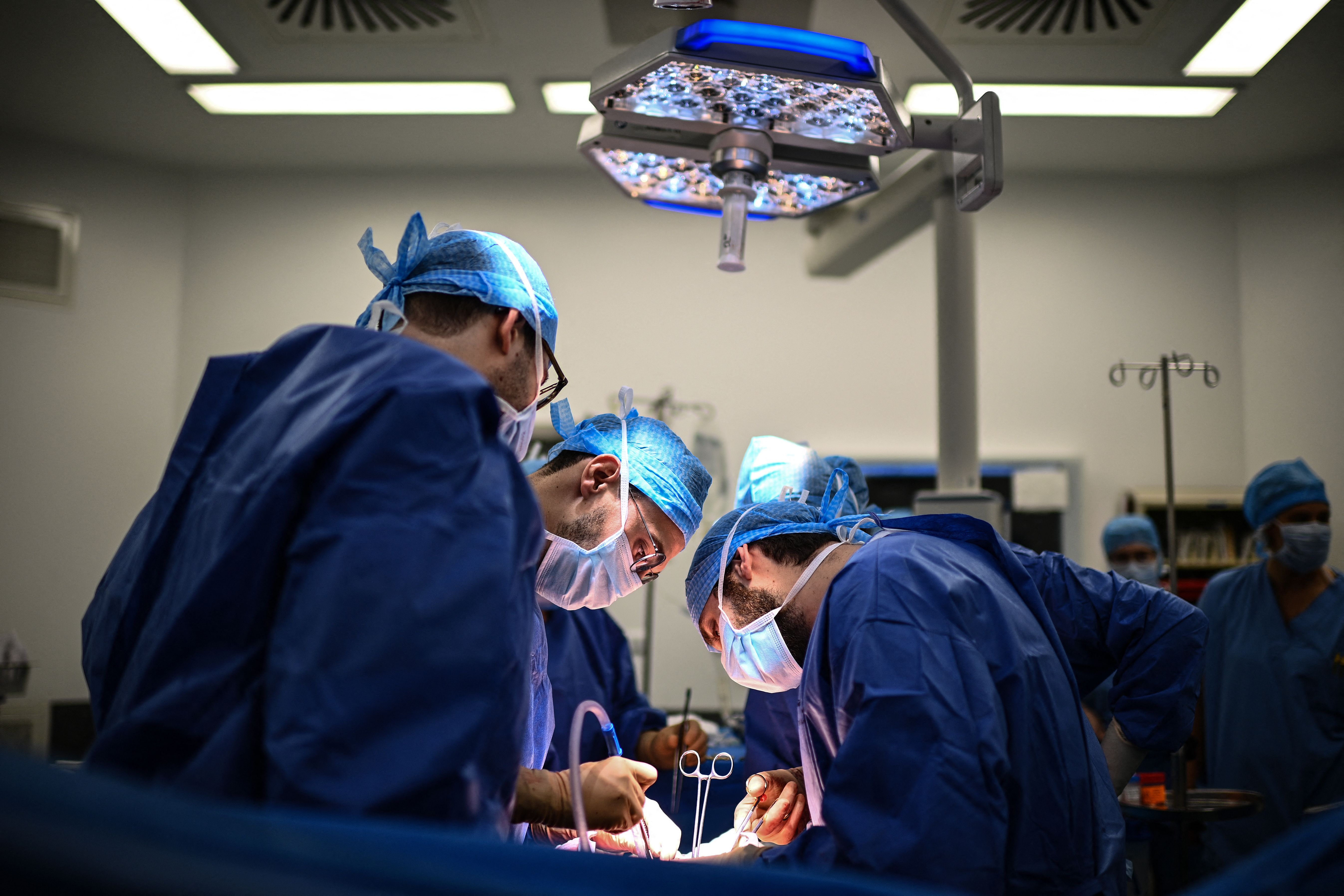
(NEW YORK) — Surgeons transplanted a pig’s kidney into a brain-dead man and for over a month it’s worked normally — a critical step toward an operation the New York team hopes to eventually try in living patients.

Scientists around the country are racing to learn how to use animal organs to save human lives, and bodies donated for research offer a remarkable rehearsal.

The latest experiment announced Wednesday by NYU Langone Health marks the longest a pig kidney has functioned in a person, albeit a deceased one — and it’s not over. Researchers are set to track the kidney’s performance for a second month.

[time-brightcove not-tgx=”true”]

“Is this organ really going to work like a human organ? So far it’s looking like it is,” Dr. Robert Montgomery, director of NYU Langone’s transplant institute, told The Associated Press.

“It looks even better than a human kidney,” Montgomery said on July 14 as he replaced a deceased man’s own kidneys with a single kidney from a genetically modified pig — and watched it immediately start producing urine.

The possibility that pig kidneys might one day help ease a dire shortage of transplantable organs persuaded the family of the 57-year-old Maurice “Mo” Miller from upstate New York to donate his body for the experiment.

“I struggled with it,” his sister, Mary Miller-Duffy, told the AP. But he liked helping others and “I think this is what my brother would want. So I offered my brother to them.”

“He’s going to be in the medical books, and he will live on forever,” she added.

Genetically-modified pigs

Attempts at animal-to-human transplants have failed for decades as people’s immune systems attacked the foreign tissue. Now researchers are using pigs genetically modified so their organs better match human bodies.

Last year with special permission from regulators, University of Maryland surgeons transplanted a gene-edited pig heart as a last-ditch attempt to save a dying man. He survived only two months before the organ failed for reasons that aren’t fully understood but that offer lessons for future attempts.

Now, the Food and Drug Administration is considering whether to allow some small but rigorous studies of pig heart or kidney transplants in volunteer patients.

Read More: Chronic Kidney Disease is Poised to Become the Black Lung of Climate Change

The NYU experiment is one of a string of developments aimed at speeding the start of such clinical trials. Also Wednesday, the University of Alabama at Birmingham reported another important success — a pair of pig kidneys worked normally inside another donated body for seven days.

Kidneys don’t just make urine — they provide a wide range of jobs in the body. In the journal JAMA Surgery, UAB transplant surgeon Dr. Jayme Locke reported lab tests documenting the gene-modified pig organs’ performance. She said the weeklong experiment demonstrates they can “provide life-sustaining kidney function.”

These experiments are critical to answer more remaining questions “in a setting where we’re not putting someone’s life in jeopardy,” said Montgomery, the NYU kidney transplant surgeon who also received his own heart transplant — and is acutely aware of the need for a new source of organs.

A long waiting list for transplants

More than 100,000 patients are on the nation’s transplant list and thousands die each year waiting.

Previously, NYU and a team at the University of Alabama at Birmingham had tested pig kidney transplants in deceased recipients for just two or three days. An NYU team also had transplanted pig hearts into donated bodies for three days of intense testing.

But how do pig organs react to a more common human immune attack that takes about a month to form? Only longer testing might tell.

The surgery itself isn’t that different from thousands he’s performed “but somewhere in the back of your mind is the enormity of what you’re doing … recognizing that this could have a huge impact on the future of transplantation,” Montgomery said.

The operation took careful timing. Early that morning Drs. Adam Griesemer and Jeffrey Stern flew hundreds of miles to a facility where Virginia-based Revivicor Inc. houses genetically modified pigs — and retrieved kidneys lacking a gene that would trigger immediate destruction by the human immune system.

As they raced back to NYU, Montgomery was removing both kidneys from the donated body so there’d be no doubt if the soon-to-arrive pig version was working. One pig kidney was transplanted, the other stored for comparison when the experiment ends.

“You’re always nervous,” Griesemer said. To see it so rapidly kickstart, “there was a lot of thrill and lot of sense of relief.”

How long should these experiments last? Alabama’s Locke said that’s not clear -– and among the ethical questions are how long a family is comfortable or whether it’s adding to their grief. Because maintaining a brain-dead person on a ventilator is difficult, it’s also dependent on how stable the donated body is.

In her own experiment, the donated body was stable enough that if the study wasn’t required to end after a week, “I think we could have gone much longer, which I think offers great hope,” she said.

The University of Maryland’s Dr. Muhammad Mohiuddin cautions that it’s not clear how closely a deceased body will mimic a live patient’s reactions to a pig organ — but that this research educates the public about xenotransplantation so “people will not be shocked” when it’s time to try again in the living.


source https://time.com/6305485/a-pigs-kidney-organ-tranplant/

The Backlash to Bradley Cooper’s Prosthetic Nose in Maestro Ignites an Ongoing Debate Over Jewish Representation

Maestro

On Tuesday, Netflix released the first trailer for Maestro, its upcoming Leonard Bernstein drama directed, co-written by, and starring Bradley Cooper. The actor’s appearance in the first glimpse of footage quickly reignited a topic of conversation that arose back in May 2022 when the first stills of the movie were released, due to Cooper’s facial prosthetics, which some alleged were unnecessary and constituted a troubling example of “Jewface.”

[time-brightcove not-tgx=”true”]

The movie is centered around the iconic composer and his relationship with Felicia Montealegre (played by Carey Mulligan), whom he married in 1951. Maestro, which also counts Steven Spielberg and Martin Scorsese among its producers, is set to premiere at the Venice Film Festival which begins at the end of this month. It will be released in select theaters on Nov. 22 and on Netflix on Dec. 20.

On Wednesday, Bernstein’s children Jamie, Alexander, and Nina Bernstein posted a statement to his official Twitter account stating that they are “perfectly” fine with Cooper’s use of “makeup to amplify his resemblance” and “we’re also certain that our dad would have been fine with it as well.” They pointed to their own involvement in the film and “the profound respect and yes, the love that Bradley brought to his portrait” of their parents.

Cooper as Bernstein

In the movie, Cooper portrays the famed composer, who is perhaps best known for composing the music for West Side Story alongside lyricist Stephen Sondheim. The focus of the drama is Bernstein’s 27-year relationship with Montealegre, who died in 1978. (Bernstein died later, in 1990.) In a June 2022 interview with Kveller, Bernstein’s daughter Jamie said that she felt the backlash to Cooper’s portrayal of her father was “ridiculous.” She told the publication, “Bernstein had a big nose and yes, he was Jewish. And what is the problem here? Are we really going to say they had to hire a Jewish actor to play [my father]?”

Despite Bernstein’s family’s support for the film, however, many users on social media expressed their distaste for the decision. One user replied to Netflix’s post sharing the trailer with photos of Cooper and Bernstein side-by-side and wrote, “This isn’t about making a non-Jewish actor look more like Leonard Bernstein; it’s about making a non-Jewish actor look more like a Jewish stereotype.”

Another user said, “Let’s talk about how prevalent of a trope it still is that Jews have big noses, even though nose diversity runs the gamut among Jews as much as any other group.” The user continued, “And here we are… enhancing a shnoz prosthetic for no apparent reason, reinforcing the stereotypes. What a putz.”

Jake Gyllenhaal, whose mother is Jewish, told Deadline in 2021 that he and Cooper had competing Bernstein projects, but the latter officially got the rights to the story in the end.

Reigniting a longstanding debate

This is not the first time debate has arisen surrounding whether only actors of a certain ethnicity or marginalized group should portray characters with the same background. Most recently, the movie Golda, due to release later this month, received backlash for star Helen Mirren’s significant makeup and prosthetics to play the Israeli prime minister. The film’s director, Guy Nattiv, defended his decision to cast Mirren, telling The Daily Mail, “If someone who’s not Jewish can’t play Jewish, does someone who’s Jewish play someone who’s not Jewish?”

Spielberg saw pushback when he cast non-Jewish actors, Paul Dano and Michelle Williams, to play his parents in last year’s semi-autobiographical film The Fabelmans, although the fact that he himself was casting his own parents made it easier to shake criticism. When Kathryn Hahn, who is not Jewish (and also played a rabbi on the TV series Transparent), was cast to play Joan Rivers in a series, the conversation surged again. (The show didn’t end up moving forward due to issues with Rivers’ life rights.)

Referencing other instances of non-Jewish actresses cast to play Jews, including Rachel Brosnahan in The Marvelous Mrs. Maisel and Rachel McAdams as an Orthodox woman in Disobedience, Sarah Seltzer explained in TIME why it’s difficult to talk about these issues as they relate to Judaism. “It’s not exactly racism or cultural appropriation, because Jewishness does not fall neatly into the categories of race, religion or ethnicity—some consider it one or another or some combination of the three—and because white Jews have access to white privilege in America … Jewish actresses like [Rachel] Weisz, Natalie Portman and Scarlett Johansson are among Hollywood’s most feted stars. When a white actor or actress snags a role written for another race or ethnicity—like Johansson herself in The Ghost in the Shell—it’s blatant erasure. This isn’t that.”

Maestro, which is Cooper’s directorial follow-up to A Star Is Born, is certainly poised to remain in the conversation for many months to come, from Venice to its streaming debut in December and likely well into awards season in 2024.


source https://time.com/6305450/bradley-cooper-maestro-trailer-jewface/

2023年8月15日 星期二

Two Trump Indictments For Trying to Overturn an Election. Two Very Different Strategies.

Georgia Grand Jury Delivers Indictment In 2020 Election Case

Special Counsel Jack Smith and Fulton County District Attorney Fani Willis are each prosecuting Donald Trump for the same fundamental alleged crime: conspiring to overturn the 2020 election and cling to power despite knowing he lost. But they are taking fundamentally different approaches, made clear in the indictments they secured against the former President this month. Whereas Smith is pursuing a narrow set of four charges against Trump in federal court, Willis has produced a sprawling and expansive case in Georgia that charges Trump and 18 of his associates with a grand total of 41 criminal counts. 

[time-brightcove not-tgx=”true”]

The contrast signifies the diverging strategies at the heart of their historic and politically combustible legal cases. Both are grappling with the complexity of prosecuting a former President who is also a leading presidential candidate in the next election—except they are not necessarily navigating the same set of headwinds. 

If Trump reclaims the White House, he could potentially exert executive power to inoculate himself from federal criminal vulnerability, such as attempting to pardon himself or appointing an attorney general who will quash the charges against him. That may be why Smith brought forth a lean indictment that he hopes can get to trial quickly, according to former federal prosecutors. “There’s a race against the clock,” says Barbara McQuade, a former U.S. Attorney, referring to Smith’s case. “In Georgia, that’s not really the case. No attorney general of the United States can shut down a state court investigation. So this case can proceed, even if Trump is elected.”

That may also help to explain why Smith eschewed charging Trump with inciting an insurrection on Jan. 6, 2021, when a mob of his supporters stormed the U.S. Capitol. Indicting him on those grounds, legal experts say, would tangle the prosecution in First Amendment arguments that could provide Trump more room to maneuver. Instead, Smith limited the 45-page indictment to the four counts of conspiracy to defraud the government, conspiracy against the right to vote, conspiracy to obstruct an official proceeding, and obstruction of an official proceeding. While Smith listed six unnamed and unindicted co-conspirators, legal analysts suspect he left them untouched for now to expedite the case. He could charge them down the road, or try to flip them as government witnesses against Trump in the intervening months. 

Willis, for her part, charged Trump with 13 criminal counts, including soliciting a public official to violate his oath of office, conspiring to commit forgery in the first degree, conspiring to file false documents, and making false statements. Moreover, she charged Trump and allies such as former White House Chief of Staff Mark Meadows and former New York City mayor Rudy Guiliani with orchestrating a criminal scheme to subvert the election results. They collectively face a range of charges but are all being prosecuted under Georgia’s anti-racketeering laws, what are known in legal parlance as RICO statutes, which have typically been used to prosecute members of the mob.

“She named those defendants because she has to be able to show the criminal enterprise,” says Anna Cominsky, a professor at New York Law School. “She has to show the overt acts of the participants. By naming these people, and saying, here’s what each of them did, either alone or collectively, that makes this a criminal enterprise. That’s what’s going to prove her case.”

While Willis has said she wants to try the case within the next six months, former prosecutors suspect that’s not a realistic timeline, especially given the number of co-defendants.

In fact, the case is unlikely to be resolved before voters cast ballots next year. “When you have 19 total defendants, you will have 19 potential motions,” says Jeremy Saland, a former Manhattan prosecutor. “You’re going to have motions to sever. You’re going to potentially have 19 motions to dismiss.” Willis has indicated she will push to try them all together, but the co-defendants are likely to seek separate trials, a decision that can slow down the process and that will ultimately be made by the judge. “I think that Jack Smith knew what he wanted, and he wanted to do it effectively,” Saland adds. “He wants to get this indictment rolled out and a potential trial in advance of the election.”

A federal judge will determine when the trial starts. Smith has asked to begin the trial on charges that Trump illegally plotted to nullify the election on Jan. 2, 2024, two weeks before the Iowa caucuses. Trump’s team has already sought to push that trial back, and most former prosecutors suspect they will successfully postpone it, as defendants are often able to procure trial delays, especially when there’s a voluminous amount of evidence presented through discovery. The government will also have to reckon with Trump’s packed courtroom itinerary over the next year while he faces multiple criminal indictments concurrently, including in a separate Special Counsel case alleging that he mishandled classified documents. 

But Smith will face another complication if Trump’s lawyers can shelve the matter long enough—the looming presidential election in which the defendant could be the Republican nominee. Trump is currently leading the GOP primary by more than 40 points in most polls. “Smith is keeping this trim and limited to Trump, because he really does want to take one of these two cases to trial before the next general election,” says David Weinstein, a former assistant U.S. attorney, “and because of the policies and practices of the Department of Justice, where they don’t want to be perceived as influencing an election. He wants to get his prosecution over and done before you get too close to the next general election.”

Meanwhile, Trump is expected to stand trial in March on charges from the Manhattan District Attorney that he falsified business records. And a federal judge overseeing the case alleging that he hoarded national security secrets at his Mar-a-Lago Club has set a trial date for May 2024. Trump had asked for an indefinite postponement in the Mar-a-Lago documents case, saying it interfered with his campaign schedule, but Judge Aileen Cannon denied the request. 

While Smith will be racing to secure convictions in the federal cases against Trump, Willis may be able to proceed with her prosecution in 2025 no matter the outcome of the next election. It’s a reality that gives her the latitude to pursue a wide-ranging case from the outset. Should Trump win the 2024 election, his lawyers could argue that he can’t go on trial as a sitting president, but there’s no guarantee such a maneuver could work, according to McQuade. Willis’s case could stretch on for years, potentially making it the last-resort legal instrument that can hold those who tried to subvert American democracy accountable.

“Rather than try to do this sort of streamlined one-defendant indictment, she charged them all with the full scope of all of the conduct,” McQuade says. “She says she’d like to try this case in six months, but realistically, she probably knows that’s not likely. She’s in it for the long haul.” 


source https://time.com/6305281/trump-indictments-strategies-fani-willis-jack-smith/

The History Lost in the Maui Wildfires

The charred remains of the Old Lahaina Courthouse

As wildfires have ravaged the Hawaiian island of Maui in one of the state’s deadliest natural disasters of all time, residents are bracing themselves for the massive rebuilding efforts to come. But many of the artifacts and objects that tell the island’s history that were lost to the blaze will not be able to be recreated.

[time-brightcove not-tgx=”true”]

Historic preservation experts in the town of Lahaina, one of the hardest hit areas, are still trying to figure out the full extent of the damage, but right now the Lahaina Restoration Foundation, a nonprofit that oversees several local historic sites, believe a majority of the collections overseen by the group—thousands of objects—have been lost. They are working off the assumption that anything made of paper, wood, ceramics, or fabric will not survive the fires. 

“We’ve lost four museums,” says Kimberly Flook, Deputy Executive Director of the Lahaina Restoration Foundation, out of at least 14 museums and sites the group oversees. “If you’re into environmentalism, if you’re into surfing, if you’re into history, something was lost in all those ways.”

Wo Hing Museum & Cookhouse—a social hall for the Chinese immigrants who helped build the tunnels and irrigation systems through the mountains—completely burned down. Baldwin Home, known as the oldest home still standing before the fires in Maui, no longer has a roof and the artifacts inside are believed to be in ruins. Old Lahaina prison—where people who were convicted of crimes were sent at the peak of the whaling era in the mid-1800s—lost its wooden gatehouse and wooden jail cell buildings. At the old Lahaina courthouse, the center of government for the region, everything but the walls is gone.

Among the prized possessions believed to be lost by Lahaina Restoration Foundation staff is an original native Hawaiian kingdom flag. On August 12, 1898, shortly after Hawaii was annexed to the U.S., the Hawaiian kingdom flag was lowered and replaced with the American flag. Flook says the flag was a great conversation-starter with visitors because “many Americans don’t realize that the path to statehood for Hawaii was not a choice.” 

Objects that show how native Hawaiians made a living for themselves are also believed to be lost, like featherwork, furniture, photographs, and kapa, a type of fabric used to make rugs, skirts, and blankets. It’s not only indigenous history that’s at stake, but objects representing the nationalities of people who worked on the plantations in the late 19th century through the mid-20th century—Chinese, Filipino, Japanese, Portuguese, Scandinavian, Spanish, and Puerto Rican. Museum staffers are hopeful that artifacts made from stone and some types of metal will survive the fires.

Flook says that while some physical objects are now gone, many Native Hawaiians still remember their histories and are working to find new ways to tell their stories to visitors. As she puts it: “We’ve lost physical pieces of history. We have not lost our history, our culture. And we won’t.”


source https://time.com/6305270/maui-wildfire-history-museums-artifacts-lost/

من هشت سال گروگان ایران بودم. آیا دوستانم از بمباران اسرائیل جان سالم به در بردند؟

Read this story in English here نمازی گروگان سابق آمریکایی در ایران است و اکنون عضو هیئت مشاوران ابتکار آزادی برای زندانیان سیاسی در...